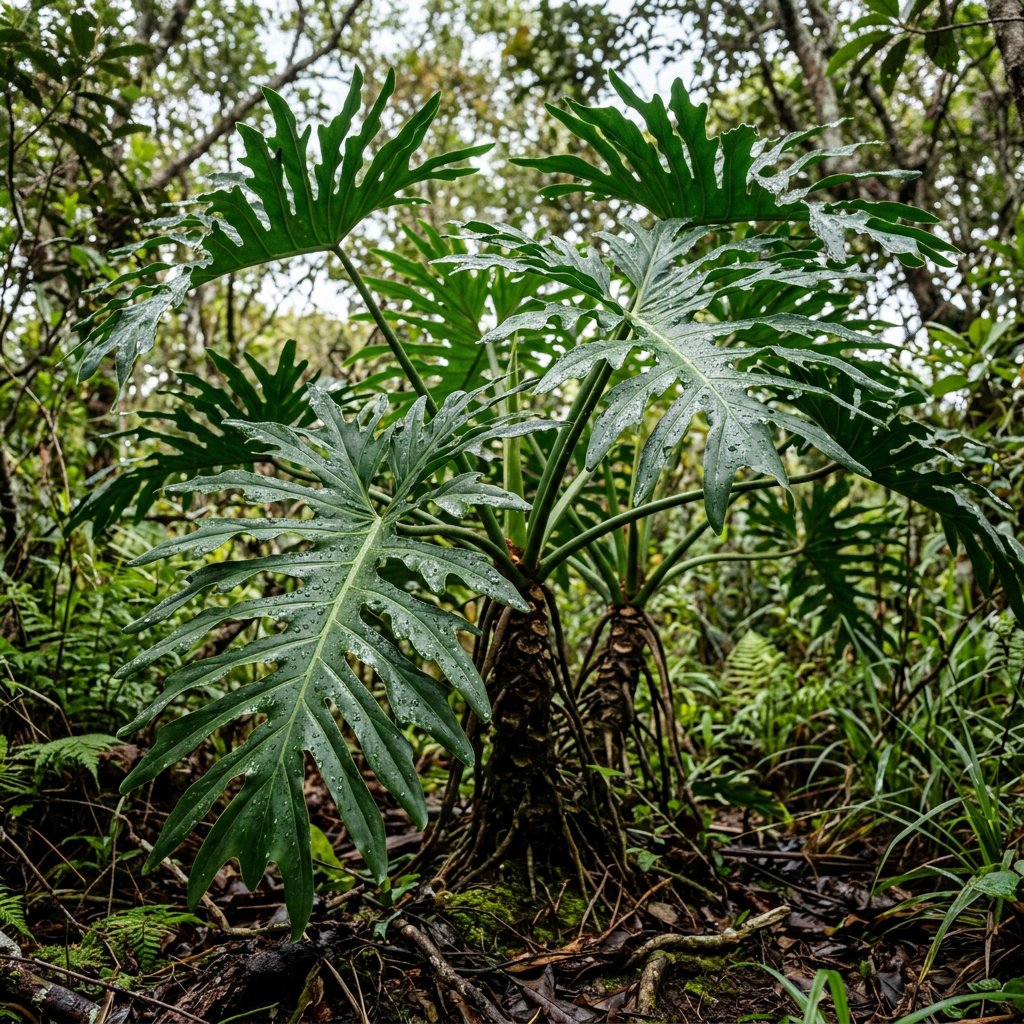
Plant Overview
Often called the Narrow-lobed Philodendron or the Fernleaf Thaumatophyllum, this Brazilian native is a true architectural masterpiece. Until recently, it was classified as a Philodendron, but its ability to grow a thick, woody trunk eventually earned it a place in the Thaumatophyllum genus. It is the perfect choice for those who want a "jungle" look without the messy sprawling habit of climbing vines.
🔍 How to Identify
- 🍃 Leaf Shape: The most striking feature is its long, narrow, sword-like leaves that feature deep, wavy lobes along the edges, resembling giant green feathers.
- 🪴 Growth Habit: Unlike many of its cousins, this is a "self-heading" plant. Instead of climbing, it grows upright on a sturdy, central trunk that becomes more prominent as the plant matures.
- 🟢 Texture & Color: The foliage is a deep, rich emerald green with a leathery, semi-glossy texture that feels substantial to the touch.
🏡 In Your Garden
- 🌬️ Space to Breathe: Because the leaves can reach lengths of up to three feet, this plant needs elbow room. It’s best used as a floor specimen where its dramatic silhouette won't be crowded.
- 💧 The "Trunk" Factor: As it grows, it will drop lower leaves and reveal a "scarred" trunk. Don’t worry—this is natural! It is simply turning into a small, indoor tree.
- 🌤️ Light Nuance: While it loves bright, indirect light, its narrow leaves are thinner than the T. bipinnatifidum (Lacy Tree Philodendron), making it slightly more sensitive to harsh, direct afternoon sun which can scorch the tips.
⚠️ Safety & Toxicity
- 🚫 Status: Toxic to humans and pets.
- 🧪 The Culprit: Like most aroids, it contains insoluble calcium oxalate crystals. If chewed or swallowed, it causes immediate mouth irritation, swelling of the throat, and digestive upset.
- 🐾 Placement: Keep this plant out of reach of nibbling cats or curious toddlers, as the sap can also cause mild skin irritation for those with sensitive skin.
✨ Fun Fact
The genus name Thaumatophyllum translates from Greek to "wonder leaf." This name change occurred in 2018 after DNA evidence proved these trunk-forming plants are genetically distinct from the climbing Philodendrons we know and love.

Detailed Care Instructions
To grow a Thaumatophyllum stenolobum plant, also known as a Philodendron stenolobum or velvet leaf philodendron, you can follow these steps:
- Choose the right location: Place your plant in a spot that receives bright, indirect light. It can tolerate some shade, but avoid direct sunlight as it may scorch the leaves.
- Provide appropriate temperature and humidity: Thaumatophyllum stenolobum prefers warm temperatures between 65-85°F (18-29°C). It also thrives in higher humidity levels, so misting or placing a humidifier nearby can be beneficial.
- Select the right container: Use a well-draining pot with adequate drainage holes. It is best to choose a pot that allows for some future growth of the plant.
- Use well-draining soil: Use a loose, well-draining potting mix that retains some moisture but doesn't become waterlogged. You can mix equal parts of peat moss, perlite, and potting soil.
- Watering: Keep the soil consistently moist but not overly soggy. Water the plant when the top inch of soil feels dry. Ensure excess water drains out of the bottom of the pot to prevent root rot.
- Fertilize regularly: Use a balanced houseplant fertilizer diluted to half strength every 2-4 weeks during the growing season (spring and summer). Avoid fertilizing during the winter months when growth slows down.
- Provide support: As the plant grows, it may benefit from staking or training to help it climb. Gentle tying with soft plant ties or using a moss pole can encourage upward growth.
- Pruning and propagation: Prune any dead or yellow leaves to maintain plant health and appearance. You can propagate Thaumatophyllum stenolobum by taking stem cuttings and rooting them in water or a well-drained potting mix.
- Monitor for pests and diseases: Keep an eye out for common houseplant pests like spider mites, mealybugs, or scale insects. Treat any infestations promptly using organic pest control methods.
With proper care and attention, your Thaumatophyllum stenolobum plant should grow and thrive in your home. Don't forget to enjoy its beautiful foliage and make adjustments to care based on your specific environment.

Place in a window with dappled sun or a spot in the middle of a room. Or directly in a window facing west or east.

To water this plant, you should first check the soil's moisture level by inserting your finger into the soil about an inch deep. If the soil is dry at this depth, it's time to water the plant. It's essential to ensure that the soil is evenly moist but not waterlogged, as overwatering can lead to root rot and other problems.
When watering the plant, water it at the base to avoid getting water on the leaves, which can cause damage or promote fungal growth. Use room temperature water, and add enough so that it drains out of the pot's bottom. It's important to allow excess water to drain away, as standing water can also harm the roots.
During the growing season, which is usually spring and summer, the plant may require more frequent watering. In contrast, during the winter months, it may need less water as it's not actively growing. A good rule of thumb is to water when the soil is dry to the touch. However, make sure not to let the soil completely dry out, as this can damage the plant.
Overall, it's essential to provide the right amount of water for the plant to thrive and avoid over or underwatering.
For proper fertilization of this plant, use a balanced liquid fertilizer during the growing season. Dilute the fertilizer to half strength and apply every two weeks. Avoid over-fertilization, which can cause foliage burn and reduce plant health. During the dormant season, reduce or stop fertilization and allow the plant to rest. Keep in mind that proper watering and soil conditions are also important for the overall health and growth of this plant.
Thaumatophyllum Stenolobum plant prefers a well-draining and aerated soil with a slightly acidic to neutral pH level ranging from 6.0 to 7.0. The soil should be rich in organic matter, such as compost and peat moss, and should have good water retention capacity. A soil mix consisting of equal parts of coco coir, perlite, and peat moss is ideal for this plant. It is essential to avoid overwatering and ensure proper drainage to prevent waterlogging. Additionally, the plant prefers a warm and humid environment, so it is recommended to place it in a location with moderate to bright indirect sunlight and provide regular misting or use a humidifier to maintain adequate humidity levels.
Thaumatophyllum stenolobum can be propagated through division, stem cuttings, and air layering. Here is a detailed guide on how to propagate this plant:
- Division: This method is best done when repotting the mother plant. Gently remove the plant from its current pot and gently separate the roots and stems into smaller sections. Be careful to not damage the roots. Plant each divided section into its own pot with fresh soil.
- Stem cuttings: Cut a healthy stem from the mother plant, around 6 inches long. Remove any leaves on the bottom two inches of the stem. Dip the cut end into rooting hormone and plant it in moist soil. Keep the soil moist, and within a few weeks, roots should begin to appear. After the roots have become established, transplant the new plant into its own pot.
- Air layering: Choose a healthy stem from the plant and slightly damage the bark with a knife where you want the roots to emerge. Wrap the damaged area with moist sphagnum moss and cover it with plastic wrap. Wait about a month or until you see roots emerging from the moss. Cut the stem from the mother plant, remove the plastic wrap, and plant the rooted stem in its own pot.
No matter which method you choose, make sure to keep the new plants in a warm and moist environment until they have become established.
Common pests of the thaumatophyllum stenolobum include Scale insect, mealybugs, spider mites, fungus gnats, thrips. Make a habit of checking your thaumatophyllum stenolobum frequently for pests so that any infestations can be caught and managed early.








