Plant Overview
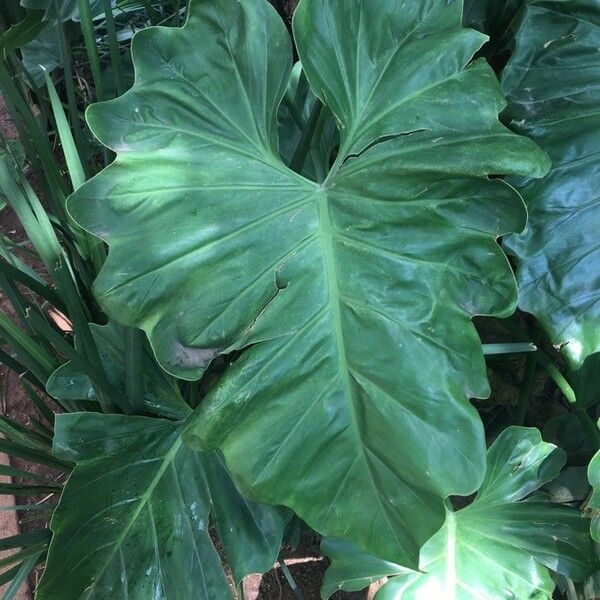
Often called the Wave-leaf Philodendron, this South American giant is a true architectural masterpiece. Recently reclassified from the Philodendron genus, it is known for its ability to grow into a massive, tree-like specimen with a thick, woody trunk. Its name perfectly describes its most striking feature—dramatically "undulating" or wavy leaf margins that give the plant a ruffled, prehistoric appearance.
🔍 How to Identify
- 🌊 The Margins: Large, heart-shaped leaves feature deeply wavy or "crinkled" edges, especially as the plant matures.
- 🍃 Texture & Color: The foliage is thick, leathery, and finished with a high-gloss, deep forest green sheen.
- 👁️ The Trunk: As old leaves drop, they leave behind distinctive "eye-shaped" leaf scars on a thick, upright stem that eventually resembles a palm-like trunk.
🏡 In Your Garden
- 📏 Space Requirements: This isn't a shelf plant; it’s a floor-dweller that needs significant "elbow room" to spread its wide, heavy leaves without hitting walls.
- ☀️ Light Nuance: Because its leaves are thicker than many of its cousins, it can handle slightly higher light levels, which helps keep the wavy margins tight and dramatic.
- 🪴 Growth Habit: Unlike many aroids that want to climb a moss pole, this species is self-supporting. It focuses its energy on building a sturdy base rather than searching for a tree to scale.
⚠️ Safety & Toxicity
- 🚫 Toxic Status: Contains insoluble calcium oxalate crystals, which are common in the Araceae family.
- 🐾 Pet & Child Risk: If leaves or stems are chewed, it causes immediate intense burning and swelling of the mouth, tongue, and throat. Keep it out of reach of curious pets and toddlers.
- 🧤 Skin Irritation: The sap can be an irritant to those with sensitive skin; it is best to wear gloves when pruning or propagating.
✨ Fun Fact
The genus name Thaumatophyllum literally translates from Greek as "wonder leaf." These plants were separated from Philodendron because they are "arborescent," meaning they have the unique ability to grow into independent, woody trees rather than remaining as vines.

Detailed Care Instructions
To grow a Thaumatophyllum undulatum plant, also known as the "Swiss cheese plant" or "Monstera deliciosa," you can follow these steps:
- Choose a suitable location: This plant prefers bright, indirect light but can tolerate some shade. Avoid placing it in direct sunlight as it can scorch the leaves. It thrives in average room temperatures of 60-80°F (15-27°C).
- Select the right pot: Use a well-draining pot with drainage holes to prevent waterlogging. The pot should be at least 2-4 inches larger in diameter than the current container.
- Potting mix: Use a well-draining potting mix that retains some moisture but also allows excess water to drain away. A mixture of peat moss, perlite, and sand or a commercial potting mix for tropical plants works well.
- Watering: Water the plant thoroughly when the top inch of soil feels dry. Avoid keeping the soil overly wet or letting it dry out completely. Ensure good drainage to prevent root rot.
- Humidity: Thaumatophyllum undulatum prefers higher humidity levels. You can increase humidity by misting the leaves regularly or placing a tray filled with water and pebbles near the plant. Grouping plants together or using a humidifier can also help.
- Fertilizer: Feed the plant once a month during the growing season (spring and summer) with a balanced houseplant fertilizer. Follow the instructions on the fertilizer package for proper dosage.
- Support: As the plant grows, it might need support to keep it upright. You can use a moss pole, trellis, or stakes to help train the vines to grow upward. Secure the vines gently to the support structure using soft plant ties or twine.
- Pruning: Regularly prune any yellow or dead leaves to keep the plant healthy and attractive. You can also trim the vines to control the size and shape of the plant.
- Propagation: Thaumatophyllum undulatum can be propagated through stem cuttings. Choose a healthy stem with at least two leaves and a node. Place the cutting in a jar of water or moist soil until roots develop, then plant it in a pot with potting mix.
- Repotting: Repot the plant every 1-2 years when it outgrows its container. It's best to do this in spring or early summer. Gently remove the plant from the old pot, shake off excess soil, and place it in a new pot with fresh potting mix.
Following these steps should help you successfully grow and care for your Thaumatophyllum undulatum plant.
This specific plant requires regular and consistent watering in order to thrive. It is important to maintain the soil around the roots moist, but not overly saturated. When watering, it is generally best to do so deeply and allow the excess water to drain out from the bottom of the pot.
To water the Thaumatophyllum Undulatum plant, fill a watering can or container with room temperature water. Slowly pour the water around the base of the plant, straight into the soil. You may want to use a watering can with a narrow spout to target the water directly to the root area, avoiding wetting the leaves excessively. Ensure that the entire root ball is sufficiently moistened, without creating waterlogged conditions.
It is important to develop a watering schedule to avoid both underwatering and overwatering. Check the soil before each watering session by gently sticking your finger about an inch deep into the soil. If it feels dry at this depth, it is time to water. However, if it feels moist, hold off on watering for another day or two.
During the winter months or cooler periods, the Thaumatophyllum Undulatum plant may require less frequent watering, as reduced temperatures can slow down its growth and water requirements. On the other hand, during hotter months or if the plant is exposed to direct sunlight, it may need watering more frequently to compensate for increased evaporation.
It is worth noting that water quality also plays a role in the plant's overall health. It is ideal to use filtered, distilled, or rainwater, as some tap water may contain chemicals like chlorine or fluoride which can be harmful to the plant over time. If using tap water, you can allow it to sit in an open container for a few hours before watering to allow chlorine to dissipate.
Observing the plant for any signs of leaf drooping, yellowing, or wilting can also indicate its hydration level. Adjust watering accordingly based on the plant's needs and environmental conditions, as each individual plant may have slightly different requirements.
- Choose a water-soluble fertilizer suitable for foliage plants.
- Dilute the fertilizer according to the package instructions, usually at a ratio of 1 part fertilizer to 2 or 3 parts water.
- Ensure that the plant's soil is moist before applying fertilizer.
- Apply the diluted fertilizer to the soil around the plant, avoiding direct contact with the leaves.
- For best results, fertilize once every month during the growing season (spring and summer).
- Monitor the plant's response to the fertilizer. If the leaves start showing signs of leaf burn or discoloration, dilute the fertilizer further or reduce the frequency of applications.
- During the dormant season (fall and winter), reduce or stop fertilizing as the plant's growth slows down.
- Regularly flush out excess salts and fertilizer build-up by thoroughly watering the plant until water drains out of the bottom of the pot.
- Always follow the instructions on the fertilizer packaging and adjust the feeding schedule as needed based on the plant's response and growth.
Thaumatophyllum Undulatum, commonly known as "Xanthosoma" or "Elephant Ear," is a tropical plant that requires specific soil conditions to thrive. Here are the details on the soil requirements for this plant without mentioning its common names:
- Soil Type: Thaumatophyllum Undulatum prefers well-draining soil that retains some moisture. It requires a soil mix that strikes a balance between moisture retention and proper drainage.
- pH Range: The ideal pH range for Thaumatophyllum Undulatum is slightly acidic to neutral, between 6.0 and 7.0. This range ensures optimum nutrient availability to the plant.
- Organic Matter: This plant benefits from soil enriched with organic matter. Adding well-rotted compost, leaf mold, or other organic materials increases soil fertility, improves drainage, and provides essential nutrients.
- Moisture Retention: Thaumatophyllum Undulatum enjoys moist soil but should not be allowed to sit in waterlogged conditions. The soil should be moist but not soggy to prevent root rot. Adequate drainage is essential to achieve the right balance of moisture retention.
- Aeration: The soil should be well-aerated to ensure healthy root development and prevent waterlogging. Good aeration allows oxygen to reach the roots and promotes optimal nutrient uptake by the plant.
- Texture: Thaumatophyllum Undulatum grows well in soil with a loamy or sandy texture. Loamy soil retains enough moisture while promoting good drainage, creating a balanced environment for root growth.
- Nutrient Content: The soil should be rich in essential nutrients, including nitrogen (N), phosphorus (P), and potassium (K), to support Thaumatophyllum Undulatum's growth. Regular fertilization or adding slow-release fertilizers can help maintain nutrient levels.
- Container Gardening: In container gardening, it is advisable to use a well-draining potting mix specifically formulated for tropical plants. These mixes usually contain a blend of peat moss, perlite, and vermiculite, which provide the necessary drainage and moisture control.
Remember, these soil requirements are specific to Thaumatophyllum Undulatum, and its overall health and growth depend on providing suitable soil conditions for its optimal development.
Thaumatophyllum undulatum, commonly known as the Swiss cheese plant or the split-leaf philodendron, is an easy-to-propagate plant. It can be propagated through various methods such as stem cuttings, air layering, or by dividing the plant. Here are some detailed instructions on how to propagate Thaumatophyllum undulatum:
- Stem Cuttings:
- Select a healthy stem from the parent plant that has at least two nodes (where leaves emerge) and a few leaves.
- Using clean and sterilized pruning shears or a sharp knife, make a clean cut just below a node. Aim for a cutting that is around 6-8 inches long.
- Remove the lower leaves from the cutting, leaving only a few leaves at the top.
- If desired, you can dip the cut end of the stem in a rooting hormone powder to enhance root development (optional).
- Prepare a well-draining rooting medium such as a mix of perlite and peat moss, or a mix of vermiculite and sphagnum moss.
- Moisten the rooting medium and create a hole or furrow in it where you can place the stem cutting.
- Insert the stem cutting into the rooting medium, burying one or two nodes in the soil.
- Firmly press the rooting medium around the stem cutting to provide stability and good soil-to-cutting contact.
- Place the cutting in a warm and humid environment, away from direct sunlight.
- Keep the soil slightly moist, but avoid overwatering to prevent rotting.
- After a few weeks, new roots should begin to develop. You can gently tug on the cutting to check for resistance, indicating root growth.
- Once a healthy root system has developed, you can transplant the cutting into a pot with well-draining soil.
- Select a healthy stem from the parent plant that has at least two nodes (where leaves emerge) and a few leaves.
- Air Layering:
- Identify a healthy stem on the parent plant and choose a section where you would like the roots to form.
- Make a horizontal cut into the stem, about one-third to halfway through its diameter. This cut should be located just below a node.
- Apply a rooting hormone to the cut area (optional).
- Take a handful of moist sphagnum moss and wrap it around the wounded section of the stem, covering the cut completely.
- Secure the moss in place by wrapping it with plastic wrap or using twist ties.
- Over time, roots will begin to grow within the moist moss.
- Keep the moss consistently moist by misting it with water or by placing a small amount of water within the plastic wrap. Ensure that it doesn't dry out.
- After 4-8 weeks, check for root development. Gently remove the plastic wrap and moss and look for well-formed roots.
- Once the roots are established, carefully cut below the rooted section and plant it in a pot with well-draining soil.
- Identify a healthy stem on the parent plant and choose a section where you would like the roots to form.
- Division:
- Select a mature Thaumatophyllum undulatum plant that has multiple stems or shoots.
- Carefully remove the plant from its pot and inspect the roots to identify natural divisions or clusters.
- Use sharp and sterilized pruning shears or a knife to separate the plant into smaller sections, ensuring that each division has its own roots and stems.
- Plant each division into its own pot with well-draining soil.
- Water the newly separated plants thoroughly, and provide proper care as they establish themselves in their new pots.
Remember to monitor the propagated plants regularly, provide them with appropriate lighting, temperature, and humidity conditions, and avoid overwatering to ensure successful propagation of Thaumatophyllum undulatum.
- Select a mature Thaumatophyllum undulatum plant that has multiple stems or shoots.








