Plant Overview
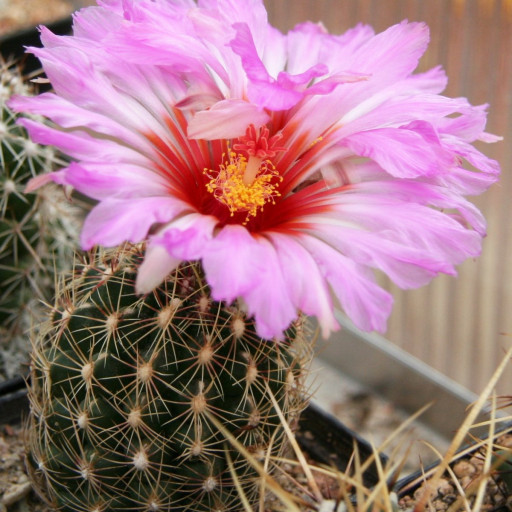
Known affectionately as the Glory of Texas or the Straw-Spine Cactus, this Chihuahuan Desert native is a true showstopper for any succulent collector. Its name "bicolor" refers to its striking, multi-toned spines that shift from fiery ruby-red to pale straw-yellow. When it blooms, it produces massive, shimmering magenta flowers that look almost too large for its compact, architectural body.
🔍 How to Identify
- 🌵 The Stem: A globe-shaped body that eventually turns cylindrical with age, featuring distinct ribs with small bumps (tubercles) that give it a "chiseled" look.
- 🎨 Spine Artistry: The spines are its most famous feature—long, flattened, and beautifully colored in bands of red and creamy white, often overlapping to form a protective, colorful cage around the plant.
- 🌸 Neon Blooms: In spring and summer, large funnel-shaped flowers emerge from the crown, boasting silky magenta petals and a deep crimson center.
🏡 In Your Garden
- ☀️ Sun for Color: To achieve those vibrant red spine colors, this cactus needs intense, direct sunlight. If kept in the shade, the spine colors will fade and the plant may become "leggy."
- 🏜️ Mineral-Heavy Soil: This species is sensitive to excess moisture. It thrives best in a "lean" potting mix dominated by pumice, grit, or perlite rather than organic peat, which helps prevent root rot.
- 💤 The Winter Nap: It requires a dry, cool dormancy period during the winter. Withholding water entirely during the cold months is the "secret" to triggering its spectacular floral display in the spring.
⚠️ Safety & Toxicity
- 🛡️ Status: Non-toxic to humans and pets.
- 🩹 Physical Hazard: While it won't poison your curious cat or toddler, the spines are incredibly sharp and rigid. Always use thick leather gloves or a "towel wrap" technique when handling or repotting to avoid painful punctures.
✨ Fun Fact
Unlike many desert cacti that require a decade of growth before they are ready to reproduce, the Thelocactus bicolor is a "precocious" bloomer—it can start producing its massive neon flowers when it is only a few years old and barely two inches wide!

Detailed Care Instructions
To grow Thelocactus Bicolor, also known as the rainbow cactus, here are some steps you can follow:
- Potting: Choose a well-draining pot with a drainage hole. Fill it with a cactus-specific or well-draining soil mix.
- Planting: Place the Thelocactus Bicolor in the pot, ensuring that its roots are buried comfortably below the soil surface. Compact the soil around the base of the plant gently.
- Sunlight: Provide the cactus with plenty of bright, indirect sunlight. A south-facing window or an area that receives at least 6-8 hours of sunlight per day is ideal.
- Temperature: Thelocactus Bicolor thrives in warm temperatures, ideally between 70-85°F (21-29°C) during the day and 50-60°F (10-15°C) at night. Protect the plant from frost or extreme winter cold.
- Watering: Water the cactus deeply but infrequently. Allow the soil to dry out completely between waterings to prevent root rot. During the growing season (spring to fall), water roughly once every 1-2 weeks. In winter, reduce watering to once a month or less.
- Humidity: These cacti prefer low humidity levels. Avoid misting the plant or placing it in a humid environment, as excessive moisture can lead to rot.
- Fertilizing: Feed the Thelocactus Bicolor sparingly during the growing season with a diluted cactus fertilizer. Follow the product instructions for dosage and frequency.
- Propagation: Thelocactus Bicolor can be propagated by seeds or by taking stem cuttings. Allow the cuttings or seeds to dry for a few days before planting. Then, follow the same potting and care instructions.
- Pruning: Remove any dead or unhealthy parts of the cactus with a sharp, sterile knife or scissors. Use caution to avoid injury from the cactus spines.
- Pest control: Check the plant regularly for common cactus pests like mealybugs or spider mites. If detected, treat the affected areas with a mild insecticidal soap or use an organic pest control method.
Remember, Thelocactus Bicolor is a slow-growing plant, so be patient with its growth. With proper care, it should thrive and gradually develop its unique rainbow-like appearance.

Place in a bright room that is sun drenched almost all day. Or directly in a south-facing window.

The Thelocactus Bicolor plant requires a moderate amount of water during its active growing season. It is important to allow the soil to dry out completely between each watering session. Overwatering can cause the plant to rot and die.
To water the plant, first, check the moisture level of the soil by inserting a finger or a wooden stick into the soil. If the soil is still wet, then wait for a few more days before watering it. If the soil feels dry, then it is time to water the plant.
Use a watering can or a hose with a spray nozzle to water the plant gently. Avoid splashing water on the leaves as it may cause sunburn or fungal infections. Water the soil around the base of the plant, making sure that all the soil gets moistened.
After watering, let the excess water drain out of the pot and make sure that the soil is not soggy. Thelocactus Bicolor plants are drought-tolerant and can survive without water for long periods. However, they need more water during the hot summer months and less water during the winter dormancy period.
To fertilize this particular plant, you should use a balanced fertilizer with a N-P-K ratio of 10-10-10 or 20-20-20. It is recommended to dilute the fertilizer to half strength and apply it once a month during the growing season (spring and summer). You should not fertilize during the winter or dormant season. Be sure to water the plant thoroughly before fertilizing to avoid root burn.
The ideal soil for Thelocactus Bicolor plant is a blend of well-draining soil with the addition of sand or perlite to improve drainage. It is recommended to avoid using heavy soils that retain moisture, as this can lead to root rot. A mix of cactus potting soil, coarse sand, and perlite in equal parts is a suitable mix for this plant. The soil should also be slightly acidic, with a pH of 6.0 to 7.5. It is important to ensure that the soil is completely dry before watering Thelocactus Bicolor, as it is susceptible to rot if the soil remains moist for extended periods. Additionally, the plant should be fertilized once a month during the growing season with a low-nitrogen fertilizer to promote healthy growth.
Thelocactus bicolor is propagated through seeds, cuttings, and offsets. To propagate through seeds, gather mature seed pods and allow them to dry for a few days. Once the pods have dried, remove the seeds and sow them in a well-draining soil mix. Cover the seeds lightly with soil and water them lightly.
To propagate through cuttings, cut a stem of the plant with a sharp, sterile knife. Allow the cuttings to dry for a few days until a callus forms. Once a callus has formed, plant the cutting in a well-draining soil mix and water it lightly.
To propagate through offsets, gently remove the offsets from the parent plant and allow them to dry for a few days. Once the offsets have dried, plant them in a well-draining soil mix and water them lightly. It is important to provide the offsets with adequate light and temperature to ensure their successful growth.
Common pests of the glory of texas include Scale insect, mealybugs, spider mites. Make a habit of checking your glory of texas frequently for pests so that any infestations can be caught and managed early.








