Plant Overview
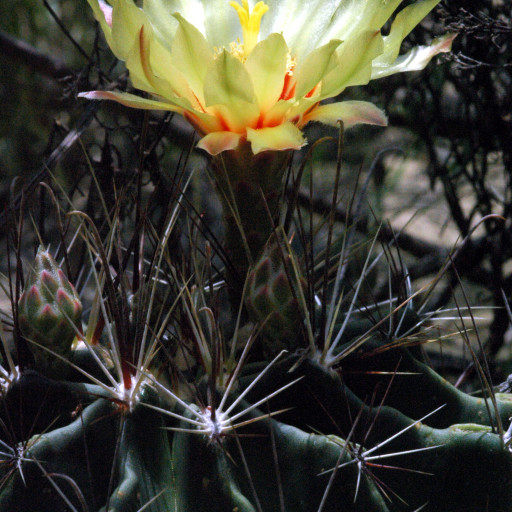
Known affectionately as the Strawberry Cactus for its bright red, berry-like fruits, Thelocactus setispinus is a Chihuahuan Desert native that brings a touch of wild Texas to your windowsill. This miniature barrel-shaped cactus is a favorite among collectors because it stays compact while producing massive, vibrant blooms that seem almost too large for its body. Its silhouette is defined by dramatic, hooked spines that tell the story of a plant perfectly adapted to surviving harsh, sun-drenched landscapes.
🔍 How to Identify
- 🌵 The Ribs: It typically features 13 distinct, thin ribs that often have a slightly wavy or "undulated" appearance rather than being perfectly straight.
- 🪝 The Spines: Look for long, central spines that curve sharply at the tip like a fishhook, surrounded by a starburst of smaller, needle-like radial spines.
- 🌼 The Bloom: It produces large, silky yellow flowers with a deep, contrasting maroon or crimson center, which emerge from the top of the plant during the warmth of summer.
🏡 In Your Garden
- ☀️ Sun Seekers: This cactus thrives on intense light; high exposure is the key to maintaining its tight, globular shape and triggering those stunning bi-color floral displays.
- 🪨 Mineral Richness: In the wild, it grows in rocky, calcareous soils, so it appreciates a gritty potting mix with extra pumice or limestone rather than rich, organic peat.
- 💧 Drought Discipline: It is highly susceptible to rot if kept damp. It prefers a "soak and dry" method where the soil turns completely bone-dry before you even consider reaching for the watering can.
⚠️ Safety & Toxicity
- 🛡️ Non-Toxic Status: This species is generally considered non-toxic to cats, dogs, and humans, making it a safe choice for pet-friendly households.
- 📌 Physical Hazard: While not poisonous, the "fish-hook" spines are incredibly sharp and designed to snag. They can cause painful punctures or skin irritation, so it should be kept out of reach of curious toddlers and playful pets.
✨ Fun Fact
Unlike many large barrel cacti that take decades to mature, the Strawberry Cactus is a "fast-tracker"—it can begin producing its signature yellow and red flowers when it is only a few years old and just a couple of inches wide!

Detailed Care Instructions
To grow Thelocactus setispinus, follow these steps:
- Obtaining the plant: Purchase Thelocactus setispinus plants from a reputable nursery or plant store. You can also obtain seeds or cuttings from established plants for propagation.
- Potting: Use a well-draining soil mix suited for cacti and succulents. Ensure the pot has proper drainage holes to prevent waterlogging.
- Planting: Gently plant the Thelocactus setispinus in the pot, making sure not to damage the delicate roots or stem. Place it at the same depth as it was in its original pot.
- Sunlight: Place the plant in a location that receives plenty of direct sunlight. Thelocactus setispinus thrives in full sun but can tolerate partial shade.
- Temperature: This cactus prefers warm temperatures, around 70-80°F (21-27°C) during the growing season. Protect it from frost and extreme cold temperatures.
- Watering: Water the plant sparingly, allowing the soil to mostly dry out between waterings. Overwatering can lead to root rot, so be cautious. Water more frequently during hot, dry weather.
- Fertilizer: Use a balanced cactus fertilizer diluted to half its recommended strength during the growing season (spring and summer). Apply every 4-6 weeks to promote healthy growth.
- Pruning: Thelocactus setispinus typically does not require pruning. However, you can remove any dead or decaying parts of the plant for aesthetics and improved health.
- Repotting: As the plant grows, it may outgrow its current pot. Repot it into a slightly larger container during the spring. Always use fresh, well-draining soil.
- Pests and diseases: Regularly inspect the plant for pests like mealybugs or spider mites. If detected, use an appropriate insecticidal soap or organic pesticide to eliminate them. Watch out for signs of rot or fungal infections, as these cacti are prone to them. In case of infection, treat it promptly with a suitable fungicide.
Remember that Thelocactus setispinus is a slow-growing plant. Be patient, provide it with proper care, and it will reward you with its unique, spiny beauty.

Place in a bright room that is sun drenched almost all day. Or directly in a south-facing window.

Thelocactus Setispinus plant requires proper watering for its growth and health. It is important to water it correctly to prevent any damage or overhydration. Here are some tips on how to water this plant without using its common names:
1. Soil: The first step is to examine the type of soil that your plant is growing in. The soil should be well-draining and not retain water for too long. This will help to prevent root rot and fungal problems.
2. Watering frequency: Thelocactus Setispinus plant should be watered moderately during the growing season. Watering once a week is sufficient, but you should always check the soil moisture before watering. Do not water if the soil is still moist.
3. Watering method: It is best to water this plant from the top using a watering can or a hose with a gentle spray. Avoid watering directly onto the base of the plant or stem as it can cause rotting. Instead, water around the plant in a circular motion, ensuring that the soil is evenly moist.
4. Amount of water: The amount of water you give to this plant depends on the size of the pot and the plant itself. Water until the soil is moist but not saturated. Overwatering can lead to root rot, while under watering can cause dehydration.
5. Water quality: Make sure to use clean, fresh water for watering. Avoid using hard water or water that has chemicals or salts in it, as it can damage the plant and affect its growth.
By following these tips, you can keep your Thelocactus Setispinus plant healthy and thriving.
To fertilize this plant, begin by selecting a quality fertilizer that is specifically formulated for cacti and succulents. Dilute the fertilizer to half strength and apply it to the soil during the plant's active growing season, typically in the spring and summer months. It is important to avoid applying fertilizer during the dormant winter months. Be sure to water the plant before and after fertilizing to ensure the nutrients are properly absorbed. Additionally, it is important to follow the manufacturer's instructions for application and frequency of use.
The Thelocactus Setispinus plant prefers well-draining soil that is gritty and sandy. It should not be planted in heavy, waterlogged soil. A mix of sand, perlite, and cactus potting soil is recommended. The soil should have a pH of 5.5 to 7.5. The plant also benefits from a layer of gravel or small rocks at the bottom of the pot to aid in drainage.
Thelocactus Setispinus is a cactus plant species that can be propagated through various methods such as seed propagation, offsets, and stem cuttings.
To propagate through seed propagation, collect seeds from mature fruits and allow them to air dry for few days. Then, plant them in well-draining soil mix and provide warmth and humidity. Germination usually takes few weeks to months, depending on the environmental conditions.
To propagate through offsets, wait until the plant forms small pups beside the main plant. Carefully separate these offsets and plant them in their own pots with well-draining soil mix. Water sparingly and provide some shade until they establish roots and start growing actively.
To propagate through stem cuttings, wait until the plant forms new shoots or branches. Gently cut off a section of the stem with a sharp, sterile knife. Allow the cut end to dry for a few days before planting it in a pot with well-draining soil mix. Keep the soil moist but not soaking wet and provide some shade until the cutting starts growing new roots and establishes itself.
Common pests of the miniature barrel cactus include Scale insect, mealybugs, spider mites. Make a habit of checking your miniature barrel cactus frequently for pests so that any infestations can be caught and managed early.








