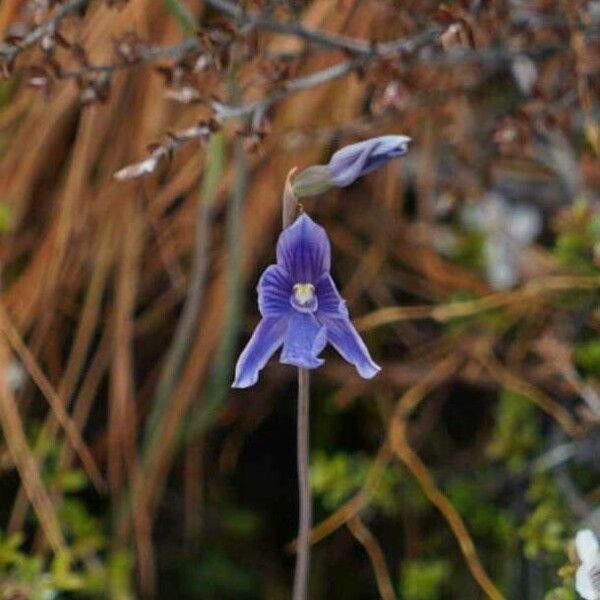
Plant Overview
Known as the Striped Sun Orchid, this vibrant blue beauty is the "introvert" of the orchid world. Native to the damp moorlands and bogs of Australia and New Zealand, it is famous for its moody personality—the flowers refuse to open unless the sun is shining brightly. It’s a favorite among hikers and naturalists who brave the wetlands to catch a glimpse of its electric blue stripes.
🔍 How to Identify
- 🌸 The Petals: Usually sky-blue to lilac, featuring very distinct, darker blue longitudinal veins (the "stripes") that run from the center to the tips.
- 🍃 The Leaf: It produces a single, thick, fleshy leaf at the base that is deeply channeled and looks similar to a blade of onion grass.
- 👑 The Column: The center of the flower features a unique "column" with a bright yellow, fleshy tip that looks almost like a tiny toothbrush or a crested helmet.
🏡 In Your Garden & Habitat
- 💧 Swamp Specialist: This isn't your typical garden orchid. In nature, it thrives in "wet feet" conditions, specifically in sphagnum moss bogs, peatlands, and high-altitude heaths where moisture is constant.
- 🍄 Hidden Partnerships: Like many wild orchids, Thelymitra cyanea relies on a symbiotic relationship with underground mycorrhizal fungi. Because it depends on these specific fungi for nutrients, it is notoriously difficult to cultivate at home and should never be dug up from the wild.
⚠️ Safety & Toxicity
- ✅ Status: Generally non-toxic.
- 🛡️ Ecological Safety: While it won't hurt your pets or children, this plant is often protected by law. The greatest "safety" concern is for the plant itself; it is highly sensitive to changes in water quality and soil compaction.
✨ Fun Fact
The name "Sun Orchid" is literal—if a cloud passes over and the temperature drops even slightly, the flower can begin to close within minutes. They are "solar-powered" beauties that require the warmth of the sun to activate the muscles in their petals!

Detailed Care Instructions

Place in a bright room that is sun drenched almost all day. Or directly in a south-facing window.

Some plants require more regular watering than others, which should be done every few days. It's critical to maintain the soil moist all of the time. The water requirements of the same plant placed in pots with varying sizes will differ. Because the water in the smaller pot evaporates faster than the water in the larger pot, it will require more watering. Regardless of pot size, the surface should constantly be maintained moist.







