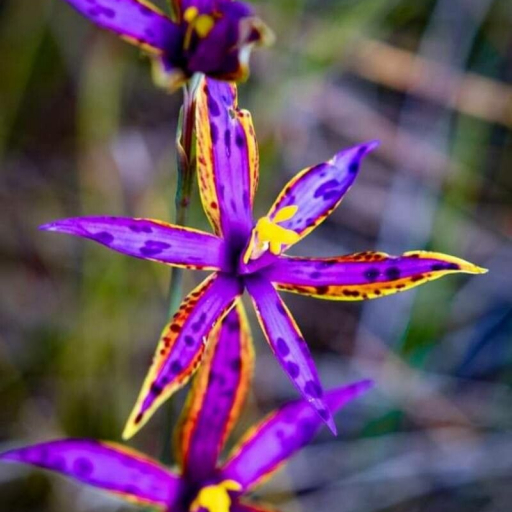
Plant Overview
Known as the Eastern Queen Orchid, this Australian native is a true royal of the "Sun Orchid" family. It is famously bashful, keeping its petals tightly curled unless the conditions are perfect—specifically, it requires bright, direct sunlight and warm temperatures to unfurl. Found primarily in the granite outcrops of Western Australia, it is a prized sight for hikers and botanists who happen to be in the right place on a sunny spring afternoon.
🔍 How to Identify
- 🎨 Metallic Petals: The flowers feature a stunning, almost iridescent blue or deep purple hue, often decorated with intricate dark spots or streaks.
- 🍃 Solitary Leaf: Like many terrestrial orchids, it grows a single, long, narrow leaf at the base that is ribbed and slightly fleshy.
- 📏 The Spike: It produces a tall, sturdy flower stalk (raceme) that can hold anywhere from 2 to 8 large, fragrant blossoms.
🏡 In Your Garden & Habitat
- ⛰️ Granite Lover: In the wild, these orchids are "specialists," thriving in the shallow, gritty soils found around granite rocks where moisture collects briefly during the winter.
- ☀️ The Sun Trigger: They are called "Sun Orchids" because they are thermally sensitive; if the day is cloudy or cold, the flowers will remain closed, protecting their delicate reproductive organs from the elements.
- 🌱 Root Sensitivity: These are incredibly difficult to grow in a standard home garden. They rely on a complex relationship with underground fungi (mycorrhizae) to survive, meaning they almost never survive being transplanted from the wild.
⚠️ Safety & Toxicity
- 🟢 Non-Toxic: The Eastern Queen Orchid is not known to be poisonous to humans, cats, or dogs.
- 🚫 Conservation Warning: Because they are rare and rely on specific soil fungi, you should never pick them or attempt to dig them up. In many regions, they are protected by law, and removing them usually results in the death of the plant.
✨ Fun Fact
Thelymitra species are "deceptive pollinators." They don't actually produce nectar! Instead, they use their brilliant colors and sweet scents to trick native bees into thinking there is a food reward, ensuring the bee moves pollen from one flower to the next for free.

Detailed Care Instructions
Thelymitra speciosa, commonly known as the "Blue Sun Orchid," is a perennial orchid native to Australia. Growing these orchids can be rewarding, but they require specific conditions to thrive. Here are some steps to help you grow Thelymitra speciosa successfully:
1. Choose the Right Location:
- Sunlight: Thelymitra speciosa thrives in full sun to partial shade. A spot that receives at least 6 hours of sunlight per day is ideal.
- Temperature: These orchids prefer mild temperatures. Protect them from frost, as they are not frost-tolerant.
2. Soil Requirements:
- Use a well-draining potting mix. A mix designed for orchids or a combination of peat, bark, and perlite can work well. The soil should retain some moisture but drain excess water effectively.
3. Watering:
- Keep the soil evenly moist, especially during the growing season (spring and summer). Avoid waterlogging, as this can lead to root rot.
- Reduce watering in the dormant season (fall and winter).
4. Fertilization:
- Use a balanced, diluted orchid fertilizer every 4-6 weeks during the growing season. Follow the recommended dosage on the fertilizer package.
- Avoid fertilizing during the dormant period.
5. Humidity:
- Maintain a moderate level of humidity around the plant, ideally between 50-70%. If growing indoors, you can use a humidity tray or a humidifier.
6. Repotting:
- Repot every 1-2 years to refresh the soil and check for any overcrowding or root issues.
- The best time to repot is in late winter or early spring before new growth starts.
7. Pest and Disease Management:
- Keep an eye out for common orchid pests such as aphids and scale. Use neem oil or insecticidal soap if infestations occur.
- Ensure good air circulation around your plants to prevent fungal issues.
8. Germination and Propagation:
- Thelymitra speciosa can be propagated from seeds or by division. Seeds require specific conditions and symbiotic fungi to germinate, which can be challenging for home growers. Hence, division of established plants is a more practical but labor-intensive method for propagation.
Additional Tips:
- Be patient, as orchids, including Thelymitra speciosa, may take time to establish and bloom.
- Since these are native to Australian ecosystems, consider mimicking their natural environment as closely as possible.
By following these guidelines, you can create suitable conditions for your Thelymitra speciosa to grow and thrive. Happy gardening!

Place in a bright room that is sun drenched almost all day. Or directly in a south-facing window.

To effectively water Thelymitra speciosa, consider the following guidelines:
1. Soil Moisture: Ensure the growing medium is well-draining. This species prefers consistently moist conditions but not waterlogged soil. You can check the moisture level by sticking your finger about an inch into the soil; it should feel slightly damp but not wet.
2. Watering Frequency: During the active growing season, which typically aligns with warmer months, water regularly, allowing the top layer of the soil to dry out slightly before the next watering. This may mean watering every few days to weekly, depending on environmental conditions such as temperature and humidity.
3. Water Quality: Use rainwater, distilled water, or leave tap water out for 24 hours to allow chlorine to dissipate. This helps to avoid any potential chemicals that could harm the plant.
4. Method of Watering: Water at the base of the plant rather than from above to prevent fungal issues and to ensure the roots receive adequate moisture. Avoid getting water on the foliage to minimize the risk of rot or disease.
5. Seasonal Adjustments: In the dormant period (usually cooler months), reduce watering significantly, allowing the medium to dry more between waterings. This mimics the natural conditions the plant would experience in its native habitat.
6. Potting and Drainage: Ensure that the pot has adequate drainage holes to prevent standing water. Using a potting mix that retains some moisture while allowing for drainage is crucial for optimal growth.
By following these guidelines, you can create a suitable watering routine that supports the health and growth of this plant.
Thelymitra speciosa requires careful attention when it comes to fertilization, as it thrives in well-balanced, nutrient-rich conditions typically found in its native environment. Here are the fertilizing instructions for this plant:
- Fertilizer Type: Use a balanced, water-soluble fertilizer with an equal ratio of nitrogen (N), phosphorus (P), and potassium (K). A formulation such as 10-10-10 or 20-20-20 can be suitable.
- Dilution: Always dilute the fertilizer to half the recommended strength to avoid root burn, especially since these plants can be sensitive.
- Frequency: Apply the diluted fertilizer every 4-6 weeks during the active growing season, which typically occurs in spring and summer.
- Watering: Ensure the soil is moist before applying fertilizer to prevent any potential damage to the roots. Watering after fertilization can help with absorption.
- Soil Type: If possible, use a well-draining potting mix that retains some moisture yet allows excess water to escape. This helps in preventing nutrient buildup and root rot.
- Fall and Winter Care: During the dormant period in fall and winter, refrain from fertilizing as the plant does not require additional nutrients during this time.
By following these guidelines, you can help ensure healthy growth and blooming of your Thelymitra speciosa.
Thelymitra speciosa thrives best in a well-draining soil mix that replicates its native habitat, which typically consists of sandy or rocky substrates. A suitable potting media for this plant would include:
- Organic Matter: Incorporate materials such as peat moss or well-rotted leaf litter to retain moisture while still allowing for aeration.
- Inert Materials: Use components like perlite or orchid bark to enhance drainage. This helps prevent root rot by ensuring that excess water can escape easily.
- Mineral Content: Adding coarse sand or horticultural grit can improve the soil's structure, promoting good drainage and mimicking the natural, mineral-rich conditions in which this species grows.
- pH Preference: Aim for a slightly acidic to neutral pH, typically around 6.0 to 7.0, to ensure optimal nutrient availability.
- Water Retention: While good drainage is crucial, the mix should still retain enough moisture to support the plant's growth during its active growing season.
A combination of these elements, adjusted to maintain the right moisture balance, will best support the health and vigor of Thelymitra speciosa. Regular monitoring of soil moisture and nutrient levels can further enhance growth and flowering performance.
Thelymitra speciosa, a fascinating member of the orchid family, can be propagated through several methods. Here are the steps for propagating this species:
1. Seed Propagation
- Collecting Seeds: After the flowering period, mature seed capsules should be collected when they turn brown and dry.
- Seed Preparation: The seeds should be extracted from the capsules and cleaned to remove any debris.
- Sowing Medium: Use a sterile, well-draining medium, such as orchid mix or a combination of sphagnum moss and perlite.
- Germination Conditions: Seeds should be sown on the surface of the medium, as they need light to germinate. Maintain a humid environment, possibly using a mini-greenhouse or plastic cover to retain moisture.
- Temperature and Light: Ideal conditions include temperatures around 20-25°C (68-77°F) with indirect light. Under these conditions, germination can occur within a few weeks to months.
- Transplanting: Once seedlings develop a few true leaves and are large enough to handle, they can be carefully transplanted into individual pots.
2. Division of Established Plants
- Timing: The best time to divide is during the dormant period, typically in late summer to early autumn.
- Plant Removal: Carefully remove the parent plant from its pot, taking care not to damage the roots.
- Division: Using a clean, sharp knife, divide the root system into smaller sections, ensuring each division has a healthy root mass and at least one growth.
- Replanting: Pot each section in a suitable orchid mix or medium. Ensure that the division is planted at the same depth it was growing previously.
- Aftercare: Water the divisions lightly and place them in a shaded area to prevent stress until they establish in their new pots.
3. Tissue Culture (Advanced Method)
- Explants Preparation: Take green tissue from healthy, disease-free plants, ideally younger shoots or leaf sections.
- Sterilization: Treat the explants with a sterilizing solution (e.g., bleach solution) to minimize contamination.
- Culture Medium: Place the explants on a nutrient agar medium containing growth hormones suitable for orchids.
- Incubation: Store the culture in a controlled environment with appropriate temperature and light conditions.
- Acclimatization: Once the shoots and roots develop, transfer the young plants to a potting medium for acclimatization.
General Tips
- Temperature and Humidity: Ensure appropriate temperature and humidity levels throughout the propagation process, as these plants thrive in conditions similar to their native habitats.
- Pest and Disease Management: Monitor for signs of pests or diseases during propagation, and take necessary actions if identified.
- Patience: Propagation can be a slow process, especially with seed germination. Be patient and provide consistent care.
Following these methods should help you propagate Thelymitra speciosa effectively.








