Plant Overview
Often called Cacau-jacaré (Alligator Cacao) or Macambillo, this wild relative of the commercial chocolate tree is a hidden gem of the Amazon basin. It earns its reptilian nickname from the thick, warty, and textured rind of its fruit, which looks strikingly like the skin of a caiman. While not as famous as common cacao, it plays a vital role in rainforest ecosystems and offers a sweet, aromatic pulp that many find superior to traditional chocolate fruit.
🔍 How to Identify
- 🐊 The "Alligator" Pod: The most distinct feature is the golden-brown fruit pods, which are covered in a rugged, bumpy, and woody texture rather than the smooth or lightly ribbed skin of standard cacao.
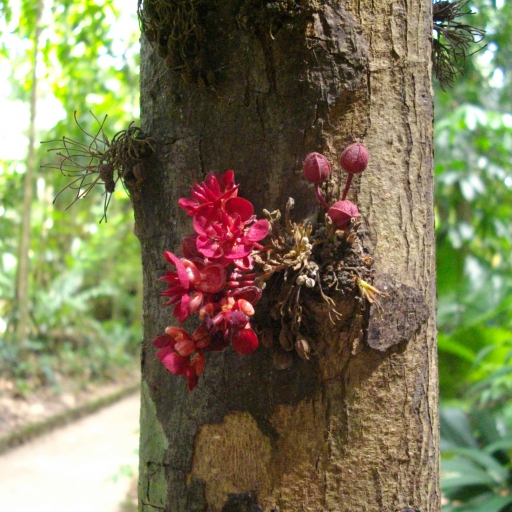
- 🌸 Trunk-Blooming Flowers: It exhibits "cauliflory," a fascinating trait where clusters of deep red or maroon flowers burst directly from the main trunk and older branches, rather than on new green stems.
- 🍃 Magnificent Leaves: The leaves are large, oblong, and leathery, often reaching over a foot in length, providing a dense, lush green backdrop that screams "tropical jungle."
🏡 In Your Garden
- ☁️ Humidity Enthusiast: This plant is an obligate tropical species; it requires high humidity (above 70%) to thrive. If the air is too dry, the large leaves will quickly develop brown, "burnt" edges.
- 🌳 The Understory Life: Because it evolved under the dense Amazonian canopy, it hates direct, scorching sunlight. It performs best in filtered light or partial shade, making it a great candidate for a large, heated conservatory or a shaded tropical backyard.
⚠️ Safety & Toxicity
- 😋 Safe for Humans: The creamy white pulp surrounding the seeds is non-toxic and prized for its sweet, floral flavor. It is frequently eaten raw or used to make refreshing juices.
- 🐾 Pet Warning: Like all members of the Theobroma genus, the seeds contain theobromine. This compound is a stimulant that is highly toxic to dogs, cats, and horses. Ensure fallen fruits are kept out of reach of roaming pets.
✨ Fun Fact
While we use its cousin to make dark chocolate, the seeds of the Alligator Cacao have a much higher fat content. In some parts of the Amazon, the seeds are pressed to create a fragrant, high-quality vegetable butter used for both cooking and traditional skin treatments!

Detailed Care Instructions
To grow Theobroma Speciosum, also known as Cupuaçu, you can follow these steps:
- Purchase seeds or seedlings from a reputable nursery or online supplier. Cupuaçu is native to the Amazon rainforest, so ensuring that you have a quality source is crucial.
- Choose an appropriate planting location. Theobroma Speciosum thrives in tropical or subtropical regions with high humidity and ample rainfall. It requires partial shade and protection from strong winds.
- Prepare the soil. Cupuaçu prefers well-draining soil that is rich in organic matter. In a garden bed, work compost or well-rotted manure into the soil. If planting in a pot, use a combination of potting soil and compost.
- Germinate the seeds or plant the seedlings. If starting from seeds, place them in a container filled with damp vermiculite or seed-starting mix. Keep the container in a warm location (around 80°F/27°C) and maintain consistent moisture until the seeds germinate. Once they have sprouted, transfer the seedlings to individual pots or a nursery bed when they reach about 4-6 inches (10-15 cm) in height.
- Plant the seedlings outdoors or in larger containers once they have developed several sets of leaves. Space the plants at least 10-15 feet (3-4.5 meters) apart to allow for their growth.
- Water regularly. Theobroma Speciosum enjoys moist conditions, so water the plants consistently, especially during dry periods. Avoid overwatering, as this can lead to root rot.
- Mulch around the base of the plant to retain moisture and suppress weed growth.
- Prune the plant as needed to maintain its shape and remove any dead or diseased branches.
- Fertilize regularly. Cupuaçu benefits from regular applications of balanced, slow-release fertilizer or organic matter such as compost. Follow the instructions on the fertilizer packaging to determine the appropriate dosage.
- Protect the plants from extreme cold temperatures. Theobroma Speciosum is not frost-tolerant, so if you live in a colder climate, consider growing the plant in a greenhouse where you can control the temperature.
Remember that growing Theobroma Speciosum can be challenging, as it requires specific conditions and care. Patience and attention to its needs are important for a successful cultivation.
The Theobroma Speciosum plant should be watered thoroughly and deeply, allowing the soil to become slightly dry between waterings. It is important not to overwater the plant as this can lead to root rot. When watering, it is best to water at the base of the plant rather than overhead, as this can cause damage to the leaves and flowers. The plant prefers to be kept moist, but not waterlogged. It is also important to avoid letting the plant sit in standing water as this can cause the roots to suffocate. Overall, the watering schedule will depend on the specific environment and conditions that the plant is in, but it is best to monitor the soil moisture regularly and adjust the watering frequency accordingly.
To fertilize Theobroma Speciosum, you must provide it with a balanced, water-soluble fertilizer that is high in nitrogen, phosphorus, and potassium. Begin fertilizing in the spring and continue every two weeks throughout the growing season. During the winter, reduce fertilizing to once a month. Dilute the fertilizer in water according to the manufacturer's instructions and apply it to the soil around the base of the plant. Be careful not to get fertilizer on the leaves or stem, as this can cause damage. Water the plant thoroughly after fertilizing.
The soil type recommended for Theobroma Speciosum plant is a well-draining soil that is rich in organic matter. The soil pH should be slightly acidic, ranging from 5.5 to 6.5. It is important to ensure that the soil is not waterlogged and is able to retain moisture without becoming too damp. To achieve this, it is recommended to mix the soil with sand and perlite to improve drainage. The plant prefers a loose, loamy soil that provides good aeration to the roots, which can be achieved by adding peat moss or compost. Theobroma Speciosum plant also requires regular fertilization during the growing season, which can be provided by using a balanced fertilizer rich in nitrogen, phosphorus, and potassium. Additionally, the plant prefers a warm and humid environment with bright, indirect sunlight.
The propagation of this plant can be done through seed sowing or stem cuttings. When using seeds, they should be soaked in water for at least 24 hours before planting. The seeds should be sown in a well-draining potting mix and covered with a thin layer of soil. The pot should be kept in a warm, humid environment and the soil should be kept moist, but not waterlogged. The seeds should germinate within 2-4 weeks.
When using stem cuttings, select a healthy stem and cut a 4-6 inch length. Remove the lower leaves and dip the cut end in rooting hormone. Plant the cutting in a well-draining potting mix and cover with a plastic bag to create a humid environment. The cutting should root within 2-3 weeks.
Once the seedlings or rooted cuttings have established themselves, they can be transplanted into individual pots filled with a well-draining potting mix. They should be placed in a brightly lit area but protected from direct sunlight. The soil should be kept moist but not waterlogged. As the plant grows, it can be gradually acclimated to more sunlight and eventually planted outside in a shaded area with well-draining soil.








