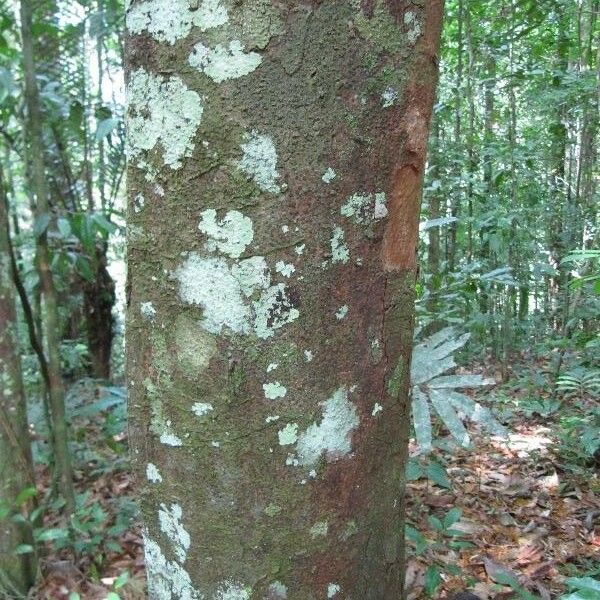
Plant Overview
Known as the Cupuí, Theobroma subincanum is a charismatic wild cousin of the famous Cacao tree. Hailing from the deep humid forests of the Amazon, this tree is a favorite among indigenous communities for its refreshing, aromatic fruit pulp. While it hasn’t reached the global fame of chocolate, it remains a vital piece of the rainforest's "edible mosaic," often referred to as a bridge between wild nature and tropical permaculture.
🔍 How to Identify
- 🍃 The Foliage: Large, leathery leaves that are dark green on top and often feature a soft, brownish-grey "felt" underneath, giving them a dusty appearance.
- 🍫 The Pods: The fruit is smaller than a standard Cacao pod, typically ellipsoid or egg-shaped, covered in a dense layer of rusty-orange or yellowish-brown fuzz.
- 🌸 The Blooms: It exhibits "cauliflory," meaning the small, star-shaped crimson flowers grow directly from the trunk and main branches rather than the tips of the twigs.
🏡 In Your Garden
- ☁️ Microclimate Needs: This is a true "understory" tree. It thrives in high humidity (above 70%) and filtered light. In a home or greenhouse setting, it must be protected from dry drafts and direct, scorching midday sun.
- 🌱 Root Sensitivity: Like many Amazonian species, it develops a sensitive taproot system. It prefers deep, acidic, organic-rich soil and strongly dislikes being moved once it has established itself in a pot or the ground.
⚠️ Safety & Toxicity
- ✅ Status: Non-toxic and edible for humans.
- 🐾 Pet Warning: While the white fruit pulp is delicious and safe for us, the seeds contain theobromine (the same compound found in chocolate). This is highly toxic to dogs, cats, and horses. Always ensure pets cannot chew on fallen pods or seeds.
✨ Fun Fact
The genus name Theobroma literally translates from Greek as "Food of the Gods." While its cousin gives us chocolate, the Cupuí is often preferred by locals for making juices because its pulp is significantly more fragrant and acidic, tasting like a tropical mix of pineapple and melon!

Detailed Care Instructions
To grow Theobroma subincanum, also known as White cacao, you can follow these steps:
- Climate and Location: White cacao plants thrive in tropical and subtropical climates with temperatures consistently between 50-85°F (10-29°C). Find a suitable location with partial shade or filtered sunlight.
- Soil Requirements: The soil should be well-draining, rich in organic matter, and have a pH range of 6.0-7.0. If your soil is heavy clay or sandy, amend it with organic matter like compost or well-rotted manure.
- Planting: Obtain healthy White cacao seedlings or seeds from a reputable nursery or supplier. Dig a hole twice as wide and as deep as the root ball or seed. Place the plant or seed in the hole and backfill with soil, ensuring it is planted at the same level it was previously.
- Watering: White cacao plants require regular watering, especially during dry periods. Keep the soil consistently moist but not waterlogged. Mulching around the plant can help retain soil moisture.
- Fertilization: Use a balanced organic fertilizer with higher nitrogen content during the growing season (spring and summer). Follow the manufacturer's instructions for application rates. Avoid over-fertilization as it may harm the plant.
- Pruning: Regular pruning can help shape the plant, remove dead or damaged branches, and encourage better airflow. Prune after harvest to control the height and width of the plant and promote bushier growth.
- Pests and Diseases: White cacao plants may be vulnerable to pests such as aphids, mealybugs, and caterpillars. Check regularly and treat with organic pest control methods if needed. Fungal diseases like black pod rot can be prevented by maintaining good airflow, avoiding over-watering, and removing infected parts.
- Harvesting: Theobroma subincanum produces small white cacao beans with a sweet flavor. Harvesting time can vary, but it is usually done once the fruits turn yellow or orange. Cut the fruits from the tree and allow them to ferment and dry before extracting the seeds.
It's important to note that White cacao plants can take several years to produce fruit, so patience is key. Additionally, ensure you are obtaining the plant material legally and following any regulations on its cultivation in your area.

Place in a window with dappled sun or a spot in the middle of a room. Or directly in a window facing west or east.

To effectively water Theobroma Subincanum plants, follow these guidelines:
1. Understand the water needs: Research the specific water requirements of Theobroma Subincanum plants. Consider factors such as the preferred moisture levels, humidity, and frequency of watering.
2. Use suitable watering methods: Choose appropriate tools to water the plant. Options may include a watering can, hose with a spray nozzle, or a drip irrigation system, depending on the plant's size and preference.
3. Assess soil moisture: Before watering, check the moisture content of the soil. Insert your finger approximately 2-3 inches into the soil near the plant's base. If it feels dry at this depth, it may be time for watering. However, if the soil is still slightly damp, you can postpone watering for a while.
4. Water at the root zone: Rather than watering the foliage or flowers, focus on saturating the soil around the roots. Direct the water flow near the base of the plant, ensuring that it reaches the root zone where moisture is essential for absorption.
5. Ensure proper drainage: Theobroma Subincanum plants typically prefer well-draining soil. If your plant is potted, ensure that the container has drainage holes to prevent excess water from pooling. This allows the roots to breathe and avoids waterlogging, which can be detrimental to the plant's health.
6. Monitor consistently: Observe the plant closely and monitor its response to watering. Signs of underwatering include wilting leaves, yellowing, or drying. On the other hand, overwatering can lead to root rot, mold, or fungal diseases. Adjust your watering routine accordingly based on the plant's needs and environmental conditions.
7. Water at appropriate times: The time of day when you water your Theobroma Subincanum plant is crucial. It is generally best to water in the early morning or evening when temperatures are cooler. This allows the plant to absorb water efficiently without the risk of excessive evaporation.
8. Consider supplemental humidity: Depending on the plant's natural habitat, it may benefit from additional humidity. Placing a tray filled with water near the plant or using a humidifier can create a more favorable environment, especially in dry climates or heated indoor spaces.
Remember that different plant species within the Theobroma Subincanum genus may have varying watering requirements. Therefore, it is essential to research and adapt your approach accordingly to promote optimal growth and health.
To fertilize Theobroma Subincanum plant, apply a balanced slow-release fertilizer once every six months. Use a granular fertilizer with equal ratios of nitrogen, phosphorus, and potassium (e.g., 10-10-10). Before application, water the plant thoroughly to prevent root burn. Sprinkle the fertilizer around the base of the plant, avoiding contact with the stems or leaves. Gently mix the granules into the top layer of soil, then water the plant again to help the nutrients penetrate the root zone. Monitor the plant's growth and adjust the fertilization schedule accordingly to ensure healthy and optimal growth.
The recommended soil type for Theobroma Subincanum is a well-draining, slightly acidic and nutrient-rich soil. It should have good water retention capacity while allowing excess water to drain away to prevent waterlogging. The soil should be loose and friable, allowing roots to penetrate easily.
To create an ideal soil mixture for this plant, you can combine equal parts of organic matter-rich soil, such as compost or leaf mold, and well-draining materials like perlite or coarse sand. This combination helps to improve soil aeration, drainage, and moisture-holding capacity.
The pH level of the soil should ideally range from slightly acidic to mildly acidic, around 5.5 to 6.5. You can monitor and adjust the pH level using a soil pH testing kit and, if necessary, make amendments with organic matter or specially formulated acidic soil additives.
It is important to note that Theobroma Subincanum prefers a soil with good fertility, enriched with organic matter. This can be achieved by adding well-decomposed compost or aged manure to the soil before planting. Organic matter helps to replenish essential nutrients, improves soil structure, and encourages beneficial microorganisms.
Regularly mulching around the base of the plant with organic materials like compost or wood chips can help to maintain soil moisture, suppress weed growth, and provide gradual nutrient release as it decomposes.
Overall, maintaining a well-draining, slightly acidic, and nutrient-rich soil will provide a healthy and optimal growing environment for Theobroma Subincanum, supporting its growth, development, and overall vigor.
The propagation of Theobroma subincanum can be done through various methods, including seed propagation and vegetative propagation.
- Seed Propagation:
- Start by obtaining fresh ripe seeds from the fruit of a mature Theobroma subincanum plant.
- Clean the seeds thoroughly and remove any pulp or flesh from them.
- Prepare a well-draining potting mix using a mixture of peat, perlite, and sand.
- Fill small pots or seedling trays with the potting mix.
- Sow the seeds on the surface of the potting mix and lightly cover them with a thin layer of the mix, ensuring they are not buried too deep.
- Water the pots gently with a mist sprayer to avoid displacing the seeds.
- Place the pots in a warm and humid environment, ideally at a temperature of 75-85°F (24-29°C).
- Keep the soil consistently moist, but not waterlogged, by misting regularly or using a humidity dome.
- Germination usually takes around 1-3 months. Once the seedlings have developed strong roots and leaves, they can be transplanted into individual pots or containers.
- Start by obtaining fresh ripe seeds from the fruit of a mature Theobroma subincanum plant.
- Vegetative Propagation:
- Propagating Theobroma subincanum through vegetative means can be done using techniques such as stem cuttings or air layering.
- For stem cuttings, select a healthy and mature stem. Cut a section of the stem, around 4-6 inches long, just below a leaf node.
- Remove the lower leaves from the cutting, leaving 2-3 leaves at the top intact.
- Dip the cut end of the stem in a rooting hormone powder to encourage root development.
- Prepare a well-draining potting mix similar to the one used for seed propagation.
- Insert the cut end of the stem into the potting mix, ensuring it is firmly positioned.
- Water the cutting thoroughly and place it in a warm and humid environment with bright, indirect light.
- Mist the cutting regularly to maintain humidity and prevent the soil from drying out.
- Roots should start developing within a few weeks. Once the cutting has a well-established root system, it can be transplanted to a larger pot or directly into the ground.
It is worth noting that Theobroma subincanum plants may require specialized care and optimal environmental conditions to thrive. It is recommended to conduct further research or consult with local agricultural experts for more specific and detailed guidance.
- Propagating Theobroma subincanum through vegetative means can be done using techniques such as stem cuttings or air layering.








