Plant Overview
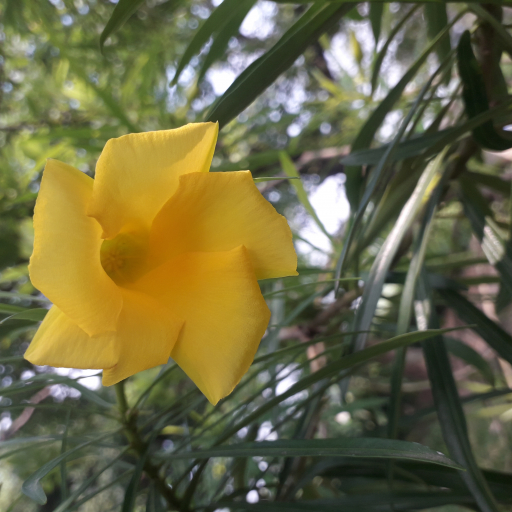
Often called the "Yellow Oleander" or the "Lucky Nut," Thevetia neriifolia is a shimmering tropical gem that seems to capture the sun in its petals. Native to the Americas but beloved in warm climates worldwide, this large shrub or small tree is prized for its year-round golden blooms and elegant, willow-like silhouette. While it looks like a friendly garden inhabitant, it is a plant that demands respect due to its potent chemical defenses.
🔍 How to Identify
- 🎺 Trumpet Blooms: Look for vibrant yellow (or occasionally apricot) flowers shaped like narrow funnels with petals that overlap in a delicate spiral.
- 🍃 Willow-Like Foliage: The leaves are long, very narrow, and glossy, resembling those of a willow tree, which gives the plant a fine, airy texture.
- 💎 The "Lucky Nut": It produces green, angular, rhomboid-shaped fruits that eventually turn black; inside is a hard stone that contains the infamous seeds.
🏡 In Your Garden
- ☀️ The Sun Worshiper: To get the most "glow" out of your Yellow Oleander, plant it in the brightest spot available. It thrives in full sun and will become sparse and "leggy" if forced to live in the shade.
- ✂️ Pruning with Care: It handles pruning exceptionally well and can be trained into a tidy single-stemmed tree or a dense privacy hedge. However, you must always wear gloves when trimming, as the plant bleeds a thick, milky white sap that is both sticky and irritating.
- 🪴 Soil & Resilience: This plant is a survivor. It is highly salt-tolerant—making it perfect for coastal gardens—and once established, it can handle significant dry spells without drooping.
⚠️ Safety & Toxicity
- 🚫 Extremely Toxic: WARNING. Every single part of this plant—from the roots to the nectar—is highly poisonous if ingested.
- ❤️ Heart Hazard: It contains cardiac glycosides, chemicals that can cause serious heart rhythm issues. It is vital to keep this plant away from areas where pets or young children play, as even a small amount of the seeds can be fatal.
- 🧤 Contact Dermatitis: The milky sap can cause skin rashes or eye irritation. Always wash your tools and hands thoroughly after handling the plant.
✨ Fun Fact
The common name "Lucky Nut" comes from a tradition where people would carry the dried pits of the fruit in their pockets as charms or talismans to bring good fortune—though, given their toxicity, they are anything but "lucky" if handled carelessly!

Detailed Care Instructions
To grow Thevetia Neriifolia plant, also known as yellow oleander, follow these steps:
- Choose a suitable location: Yellow oleander thrives in warm climates, so select a sunny spot in your garden or balcony. Ensure the soil is well-draining and slightly acidic.
- Prepare the soil: Loosen the soil and remove any weeds or debris. If the soil is heavy or clay-like, add organic matter like compost to improve drainage and fertility.
- Propagation: Thevetia Neriifolia can be propagated through seeds, stem cuttings, or air layering. If using seeds, soak them in water for 24 hours before planting.
- Planting: Dig a hole slightly larger than the root ball of the plant. Place the plant in the hole, making sure it sits at the same level as it was in the pot. Backfill the hole with soil and gently pat it down.
- Watering: After planting, thoroughly water the plant to settle the roots. Keep the soil consistently moist but not waterlogged. Allow the top 1-2 inches of soil to dry between waterings.
- Fertilizer: Yellow oleander plants benefit from regular feeding during the growing season. Use a balanced fertilizer designed for flowering plants, following the recommended dosage on the product label.
- Pruning and maintenance: Prune the plant to maintain its shape and remove any dead or diseased branches. Thevetia Neriifolia is a relatively low-maintenance plant, but occasional fertilizing and pruning will enhance its growth and appearance.
- Pest and disease control: Keep an eye out for common pests like aphids, caterpillars, or whiteflies. Treat infestations promptly with organic insecticides or natural remedies. Yellow oleander is generally resistant to most diseases.
- Protection from frost: If you live in a region with cold winters, provide frost protection for Thevetia Neriifolia, as it is sensitive to freezing temperatures. Cover the plant with a frost cloth or move it indoors during winter.
- Safety precautions: Be cautious while handling yellow oleander, as all parts of the plant are poisonous if ingested. Keep it out of reach of children and pets.
Remember to research and follow any specific care instructions for your particular cultivar of Thevetia Neriifolia.
The Thevetia Neriifolia plant should be watered deeply but infrequently, allowing the soil to dry out slightly between waterings. When watering, the soil should be soaked until the water has penetrated the root zone. Overwatering can lead to root rot, so it's important to ensure that excess water drains away from the plant. The plant should be watered more often in the summer months and less frequently in the winter. It's also important to avoid getting water on the leaves as this can promote fungal growth.
To properly fertilize this plant, you should first ensure it is planted in well-draining soil. You can fertilize it every two weeks during the active growing season, using a balanced fertilizer with equal parts nitrogen, phosphorus, and potassium. Be sure to dilute the fertilizer to half strength to avoid burning the plant's roots. Water the plant thoroughly after fertilizing to help the nutrients penetrate the soil. Avoid fertilizing during the dormant season or when the plant is experiencing stress, as this can do more harm than good.
The optimal soil type for Thevetia Neriifolia plant should be well-draining and loose in texture. It is recommended to use a soil mix that consists of a balanced blend of sand, silt, and clay. The pH of the soil should be slightly acidic to neutral and should range from 6.0 to 7.5. The soil should be rich in organic matter and nutrients such as nitrogen, phosphorus, and potassium to promote healthy growth of the plant. A good quality soil mix should have good water retention capacity to ensure that the plant's roots are always moist but not waterlogged. It is also recommended to add some perlite or vermiculite to the soil mix to improve its porosity and ensure good aeration.
The propagation of this plant can be done using seeds or stem cuttings. For seed propagation, the seeds should be collected from mature fruits and sown in a seedbed or individual pots filled with well-draining soil mix. The seeds should be covered lightly with soil and watered. They should be kept in a warm, bright location and watered regularly until germination occurs, which can take around 2-3 weeks.
For stem cutting propagation, healthy stems should be selected from the parent plant and cut into 4-6 inch lengths with a sharp and sterile knife or pruners. The cuttings should be treated with a rooting hormone to encourage root growth. They should be planted in well-draining soil mix and placed in a warm and bright location, while ensuring that the soil remains moist. The cuttings should develop roots in around 3-4 weeks, after which they can be transplanted into larger pots or directly into the garden.
In both methods of propagation, care should be taken to ensure that the young plants are protected from harsh weather conditions and pests. They should be watered regularly and fertilized with a balanced fertilizer to promote healthy growth. As the plants mature, they should be pruned to maintain their shape and size.








