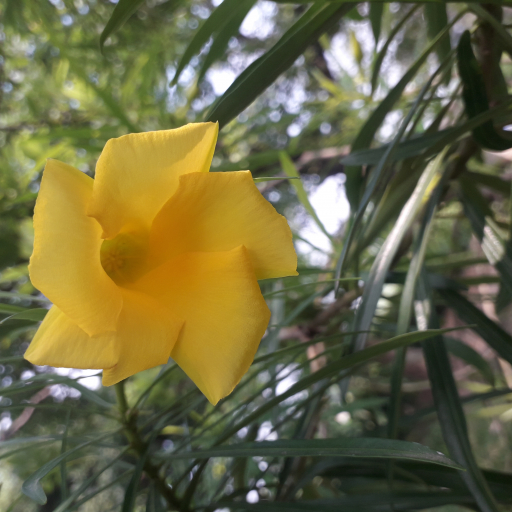
Plant Overview
Often called the "Yellow Oleander" or the "Lucky Nut" tree, Thevetia peruviana is a sun-drenched tropical beauty originally hailing from Mexico and Central America. With its delicate, funnel-shaped blossoms and graceful, willow-like foliage, it is a popular ornamental choice in warm climates. However, beneath its elegant exterior lies a potent chemistry that has earned it a reputation for being as dangerous as it is beautiful.
🔍 How to Identify
- 🌿 The Foliage: Long, narrow, sword-shaped leaves that are glossy green on top. They look remarkably similar to the leaves of a willow tree, giving the plant a soft, feathery texture.
- 🎺 The Flowers: Bright yellow or sometimes apricot-orange blossoms shaped like long trumpets or funnels. They usually have a subtle, sweet fragrance that attracts various pollinators.
- 🥜 The Fruit: Green, angular pods that transition to a deep black as they ripen. Inside sits a large, hard seed—the namesake "Lucky Nut"—which is surprisingly heavy.
🏡 In Your Garden
- ☀️ Sun Worshiper: This plant lives for the heat. It requires full sun to produce its signature heavy clusters of flowers and will often become leggy or sparse if kept in the shade.
- 🏜️ Drought Resilience: Once its root system is established, it is incredibly hardy. It can survive long periods without rain, making it an excellent choice for xeriscaping or low-maintenance tropical gardens.
- ✂️ Pruning Habits: It is a fast grower that can be trained as a large shrub or a small tree. When pruning to maintain its shape, always wear protective gear to avoid contact with its sticky white latex.
⚠️ Safety & Toxicity
- 🚫 Extreme Toxicity: WARNING. All parts of this plant—the leaves, flowers, seeds, and sap—contain cardiac glycosides. If ingested, it can cause serious heart rhythm issues and is potentially fatal.
- 🐾 Pets & Children: This is not a plant for a yard where pets chew on sticks or small children play unsupervised. Even the smoke from burning the wood can be hazardous to breathe.
- 🧤 Skin Irritant: The milky white sap can cause significant skin irritation or "contact dermatitis" for many people. Always wash your hands thoroughly after handling.
✨ Fun Fact
In some cultures, despite their high toxicity, the dried "Lucky Nuts" are used to create traditional musical instruments. They are often strung together to make "seed rattles" or ankle bells used by dancers to provide a rhythmic, percussive clack during performances.

Detailed Care Instructions
To grow Thevetia Peruviana, also known as yellow oleander or lucky nut, follow these steps:
- Choose a suitable location: The plant requires full sun, so select a spot in your garden or balcony that receives at least 6-8 hours of direct sunlight each day.
- Prepare the soil: Thevetia Peruviana prefers well-draining soil. If your soil is heavy or clay-like, consider adding some sand or organic matter to improve drainage.
- Propagation: You can grow Thevetia Peruviana from seeds, stem cuttings, or by air layering. Seeding is the most common method. Just sow the seeds about half an inch deep in the soil.
- Watering: Water the plant regularly, but do not overwater it as it can cause root rot. Allow the top layer of soil to dry out slightly between waterings. During hot summers, you may need to water more frequently.
- Fertilizing: Thevetia Peruviana benefits from regular feeding. Use a balanced, slow-release fertilizer or a liquid fertilizer formulated for flowering plants. Follow the instructions on the fertilizer package for application rates and frequency.
- Pruning: Pruning is not necessary for Thevetia Peruviana, but removing dead or damaged branches can help maintain a tidy appearance. Trim the plant after the flowering season to encourage new growth.
- Pests and diseases: The yellow oleander is generally pest and disease resistant. However, keep an eye out for common garden pests such as aphids, mealybugs, or spider mites. Treat any infestations as soon as you notice them to prevent damage to the plant.
- Protection from frost: Thevetia Peruviana is sensitive to frost, so if you live in a region with cold winters, consider growing it in a container that you can bring indoors during frosty weather.
Remember, Thevetia Peruviana contains toxic compounds, so it is important to keep it away from children and pets. Avoid ingesting any part of the plant and wear gloves while handling it.

Place in a bright room that is sun drenched almost all day. Or directly in a south-facing window.

To water this plant, wait until the top layer of soil is dry to touch and then water it thoroughly, making sure to saturate the soil. Make sure not to overwater the plant, as this can lead to root rot. Allow excess water to drain from the bottom of the pot, and avoid letting the plant sit in standing water. In the winter, reduce watering frequency as the plant's growth slows down.
To fertilize this plant, apply a balanced fertilizer with similar amounts of nitrogen, phosphorus, and potassium in the ratio of 10-10-10. Apply the fertilizer once a month during the growing season, from spring to fall. Water the plant thoroughly before and after fertilizing to prevent root burn. Avoid fertilizing during winter or when the plant is dormant. Always follow the fertilizer package instructions and use caution when handling fertilizers.
The best soil for Thevetia Peruviana plant should be well-draining and contain a mixture of organic matter and sand. It should have a pH range between 6.0 and 7.0 and should be nutrient-rich. Avoid heavy clay soils that do not drain well as they may lead to root rot in Thevetia Peruviana plant. The soil should not be too acidic or too alkaline. You can also add peat moss or perlite to the soil to aid with drainage. It is important to ensure that the soil is moist but not waterlogged as this can cause root rot. Thevetia Peruviana plant thrives in full sunlight, so ensure that the plant is placed in an area that receives adequate sunlight.
The process of propagating this plant involves taking stem cuttings from a mature plant. It is important to choose a healthy and vigorous stem that is at least 4-6 inches long and has a few leaves attached to it.
The next step is to remove the lower leaves of the stem, leaving only a few at the top. This will reduce the surface area for moisture loss and redirect energy to root development. Using a sharp and sterilized cutting tool, slice the bottom at a 45-degree angle. This will increase the surface area for rooting and enhance water uptake.
Dip the cut end of the stem in rooting hormone powder, tapping off excess powder. The hormone will speed up the rooting process and increase the success rate. Place the stem cutting in a pot filled with well-draining soil and cover with a plastic bag to create a humid environment. Keep the soil lightly moist but not too wet to prevent rotting.
Place the pot in a warm and bright location that receives indirect sunlight, such as a windowsill or greenhouse. The root development can take 2-4 weeks, depending on the temperature and moisture levels. Once the new roots are visible at the bottom of the pot and new growth appears at the top, you can remove the plastic bag and transplant the new plant into a larger container or garden bed.
It is important to provide good care to the new plant to ensure healthy growth and development. Water regularly but avoid overwatering, fertilize every few weeks with a balanced fertilizer, and provide adequate sunshine and humidity. With proper care, the newly propagated Thevetia Peruviana plant will grow into a beautiful and vibrant addition to your garden.
Common pests of the yellow oleander include Scale insect, mealybugs, spider mites, aphids, larvae. Make a habit of checking your yellow oleander frequently for pests so that any infestations can be caught and managed early.








