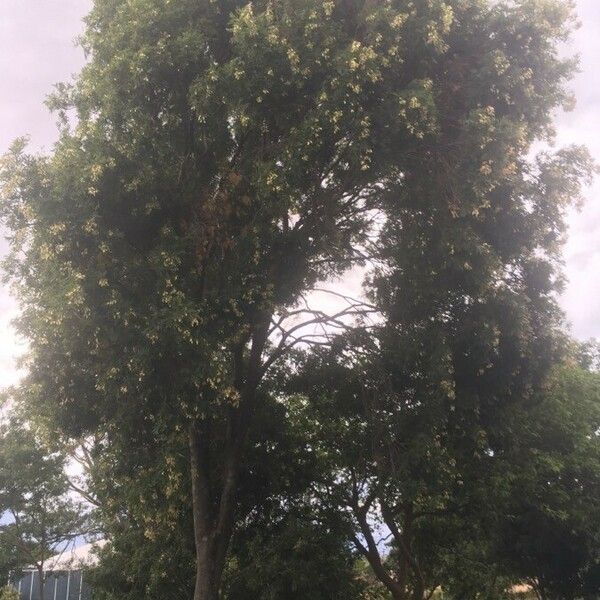
Plant Overview
Known in its native Mexico and Central America as "Cola de Pavo" (Turkey Tail) due to its feathery, fanned-out foliage, Thouinidium decandrum is an elegant member of the Soapberry family. This slender tree or large shrub is a master of the tropical dry forest, offering a delicate, airy silhouette that belies its hardy, sun-loving nature. It is often celebrated for its "helicopter" seeds that dance through the wind during the dry season.
🔍 How to Identify
- 🍃 Feathery Foliage: The leaves are pinnately compound, meaning they consist of several pairs of narrow, pointed leaflets that look like green feathers or a turkey's tail.
- 🌸 Frothy Blooms: It produces large, upright clusters (panicles) of tiny, creamy-white flowers that look like a light dusting of sea foam against the green leaves.
- 🚁 Winged Samaras: The most distinct feature is the fruit—a reddish-brown winged seed (samara) that looks remarkably like a single-winged maple seed.
🏡 In Your Garden
- ☀️ Drought Warrior: This plant is exceptionally well-suited for xeriscaping or "dry gardens." Once its root system is established, it can handle long periods without rain, making it a resilient choice for hot climates.
- 🪴 Drainage is Key: Because it is native to rocky slopes and dry forests, it "breathes" through its roots. It will quickly decline if planted in heavy, water-logged clay; always aim for a sandy or gravelly soil mix.
⚠️ Safety & Toxicity
- 🐾 Pet Watch: While not listed as highly "deadly," Thouinidium belongs to the Sapindaceae family, which often contains saponins. These compounds can cause digestive upset or vomiting if pets or curious children ingest the seeds or leaves.
- 🧤 Pruning Care: The wood is quite hard and dense. When pruning, use sharp, bypass shears to avoid jagged tears in the bark, which can invite pests to move into the trunk.
✨ Fun Fact
The seeds of the Thouinidium decandrum are designed for "wind-dispersal." Because the wings are slightly curved, they create lift and auto-rotation, allowing the seeds to travel long distances away from the parent tree by spinning like tiny, natural gyroscopes!

Detailed Care Instructions

Some plants require more regular watering than others, which should be done every few days. It's critical to maintain the soil moist all of the time. The water requirements of the same plant placed in pots with varying sizes will differ. Because the water in the smaller pot evaporates faster than the water in the larger pot, it will require more watering. Regardless of pot size, the surface should constantly be maintained moist.








