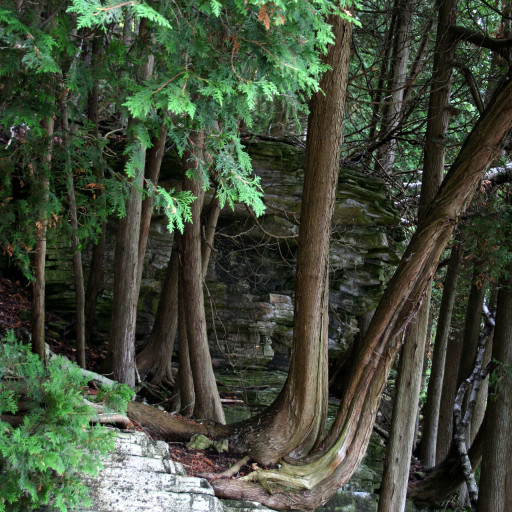
Plant Overview
Known as the "Arborvitae" or "Tree of Life," this evergreen has been a cornerstone of landscaping for centuries. Native to the cool forests of North America, it earned its regal nickname after French explorers discovered its needles could stave off illness during harsh winters. Today, it is the quintessential choice for living privacy screens, loved for its lush, fan-like foliage and aromatic scent.
🔍 How to Identify
- 🍃 Fan-Like Foliage: Unlike pines with long needles, these leaves are flat, scale-like, and arranged in soft, overlapping sprays that look like pressed ferns.
- 🪵 Shreddy Bark: The trunk features distinctive reddish-brown bark that naturally peels in long, thin vertical strips as the tree matures.
- 🌲 Tiny Cones: It produces very small, bell-shaped cones (about half an inch long) that start as a pale green and turn a woody brown in the autumn.
🏡 In Your Garden
- 💧 Moisture Consistency: While hardy, the Arborvitae is a "thirsty" evergreen. It thrives in moist, well-drained soil and often struggles in high-heat, drought-prone areas where its foliage may turn a dull "bronze" color.
- ✂️ The Perfect Hedge: This plant is famous for its tolerance to heavy pruning. Because it grows densely and maintains a naturally narrow, upright shape, it is the gold standard for creating natural fences or sound barriers in suburban yards.
⚠️ Safety & Toxicity
- 🐾 Mildly Toxic: The foliage contains an oil called thujone. While it smells lovely (like crushed apples or pine), it can cause digestive upset, vomiting, or lethargy if ingested in large quantities by dogs, cats, or horses.
- 🧴 Skin Irritation: Gardeners with sensitive skin might develop a mild red rash after handling the branches. It is always best to wear gloves when pruning or shaping your hedge.
✨ Fun Fact
The name "Tree of Life" isn't just a poetic title! In 1536, the explorer Jacques Cartier’s crew was dying of scurvy in Canada. Local Indigenous people showed them how to brew a tea from the needles and bark of this tree. Because it is incredibly rich in Vitamin C, it saved the crew’s lives, leading the French King to name it Arborvitae.

Detailed Care Instructions
They are extremely easy to care for and need little to zero maintenance.
How fast does emerald green arborvitae grow?
These slim trees grow at a faster rate of speed when they are young, adding 1 to 2 feet per year. As the tree matures, the growth rate will slow down to about 6 inches a year until reaching full height.
How long can emerald green arborvitae live?
The lifespan of emerald green arborvitae varies, from 25 years up to 150 years.
| Humidity | Normal |
| Lighting | Part Sun |
| Soil Type | Well-Drained But Adequately-Watered Soil |
| Difficulty | Medium |
| Plant Type | Coniferous Evergreen |
| Mature Size | Height Of 10 To 15 Feet (With A Spread Only About Half Of That) |
| Temperature | 10°C - 24°C |
| Sun Exposure | Full To Partial Sun |
| Hardiness Zones | 3-7 |
To effectively grow a Thuja Occidentalis plant, also known as American Arborvitae or Eastern Arborvitae, follow these steps:
- Choose the right location: Select a spot in your garden that receives full to partial sunlight. Thuja Occidentalis can tolerate a wide range of soil types but prefers well-drained soil.
- Prepare the soil: Remove any weeds or debris from the planting area. Loosen the soil using a garden fork or tiller and mix in some organic matter, such as compost or aged manure, to improve soil fertility.
- Dig a hole: Dig a hole in the prepared soil that is slightly wider and deeper than the root ball of the Thuja Occidentalis plant.
- Plant the tree: Gently place the root ball into the hole, ensuring that the top of the root ball is level with or slightly above the soil surface. Backfill the hole with soil, gently firming it around the roots as you go.
- Water the plant: Thoroughly water the newly planted Thuja Occidentalis to settle the soil and eliminate any air pockets around the roots. Keep the soil consistently moist, but not waterlogged, during the first year of growth.
- Mulch around the tree: Apply a layer of mulch, such as wood chips or shredded bark, around the base of the plant. This will help retain soil moisture, suppress weed growth, and regulate soil temperature.
- Prune as necessary: Thuja Occidentalis generally requires minimal pruning, but you can shape it if desired. Prune any dead or damaged branches in early spring or late winter to promote healthy growth.
- Fertilize sparingly: Apply a slow-release, balanced fertilizer in early spring to provide essential nutrients to the plant. Follow the instructions on the fertilizer package and avoid over-fertilization, as it can lead to excessive growth and weak branches.
- Protect from harsh conditions: Thuja Occidentalis is relatively hardy, but extreme weather conditions like strong winds or heavy snowfall can damage the plant. Consider erecting windbreaks or removing heavy snow to protect the tree.
- Maintain regular care: Water the plant during dry periods, especially in its first year. Monitor for pests or diseases and take appropriate measures if necessary. While Thuja Occidentalis is generally low-maintenance, regular care ensures its optimal growth and health.

Place in a window with dappled sun or a spot in the middle of a room. Or directly in a window facing west or east.

1. Determine the moisture requirements: Thuja Occidentalis plant needs a regular supply of water, but it does not tolerate consistently wet soil.
2. Check the soil moisture: Before watering the plant, check the soil moisture level. Insert your finger about 1 inch deep into the soil. If it feels dry, then it's time to water the plant.
3. Water the plant deeply: Use a watering can or a garden hose to water the Thuja Occidentalis plant. Apply enough water to moisten the soil to a depth of at least 6 to 8 inches.
4. Water at the right time: Water the plant early in the morning or late in the evening when the temperatures are cooler. This will prevent the water from evaporating quickly and allow the soil to absorb more moisture.
5. Avoid overwatering: Overwatering can lead to root rot and other plant diseases. It's essential to water the Thuja Occidentalis plant only when the soil feels dry to the touch.
6. Mulch the soil: A layer of mulch around the base of the Thuja Occidentalis plant can help to retain moisture in the soil, reduce water evaporation, and suppress weed growth.
7. Monitor the plant: Check the plant regularly for signs of moisture stress, such as wilted leaves. If they occur, water the plant immediately to prevent further damage.
Remember, providing the right amount of water is essential for the healthy growth of Thuja Occidentalis plant. Too much or too little water can cause stress and damage to the plant.
To fertilize this plant, apply a balanced fertilizer with equal amounts of nitrogen, phosphorus, and potassium in the early spring before new growth appears. Use a slow-release fertilizer to avoid burning the roots, and make sure to water the plant before and after fertilizing to help the fertilizer reach the roots. Avoid applying fertilizer to the foliage as it may cause leaf burn, and be careful not to over-fertilize, as it can lead to excessive growth and weaken the plant.
The recommended soil for the plant with the scientific name Thuja Occidentalis is a well-draining, slightly acidic soil with a pH range of 5.0-7.5. It should be rich in organic matter such as compost or aged manure. The texture of the soil should be loamy or sandy loam with good water-holding capacity. Avoid using heavy clay soils that do not drain well. Before planting, amend the soil with organic matter and ensure proper drainage. It is also important to monitor soil moisture levels to avoid overwatering and root rot.
There are a few ways to propagate this plant. One method is by taking cuttings. Cut a stem from the plant approximately 4-6 inches long, making sure to take it from the current year's growth. Remove the bottom set of leaves and dip the cut end in rooting hormone. Plant the cutting in potting soil and keep it moist while it takes root.
Another method is by layering. Choose a low-hanging branch and bend it down to the ground. Make a small cut in the bark on the underside of the branch and apply rooting hormone to the wound. Cover the cut with soil and secure the branch to the ground with a small stake if necessary. Keep the soil moist and wait for new roots to form. Once they have formed, cut the branch from the mother plant and plant it in a new location.
A third method is by dividing the plant. This is best done in the spring. Dig up the main plant and separate it into smaller sections, making sure each section has its own roots and foliage. Transplant the sections into new pots or into the ground, depending on your preference. Keep the soil moist until the plants have established themselves.








