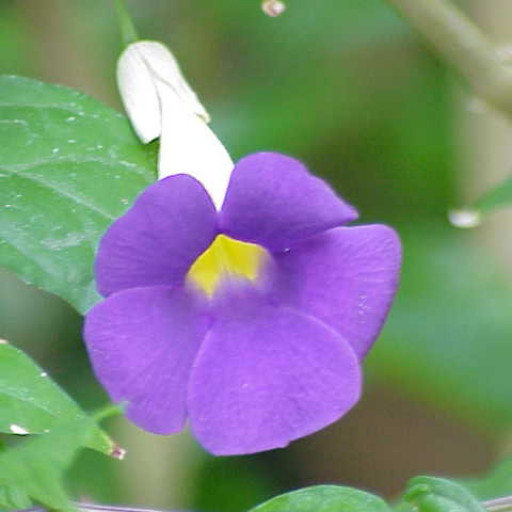
Plant Overview
Often called the King’s Mantle, this royal beauty looks like it belongs in a velvet-lined palace garden. Native to tropical Africa, it swaps the aggressive, sprawling nature of its climbing cousins for a sophisticated, upright shrubby habit. It is a favorite for gardeners who want deep, dramatic colors and a plant that stays exactly where it is told to grow.
🔍 How to Identify
- 🌸 Royal Blooms: Features funnel-shaped flowers that are a rich, velvety deep purple or midnight blue, contrasting sharply with a bright yellow or creamy white "throat."
- 🍃 Elegant Foliage: The leaves are small, ovate, and a dark, glossy green with slightly wavy edges, providing a lush backdrop for the vibrant flowers.
- 🌿 Bushy Habit: Unlike the common "Black-eyed Susan" vine, this species grows as a multi-stemmed shrub that typically reaches 4 to 6 feet in height.
🏡 In Your Garden
- ✂️ The Pruning King: This plant is incredibly forgiving of the shears. Because it produces flowers on new wood, regular pinching and pruning will encourage a denser shape and a much more prolific bloom cycle.
- 🌞 Light for Color: While it can survive in partial shade, the "mantle" only reaches its full, saturated purple potential when given plenty of bright sunlight.
- 🚿 Drainage is Key: It has a "Goldilocks" relationship with water; it loves to stay moist but will quickly decline if the soil becomes soggy or compacted. Using a loamy, well-draining mix is essential for its health.
⚠️ Safety & Toxicity
- ✅ Safe Profile: Thunbergia erecta is generally considered non-toxic and safe for homes with curious cats, dogs, or adventurous toddlers.
- 🧤 Sensory Note: While not poisonous, the woody stems can be a bit scratchy and the sap may cause very mild irritation to those with highly sensitive skin during heavy pruning sessions.
✨ Fun Fact
Despite its name and regal appearance, the King’s Mantle is a close relative of the Acanthus plant—the very same species that inspired the ornate leaf carvings found on the tops of ancient Greek Corinthian columns!

Detailed Care Instructions
To grow Thunbergia Erecta, also known as the King's Mantle or Bush Clock Vine, you can follow these steps:
- Location: Choose a sunny spot in your garden or a well-lit area for indoor cultivation. This plant requires at least 6 hours of direct sunlight daily.
- Soil: Ensure the soil is well-draining and rich in organic matter. Thunbergia Erecta prefers slightly acidic to neutral soil with a pH range between 6.0 and 7.0.
- Planting: If starting from seeds, soak them in warm water for a few hours before planting to aid germination. Sow the seeds about 1/4 inch deep in seed-starting mix or directly in the garden soil if the climate allows. Maintain a consistent soil temperature of around 70°F (21°C). Alternatively, you can also propagate the plant from cuttings or purchase young plants from a nursery.
- Watering: Water the plant regularly, keeping the soil moist but not overly saturated. Thoroughly soak the soil during watering and ensure proper drainage to prevent waterlogging.
- Fertilization: Feed the Thunbergia Erecta plant with a balanced, slow-release fertilizer once a month during the growing season. Follow the instructions on the fertilizer packaging for application rates. This will provide the necessary nutrients for healthy growth and flowering.
- Support: As the plant grows, provide support such as trellis or stakes to help it climb and spread. Thunbergia Erecta can reach a height of 10-15 feet (3-4.5 meters), so ensure there is adequate vertical space.
- Pruning: Prune the plant periodically to maintain its shape and encourage bushier growth. Remove dead or damaged stems and trim back excessive growth to keep it tidy and promote better air circulation.
- Pests and diseases: Monitor the plant regularly for any signs of pests such as aphids or whiteflies. Treat infestations promptly with appropriate organic or chemical methods. Also, watch out for common diseases like leaf spot or powdery mildew, which can be managed through proper sanitation and, if necessary, the use of fungicides.
- Overwintering: Thunbergia Erecta is a tender perennial usually grown as an annual in colder regions. In colder climates, bring potted plants indoors or provide frost protection in winter. In warmer regions, it can be grown year-round.
By following these guidelines, you can successfully grow Thunbergia Erecta and enjoy its beautiful flowers throughout the growing season.

Place in a window with dappled sun or a spot in the middle of a room. Or directly in a window facing west or east.

To water this plant, you should first assess the moisture level of the soil. Stick your finger about an inch deep into the soil to feel if it is dry or moist. If it feels dry, it's time to water.
Use room temperature or slightly warm water to avoid shocking the roots. Slowly pour water around the base of the plant until the soil is moist but not waterlogged.
Avoid getting water on the leaves of the plant, as this can promote fungal growth. If you do get water on the leaves, gently shake them to remove any excess.
Water the plant regularly, but avoid overwatering as this can lead to root rot. The frequency of watering will depend on factors such as temperature, humidity, and the size of the pot. In general, it's better to underwater than overwater.
Thunbergia Erecta plant should be fertilized with a balanced NPK fertilizer every 4 to 6 weeks during the growing season. Apply the fertilizer to the soil around the base of the plant, avoiding direct contact with the stems or leaves. Water the plant thoroughly after fertilizing to help distribute the nutrients. Be careful not to over-fertilize, as this can lead to burnt or damaged roots.
Thunbergia Erecta plants prefer a well-draining soil with a pH level between 5.6 and 7.0. It is best to use a soil mixture that is rich in organic matter and has good water retention capabilities. A mix of garden soil and compost, or peat moss and perlite can work well as a soil medium. Avoid using heavy clay soils as they can lead to waterlogging and root rot. Additionally, adding some sand to the soil mix can help improve drainage. Ensure that the soil is kept moist but not waterlogged by watering the plant regularly.
Thunbergia Erecta plant can be propagated through stem cuttings. The cuttings should be taken from the mother plant during the growing season and should be about 4-6 inches long. The lower leaves should be removed and the cutting should be dipped in rooting hormone. The cutting can then be planted in a potting mix that is well-draining and kept moist but not overly wet. The cutting should be kept in a warm, bright place but not in direct sunlight. Within a few weeks, new growth should appear indicating that the cutting has rooted. After about 6-8 weeks, the rooted cuttings can be transplanted to individual pots or directly into the ground.
Common pests of the bush clockvine include Spider mites, aphids, whiteflies, larvae. Make a habit of checking your bush clockvine frequently for pests so that any infestations can be caught and managed early.








