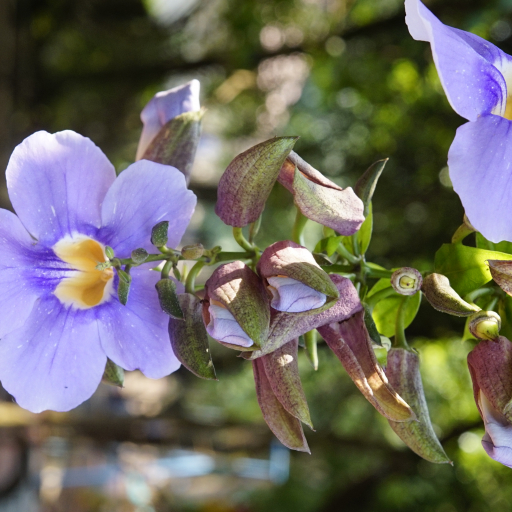
Plant Overview
Known as the Laurel Clock Vine or "Blue Trumpet Vine," this vigorous climber is a crown jewel of tropical landscapes. In its native Thailand, it is affectionately called Rang Chuet, where it is revered not just for its beauty, but as a "miracle herb" used in traditional medicine for centuries. Its cascading clusters of sky-blue flowers can quickly transform a plain fence into a living wall of lavender-hued velvet.
🔍 How to Identify
- 🌸 The Blooms: Large, trumpet-shaped flowers that range from pale lavender to a deep sky blue, usually featuring a soft creamy-yellow or white throat.
- 🍃 The Foliage: Unlike its cousin (the Black-eyed Susan vine), this species has long, elegant, dark green leaves that resemble laurel leaves—lance-shaped with a pointed tip.
- 🌀 Growth Habit: A powerful, woody evergreen vine that climbs by twining its stems tightly around any available support, reaching heights of up to 30 feet in ideal conditions.
🏡 In Your Garden
- 🏗️ Support is Key: Because of its rapid growth and heavy woody stems, this plant requires a sturdy trellis, pergola, or fence. Avoid flimsy plastic supports, as the vine’s weight can eventually collapse them.
- ✂️ Pruning Nuance: It is an enthusiastic grower that can become invasive in tropical climates. To keep it tidy and encourage more flowers, prune it back hard after the main flowering season.
- ☀️ Light & Thirst: While it thrives in full sun, it appreciates a bit of afternoon shade in scorching climates to prevent the delicate petals from wilting. It loves consistent moisture but hates "wet feet," so ensure your soil drains well.
⚠️ Safety & Toxicity
- ✅ Status: Generally considered non-toxic to humans and frequently used in herbal teas.
- 🐾 Pets: While not listed as a primary toxic plant for cats and dogs, the ingestion of any large amount of fibrous plant material can cause mild stomach upset or vomiting in curious pets.
- 🍵 Medicinal Note: In Southeast Asia, it is used as a detoxifying agent, but gardeners should never consume home-grown plants for medicinal purposes without professional guidance.
✨ Fun Fact
In Thailand, Thunbergia laurifolia is known as the "Antidote Plant." It is scientifically studied for its ability to help treat chemical poisoning and even reduce the symptoms of alcohol hangovers by accelerating the body's detoxification process!

Detailed Care Instructions
To grow Thunbergia Laurifolia, also known as blue trumpet vine or laurel clock vine, you can follow these steps:
- Obtain seeds or cuttings: Thunbergia Laurifolia can be grown from seeds or stem cuttings. You can either purchase seeds from a garden store or obtain stem cuttings from an existing plant.
- Soil preparation: Thunbergia Laurifolia prefers well-draining soil, rich in organic matter. Prepare a pot or garden bed by adding compost or well-rotted manure to the soil. Ensure the soil is loose and not compacted.
- Germinating seeds: If you are using seeds, soak them in warm water for 24 hours before planting. Sow the seeds in a pot filled with moist soil, pressing them lightly into the soil surface. Keep the pot in a warm and sunny location. Germination typically takes around 2-4 weeks.
- Planting cuttings: If you have obtained stem cuttings, remove the lower leaves from the stem and dip the base in a rooting hormone powder. Plant the cutting in a pot filled with well-draining soil. Water the cutting thoroughly and place it in a warm and shaded area to root.
- Watering: Thunbergia Laurifolia prefers regular watering. Keep the soil evenly moist but avoid overwatering, as this can lead to root rot. Water the plant when the top inch of soil feels dry.
- Sunlight requirements: Thunbergia Laurifolia thrives in full sun to partial shade. Provide at least 4-6 hours of direct sunlight daily for optimum growth and flowering.
- Trellis or support structure: Thunbergia Laurifolia is a climbing vine and requires a trellis or support structure to grow upwards. Install a sturdy trellis or provide a support system for the plant to climb on.
- Fertilization: Use a balanced, slow-release fertilizer or organic compost during the growing season to promote healthy growth and flowering. Follow the instructions on the fertilizer packaging for the correct dosage.
- Pruning: Thunbergia Laurifolia benefits from regular pruning to maintain its shape and encourage bushier growth. Prune any dead or damaged branches and trim back excessive growth to keep the plant in check.
- Pests and diseases: Monitor the plant regularly for pests such as aphids or spider mites. If necessary, treat the plant with an appropriate insecticide or use organic methods to control pests. Thunbergia Laurifolia is generally resistant to diseases.
By following these steps, you should be able to successfully grow Thunbergia Laurifolia and enjoy its beautiful blue flowers.

Place in a bright room that is sun drenched almost all day. Or directly in a south-facing window.

To water this particular plant, you should first ensure that the soil is dry to the touch before watering. When watering, use a gentle stream of water to moisten the soil evenly, taking care not to flood the plant. The frequency of watering will depend on the climate and conditions in which the plant is growing, but it is generally recommended to water thoroughly once or twice per week, rather than a light watering every day. It is also important to ensure that the plant has good drainage to avoid waterlogged soil.
To fertilize this plant, use a balanced fertilizer with equal parts nitrogen, phosphorus, and potassium. Apply the fertilizer during the growing season, from spring to fall, every two to three weeks. Dilute the fertilizer according to the package instructions and water thoroughly after application. Avoid over-fertilizing, as this may promote excessive leaf growth at the expense of flowers.
Thunbergia laurifolia grows best in a soil that is well-drained yet moisture-retentive. A soil with a pH of 6.5 to 7.5 is ideal. It prefers a rich, loamy soil that is high in organic matter. The soil should be free from stones and gravel, and should not be too sandy or clayey. The plant requires a soil that is adequately aerated, so soil that is too dense or compact should be avoided. The soil should be fertile and nutrient-rich, and should be supplemented with organic matter such as compost or manure. The plant responds well to regular fertilization with a balanced, slow-release fertilizer. When potting Thunbergia laurifolia, a mixture of peat moss, perlite or vermiculite, and a good quality potting soil should be used.
- Choose a healthy Thunbergia Laurifolia plant with mature stems and leaves.
- Select a stem that is about 4-6 inches long and cut it diagonally with a sharp, sterilized knife or garden shears.
- Remove the leaves from the lower 1/3 of the stem.
- Low above a container with a mixture of half sand and half potting soil, or half peat moss and half vermiculite. Press the stem of the Thunbergia Laurifolia into the mixture so that about 1/3rd of the stem is below the soil surface.
- Gently mist the cutting with water and cover it with a clear plastic bag. This will create a mini greenhouse effect and prevent the cutting from drying out.
- Place the container in a well-lit area, but not in direct sunlight.
- Regularly mist the cutting and monitor the soil moisture level by sticking your finger into the soil. If the soil feels dry, add water.
- After a few weeks, roots should start to grow, and new growth should emerge from the top of the cutting. At this point you can remove the bag and move the cutting to a larger container.
- After about six weeks, the new Thunbergia Laurifolia plant should be ready for transplanting into a larger pot, or into the garden if the weather is warm.








