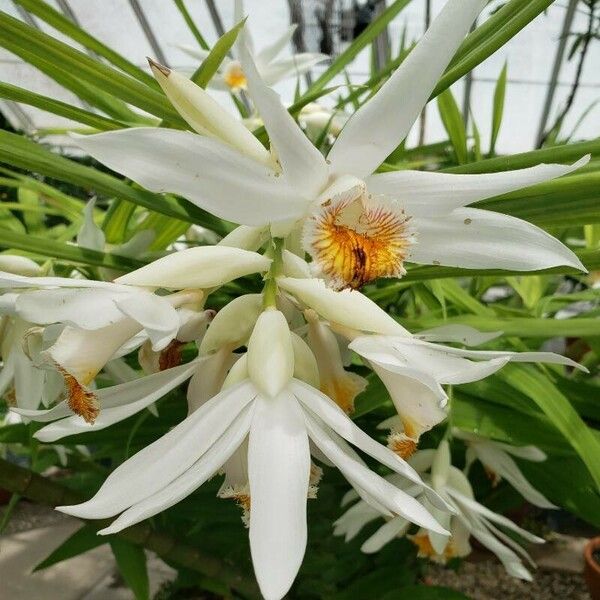
Plant Overview
Known as the "Orchid Lily," Thunia alba bridges the gap between the elegance of a classic orchid and the sturdy, upright look of a garden lily. Native to the mist-shrouded foothills of the Himalayas and Southeast Asia, this orchid tells a story of dramatic transformation. It is a deciduous species, meaning it completely sheds its leaves to endure a dry winter "sleep" before bursting into lush, bamboo-like growth every spring.
🔍 How to Identify
- 🎋 Cane-like Stems: Unlike many bulbous orchids, this species grows tall, upright, silver-green canes (pseudobulbs) that can reach up to 3 feet in height.
- 🌿 Lily-like Foliage: Soft, lance-shaped leaves are arranged in two rows along the stem, giving the plant a leafy, tropical appearance long before the flowers arrive.
- 🌸 Fringed Blooms: Large, snowy-white flowers hang in drooping clusters at the top of the canes. The most striking feature is the "lip" (labellum), which is adorned with a delicate fringe and a splash of sunny yellow or orange.
🏡 In Your Garden
- 💤 The Winter Nap: This orchid is strictly seasonal. When the leaves turn yellow in autumn, do not panic! It is simply entering dormancy. During this time, you must stop watering entirely and move it to a cool spot; the bare canes may look dead, but they are just storing energy for a spectacular spring comeback.
- 💧 Thirsty Growth: Once new shoots appear at the base in spring, the plant becomes a "sponge." It requires frequent watering and heavy feeding to support its rapid growth, but it must be planted in a very airy, well-draining medium (like bark and perlite) to keep the roots happy.
⚠️ Safety & Toxicity
- ✅ Safe Status: Thunia alba is generally considered non-toxic to humans, cats, and dogs. It is a "friendly" orchid for household hobbyists.
- 🌱 Sap Sensitivity: While not poisonous, the sap from broken or cut canes can occasionally cause mild skin irritation for those with highly sensitive skin. It is a good habit to wash your hands after pruning or repotting.
✨ Fun Fact
Unlike the famous Phalaenopsis (Moth Orchid) which grows on trees, Thunia alba is a lithophyte, meaning it is often found growing directly on moss-covered rocks or steep embankments in its native mountain home!

Detailed Care Instructions
Thunia alba, also known as the white orchid or Thunia, is a beautiful and relatively easy-to-grow orchid native to Southeast Asia. Here are some steps and tips to help you successfully grow Thunia alba:
1. Choose the Right Environment:
- Light: Thunia alba thrives in bright, indirect sunlight. Avoid direct sunlight, which can scorch the leaves. A north or east-facing window is usually ideal.
- Temperature: This orchid prefers temperatures between 65°F to 80°F (18°C to 27°C) during the day, with slightly cooler temperatures at night.
- Humidity: Aim for humidity levels of around 50% to 70%. You can increase humidity by using a humidity tray with water and pebbles or by placing a humidifier nearby.
2. Potting Medium:
- Use a well-draining potting mix specifically formulated for orchids. A blend of bark, moss, and perlite or coconut coir works well. Ensure that the mix provides aeration to the roots.
3. Watering:
- Water the plant thoroughly when the top inch of the potting mix feels dry. Typically, this may require watering once a week, but it can vary based on the season and environment. Avoid letting the plant sit in standing water to prevent root rot.
4. Fertilization:
- Use a balanced orchid fertilizer (e.g., 30-10-10) diluted to half strength every 2-4 weeks during the growing season (spring and summer). Reduce feeding in the fall and winter when the plant is not actively growing.
5. Repotting:
- Repot Thunia alba every 1-2 years to refresh the potting medium and check root health. Choose a slightly larger pot if the plant has outgrown its current container.
6. Pruning:
- After flowering, prune stalks that have finished blooming back to the base. This encourages new growth and flowering in the next cycle.
7. Pests and Diseases:
- Regularly inspect your plant for common pests like aphids, mealybugs, or spider mites. If necessary, treat with insecticidal soap or neem oil. Ensure good air circulation to help prevent fungal diseases.
8. Flowering:
- Thunia alba typically blooms in late spring or early summer. Ensure it receives adequate light and nutrients leading up to its flowering time.
By following these tips and providing the right care, you can enjoy the beauty of Thunia alba in your home or garden. Good luck with your orchid cultivation!

Place in a bright room that is sun drenched almost all day. Or directly in a south-facing window.

Watering the Thunia alba requires a careful approach to ensure that the plant remains healthy and thrives. Here’s a detailed guide:
1. Soil Moisture Monitoring:
- Before watering, check the moisture level of the growing medium. The top inch of the substrate should feel dry to the touch before you consider watering again.
2. Watering Technique:
- Use tepid water to avoid shocking the plant. Water should be at room temperature.
- Water the plant thoroughly until you see excess water draining out from the bottom of the pot. This ensures that the roots receive adequate moisture.
3. Water Quality:
- Avoid using chlorinated water. If you must use tap water, let it sit out for 24 hours to allow chlorine to dissipate. Alternatively, you can use rainwater or distilled water.
4. Frequency:
- Watering frequency will depend on environmental conditions such as temperature, humidity, and light. During active growth (typically spring and summer), this plant may require watering once a week, while in cooler months, reduce to every 10 to 14 days.
5. Environmental Considerations:
- Maintain a humid environment if possible, especially during hotter months. If the surrounding air is too dry, consider misting the leaves or placing a humidifier nearby.
- Ensure that the growing environment has adequate air circulation to help maintain humidity without creating a damp environment.
6. Drainage:
- Ensure that the pot has adequate drainage holes to prevent water from accumulating at the bottom, which can lead to root rot.
7. Fertilization (Optional):
- When the plant is actively growing, you can dilute a balanced fertilizer with water according to the product instructions. This can be added to the watering routine every 4-6 weeks but ensure the medium is pre-moistened to avoid burning the roots.
By closely monitoring the moisture needs and adjusting your watering schedule based on the plant’s specific conditions, you can promote healthy growth for this species.
Fertilizing instructions for Thunia alba are as follows:
- Fertilizer Type: Use a balanced, water-soluble fertilizer with an N-P-K ratio around 20-20-20 or a specialized orchid fertilizer diluted to half strength.
- Frequency: Fertilize every two to four weeks during the active growing season (spring and summer). Reduce or discontinue fertilization during the dormant period (fall and winter).
- Dilution: Always dilute the fertilizer according to the instructions on the package, as over-fertilization can harm the plant.
- Application: Water the plant thoroughly before applying fertilizer to prevent root burn. Apply the diluted solution directly to the substrate, avoiding excess accumulation around the roots.
- Monitoring: Observe the plant for signs of nutrient deficiency or excess (such as leaf discoloration or brown tips) and adjust your fertilization schedule accordingly.
- Water Quality: If possible, use rainwater or distilled water for diluting the fertilizer, as tap water may contain chemicals that could affect the health of the plant.
- Substrate Consideration: Ensure that the substrate is well-draining to prevent salt buildup from fertilizers, which can harm the roots.
By following these guidelines, you can help ensure the healthy growth and development of your Thunia alba.
Thunia Alba, a type of orchid, thrives in a specific soil composition that promotes healthy growth and drainage. Here are the details regarding the soil to use:
- Medium Drainage: The soil should provide excellent drainage to prevent root rot. A mix that allows excess water to flow away swiftly is essential.
- Bark-based Mix: A blend of fir bark or similar materials is commonly used. This not only supports drainage but also mimics the natural habitat of the plant, allowing air circulation around the roots.
- Perlite or Pumice: Incorporating materials such as perlite or pumice can enhance drainage and aeration in the soil mix. These components help to prevent compaction and retain moisture without becoming waterlogged.
- Sphagnum Moss: A small amount of sphagnum moss can be added to retain some moisture while still allowing for adequate drainage. It can provide additional nutrients and support as the plant grows.
- pH Level: Aim for a slightly acidic to neutral pH level, typically between 5.5 and 7.0. This helps ensure optimal nutrient uptake for the plant.
- Nutrient Content: The mix should provide enough nutrients to support growth without being overly rich. You can consider adding a balanced, slow-release fertilizer according to the plant's growth cycle.
- Container: The choice of pot is also important; select one with ample drainage holes to further enhance water flow and prevent standing water.
This combination will help to create an optimal growing environment for Thunia Alba, supporting its health and vibrant growth.
To propagate Thunia alba, a species known for its beautiful blooms, you can use the following methods:
1. Division:
- Timing: The best time to propagate through division is during the growing season, typically in spring or early summer when the plant is actively growing.
- Procedure:
- Carefully remove the parent plant from its pot or the ground.
- Gently shake off excess soil to expose the root system.
- Identify sections of the root system that contain at least one growth point or pseudobulb.
- Use a clean, sharp knife to cut the roots apart, ensuring each division has healthy roots and a growth point.
- Replant the divisions in separate pots with well-draining potting medium, and water them lightly.
2. Offsets:
- Carefully remove the parent plant from its pot or the ground.
- Timing: This method can be done during the growing season as offsets develop.
- Procedure:
- Look for offsets (small bulbs or shoots) growing at the base of the parent plant.
- Use a sharp knife to cut the offset away from the main plant, ensuring it has roots attached.
- Plant the offsets in pots filled with suitable potting mix, and water them lightly.
3. Seed Propagation:
- Look for offsets (small bulbs or shoots) growing at the base of the parent plant.
- Timing: Collect seeds during the flowering period when the seed pods have matured.
- Procedure:
- Wait until the seed pods turn brown and begin to dry.
- Carefully harvest the seeds and clean them to remove any pod material.
- Prepare seed trays with a light, well-draining seed-starting mix.
- Sow the seeds evenly on the surface and lightly cover them with a thin layer of the mix.
- Water the seeds gently to avoid washing them away.
- Place the trays in a warm, humid environment with indirect light.
- Keep the soil moist but not waterlogged until germination occurs, which can take several weeks.
4. Tissue Culture (Advanced):
If you're looking for a more sophisticated method and have access to laboratory facilities:
- Wait until the seed pods turn brown and begin to dry.
- Procedure:
- Collect healthy plant tissue, such as a part of a stem or leaf.
- Use aseptic techniques to prepare culture media with necessary nutrients and hormones.
- Inoculate the tissue onto the medium and incubate under controlled conditions.
- Once shoots and roots develop, transfer the plantlets to soil for acclimatization.
Care After Propagation:
- Collect healthy plant tissue, such as a part of a stem or leaf.
- After utilizing any propagation method, provide the new plants with appropriate care:
- Lighting: Place them in bright, indirect light to encourage growth.
- Watering: Keep the soil slightly moist, avoiding overwatering to prevent root rot.
- Humidity: Maintain a humid environment, particularly for seedlings or divisions, until they establish well.
With these methods, you should be able to successfully propagate Thunia alba and expand your collection!
- Lighting: Place them in bright, indirect light to encourage growth.








