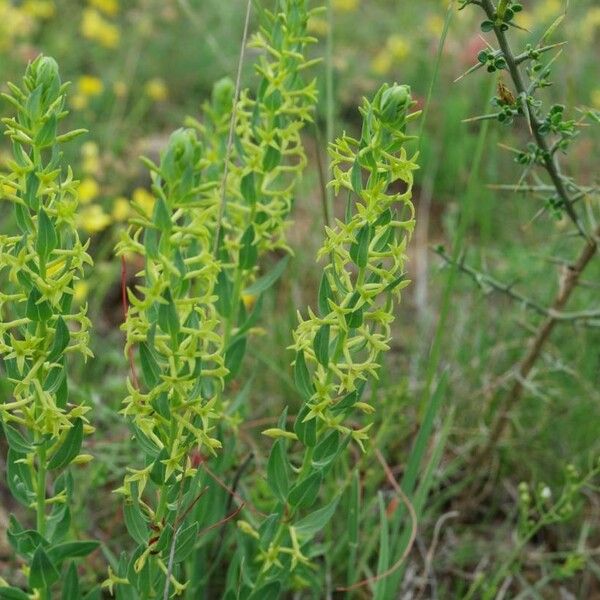
Plant Overview
Known as the Sanamunda, this hardy Mediterranean shrub is a master of survival in some of the harshest, rockiest terrains of Southern Europe. While it may look like a humble, low-lying bush to the untrained eye, it carries a deep history in Iberian folk traditions. It is often found clinging to sun-drenched limestone cliffs where few other plants can thrive, acting as a resilient anchor for dry ecosystems.
🔍 How to Identify
- 🌿 Scale-like Leaves: The leaves are small, narrow, and leathery, often overlapping one another along the stems to conserve moisture in the heat.
- 🌼 Tucked-in Blooms: It produces tiny, inconspicuous flowers that are yellowish or greenish-yellow, usually appearing in the leaf axils rather than at the tips.
- 🪵 Woody Base: The plant features a tough, greyish-brown woody stem that becomes increasingly gnarly and "bonsai-like" as it ages.
🏡 In Your Garden
- ☀️ Sun Worshipper: This plant thrives in "harsh" conditions; it requires full, direct sun and will fail quickly if kept in a damp or shaded corner.
- 🪨 Drainage is Vital: Because it naturally grows in rocky, calcareous soils, it is extremely prone to root rot. If you're growing it in a container, use a gritty, cactus-like soil mix and a pot that breathes, like terracotta.
- ✂️ Low Maintenance: Once established, it is exceptionally drought-tolerant and rarely needs pruning, making it a "set and forget" plant for rock gardens.
⚠️ Safety & Toxicity
- 🚫 Toxic Status: The Sanamunda is considered a toxic plant and should never be consumed.
- 🧪 Chemical Defense: It contains potent resinous compounds that were historically used as a violent purgative in folk medicine—a practice that is now considered dangerous and obsolete.
- 🤲 Skin Irritation: The sap can be an irritant to some individuals; it is best to wear gloves when pruning or handling broken branches to avoid skin redness or blistering.
✨ Fun Fact
The name Thymelaea is derived from the Greek words for "Thyme" and "Olive." This is a nod to its thyme-like leaves and its fruit, which bear a very passing resemblance to tiny olives, even though it isn't related to either species!

Detailed Care Instructions
To water this plant, first you need to assess the soil moisture level by inserting your finger into the soil. If the top two inches of soil feel dry, it's time to water.
Take a watering can or a hose with a soft nozzle and water gently around the base of the plant. Avoid watering the foliage as this can lead to fungal diseases.
Water until the soil is completely saturated, but be careful not to overwater as this plant is sensitive to waterlogged soil.
During the hot summer months, you may need to water more frequently to prevent the soil from drying out completely. However, in the winter months, you should reduce watering to avoid waterlogged soil.
It's also important to note that this plant prefers well-drained soil, so you may want to consider adding sand or perlite to the soil mix to improve drainage.
Thymelaea Sanamunda plant should be grown in well-draining soil with a neutral to alkaline pH. The soil should be sandy and slightly rocky, with good drainage properties to prevent waterlogging and root rot. Organic matter should be kept to a minimum, as too much can encourage fungal growth and damage the plant. Adding a layer of gravel or sand to the bottom of the planting hole can help improve drainage and prevent the soil from becoming too compacted. Fertilizers should be used sparingly, as the plant prefers a low-nutrient environment. Regular watering is important during the growing season, but the soil should be allowed to dry slightly between waterings to prevent overwatering.








