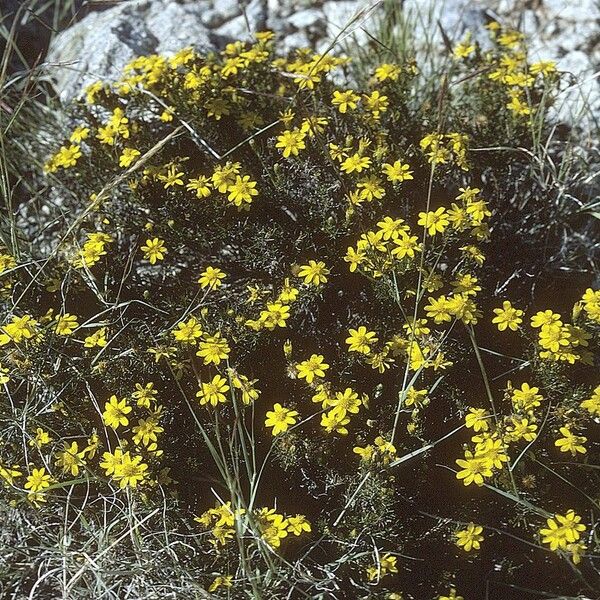
Plant Overview
Known as the Prickleaf Dogweed or Needleleaf Dogweed, this rugged little survivor is a desert gem. Found gracing the limestone slopes of the Southwestern United States and Mexico, it forms low, dense mounds that erupt in a golden display of tiny, daisy-like flowers. It is the ultimate "tough-love" plant, thriving where others wither and providing a vital splash of color to sun-scorched landscapes.
🔍 How to Identify
- 🌿 The Foliage: Look for very fine, needle-like leaves that are stiff and sharp to the touch. The name acerosa actually comes from the Latin word for "needle-shaped."
- 🌼 The Blooms: Small, bright yellow flower heads appear at the tips of the branches. Each flower has both "ray" petals and a central disk, mimicking a miniature sunflower.
- 👃 The Scent: If you gently crush the leaves, they release a pungent, citrusy, or musky odor similar to marigolds—a trait shared by many members of the "dogweed" family.
🏡 In Your Garden
- 🏜️ The Desert Specialist: This plant is a champion of xeriscaping. It hates "wet feet" and will thrive in rocky, poor, or limestone-heavy soil where most garden plants would struggle.
- ☀️ Sun Seeker: It requires full, intense sun to maintain its compact shape. If placed in the shade, it will become leggy and lose its characteristic dense, mounded appearance.
- 🐝 Pollinator Magnet: Despite its small size, it is a significant nectar source for native bees and small butterflies, making it a functional addition to a wildlife-friendly rock garden.
⚠️ Safety & Toxicity
- ✅ Status: Generally non-toxic and safe for home gardens.
- 🌵 Physical Irritant: While not chemically poisonous, the "prickleaf" name is literal. The stiff, pointed leaves can be a bit scratchy for curious pets or toddlers, though they rarely cause lasting irritation.
- 🐾 Pet Safety: There are no known major toxicity reports for cats or dogs regarding this specific species, making it a safer alternative to more decorative but toxic desert plants.
✨ Fun Fact
The Prickleaf Dogweed is a master of the "long game." It is a perennial subshrub, meaning it has a woody base that survives through the winter, allowing it to spring back to life and bloom repeatedly for years, even in the harshest drought conditions!

Detailed Care Instructions

Place in a bright room that is sun drenched almost all day. Or directly in a south-facing window.

Some plants require more regular watering than others, which should be done every few days. It's critical to maintain the soil moist all of the time. The water requirements of the same plant placed in pots with varying sizes will differ. Because the water in the smaller pot evaporates faster than the water in the larger pot, it will require more watering. Regardless of pot size, the surface should constantly be maintained moist.








