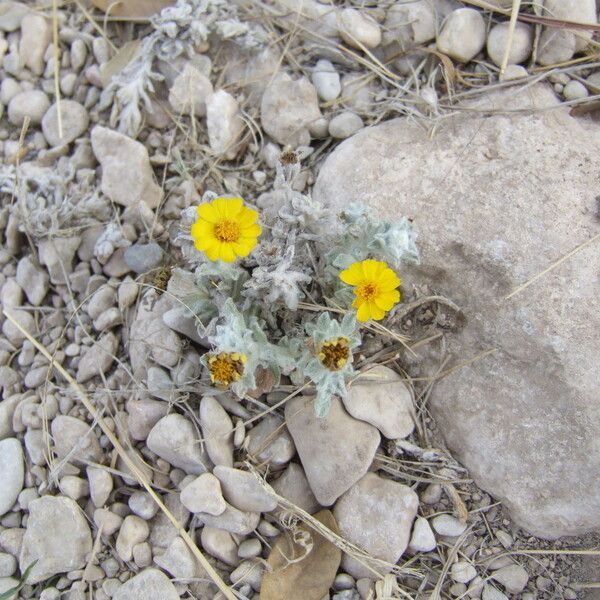
Plant Overview
Often called "Woolly Dogweed" or "Tiny Tim," Thymophylla micropoides is a pint-sized powerhouse of the desert. Native to the rugged, sun-scorched landscapes of the Southwest and Mexico, this plant looks like a soft, silver-green cushion dusted with miniature gold coins. It is the ultimate choice for a "zero-effort" garden, as it thrives in conditions that would wither most other flowers.
🔍 How to Identify
- 🌿 The Foliage: The leaves are tiny, needle-fine, and deeply divided. They are covered in a dense layer of fine white hairs, giving the plant a distinct "woolly" or silvery-grey appearance that protects it from the sun.
- 🌼 The Blooms: Small, brilliant yellow daisy-like flowers sit directly atop the foliage. Each flower head features several ray petals surrounding a dense, golden central disk.
- 📏 Growth Pattern: It is a low-growing perennial (or annual in colder zones) that forms a neat, rounded mound. It rarely exceeds 6 inches in height, making it look like a piece of living lace.
🏡 In Your Garden
- 🏜️ Drainage is Destiny: This plant is a specialist in rocky, limestone-heavy soils. In a garden setting, it hates "wet feet." If your soil is heavy clay, it must be planted in a raised rock garden or a gravel bed to prevent the roots from suffocating in moisture.
- ☀️ Heat Seeker: It thrives in the kind of intense, reflected heat that would kill traditional bedding plants. Its woolly hairs aren't just for show; they act as a natural sunscreen and moisture-trap, allowing it to bloom even during the peak of a desert summer.
⚠️ Safety & Toxicity
- ✅ General Status: Thymophylla micropoides is considered non-toxic to humans and common household pets like cats and dogs.
- 👃 Sensory Note: While safe, the foliage contains specialized oil glands that release a very strong, pungent aroma when stepped on or crushed. Some gardeners find the scent refreshing and citrusy, while others find it a bit too "skunky."
✨ Fun Fact
The genus name Thymophylla literally translates to "Thyme-leaf." While it is a member of the Sunflower family (Asteraceae), its fine, aromatic leaves so closely resemble the culinary herb Thyme that early botanists couldn't resist the comparison!

Detailed Care Instructions

Place in a bright room that is sun drenched almost all day. Or directly in a south-facing window.

Some plants require more regular watering than others, which should be done every few days. It's critical to maintain the soil moist all of the time. The water requirements of the same plant placed in pots with varying sizes will differ. Because the water in the smaller pot evaporates faster than the water in the larger pot, it will require more watering. Regardless of pot size, the surface should constantly be maintained moist.








