Plant Overview
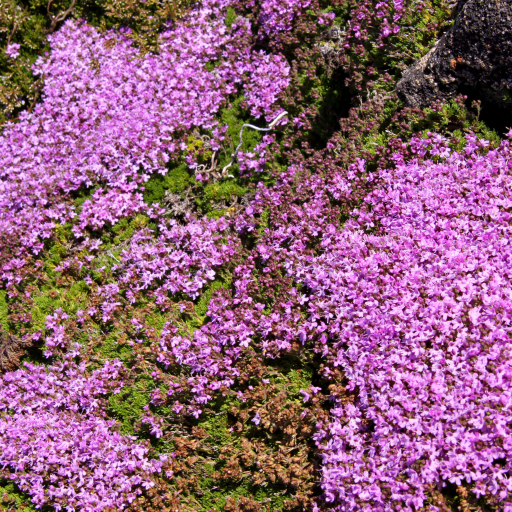
Known as the Azores Thyme or Tufted Thyme, this delightful evergreen subshrub is like a living, fragrant carpet for your garden. Native to the rocky coasts of Portugal, Spain, and the Azores islands, it is cherished for its ability to transform harsh, stony gaps into a lush tapestry of green and lilac. Unlike its upright culinary cousins, this thyme prefers to stay low to the ground, whispering its citrusy scent every time a breeze passes or a footstep brushes its leaves.
🔍 How to Identify
- 🌿 Growth Habit: It forms dense, moss-like cushions or mats that rarely exceed 4 inches in height, spreading outward to cover the soil.
- 🍃 The Foliage: The leaves are tiny, narrow, and spade-shaped. They are a bright, vivid green and grow in tight clusters along woody stems.
- 🌸 The Blooms: In early to mid-summer, the plant is smothered in small, tubular flowers that range from pale pink to deep lilac, occasionally appearing in pure white.
🏡 In Your Garden
- 🌱 Rocky Roots: Because it originated on Atlantic cliffsides, this plant absolutely demands "sharp" drainage. It thrives in gritty, sandy, or poor soils where other plants might wither.
- ☀️ Sun Seeker: To keep its "tufted" shape tight and prevent it from becoming leggy, place it in the sunniest spot available. It uses the sun’s heat to concentrate the essential oils in its leaves.
- 🚶 Step-able Texture: It is a fantastic "steppable" plant. It is resilient enough to be planted between flagstones or pavers, releasing a burst of tangerine-like fragrance when lightly trodden upon.
⚠️ Safety & Toxicity
- ✅ Safe for All: Thymus caespititius is considered non-toxic to humans, dogs, cats, and horses.
- 🍵 Culinary Note: While edible and safe, this species is grown more for its ornamental beauty and scent than for cooking. Its flavor profile is more "zesty" and "pine-like" than the earthy flavor of common garden thyme.
✨ Fun Fact
Unlike the savory, herbal scent of common thyme, the Azores Thyme is famous for its unique "citrus-tangerine" aroma. In the wild, this scent helps protect the plant from being eaten by herbivores who find the strong citrus oils unappealing!

Detailed Care Instructions
To grow Thymus caespititius, also known as creeping thyme, you can follow these steps:
- Choose a suitable location: Thymus caespititius prefers full sun but can tolerate partial shade. It thrives in well-draining soil, so make sure the planting area has good drainage.
- Prepare the soil: Remove any weeds or grass from the planting area. Loosen the soil and add organic matter, such as compost, to improve drainage and fertility.
- Sow the seeds: Thymus caespititius can be grown from seeds or starter plants. If you are using seeds, scatter them over the prepared soil and lightly press them into the surface. Water gently to settle the seeds in.
- Watering: Keep the soil consistently moist until the seeds germinate, which usually takes about 10-14 days. Once the plants are established, Thymus caespititius is drought-tolerant and only needs watering during extended dry periods.
- Thin and space: If you've sown seeds, thin the seedlings when they have grown a couple of inches tall, leaving at least 6-12 inches of space between each plant. If you are planting starter plants, space them out accordingly.
- Mulch: Apply a layer of organic mulch, such as straw or wood chips, around the plants to help retain moisture, suppress weed growth, and insulate the roots against extreme temperatures.
- Pruning and maintenance: Trim the plant back after flowering to promote new growth and maintain a compact shape. Regular light trimming throughout the growing season can also help control its spread and encourage lush foliage.
- Pests and diseases: Thyme is generally resistant to pests and diseases. However, keep an eye out for aphids, spider mites, or powdery mildew. If necessary, treat with appropriate organic pesticides or fungicides.
- Harvesting: Thymus caespititius is commonly used in cooking due to its aromatic leaves. Harvest the leaves as needed, and it's best to do so before the plant flowers for the most intense flavor.
Remember, Thymus caespititius is a perennial plant, so it will continue to grow and spread over time, providing a low-growing, aromatic groundcover.

Place in a bright room that is sun drenched almost all day. Or directly in a south-facing window.

Thymus Caespititius plants should be watered regularly and deeply, but not to the point of soaking or waterlogging the soil. The key is to wait until the soil surface has dried out before watering again. It is important to avoid watering the leaves and stems, as this can lead to disease or fungal issues. Instead, watering should be directed towards the base of the plant, ideally with a watering can or drip irrigation system. If the plant is in a container, make sure to allow excess water to drain away, as roots sitting in water can cause rot. During hot and dry periods, or if the plant is located in a particularly exposed or sunny area, it may need more frequent watering. Ultimately, the goal is to maintain evenly moist soil without causing water stress or damage to the plant.
To fertilize this plant, apply a balanced, all-purpose fertilizer in early spring before new growth begins. Use a slow-release fertilizer or a liquid fertilizer according to label instructions. Be sure not to over-fertilize, as this can lead to excessive growth and reduced flavor in the leaves. Water the plant thoroughly after fertilizing to ensure the nutrients are dispersed properly. Repeat fertilization once or twice during the growing season as needed.
The Thymus Caespititius plant thrives in well-draining and nutrient-rich soil. It is recommended to use a soil mixture that is composed of equal parts of sand, loam, and perlite. This type of soil will ensure good drainage and aeration while providing the necessary nutrients for the plant's growth. The soil should also have a pH level of 6.0 to 8.0. Adding organic matter to the soil, such as compost, can also provide additional nutrients for the plant. Additionally, it is important to avoid soil with high clay content, as this may cause the soil to become waterlogged, leading to root rot and other issues.
Thymus Caespititius can be propagated through various methods such as division, stem cuttings, and seed sowing.
- Division: This method involves separating the clumps of the plant's roots to create new plants. It is best done in early spring before new growth begins.
- Dig up the clump of Thymus Caespititius plant you would like to divide.
- Gently pull the clump apart into smaller sections with roots.
- Plant each new section into a new location or container, ensuring that the soil is well-drained and in a sunny spot.
- Stem Cuttings: This propagation method involves taking cuttings from the Thymus Caespititius plant and planting them in soil to create new plants.
- Take a stem cutting that is about 3-4 inches in length, ideally from a healthy and mature plant.
- Remove the leaves from the bottom half of the stem.
- Dip the cut end into rooting hormone powder (optional).
- Plant the cutting into a container with well-drained soil and place it in a sunny spot.
- Keep the soil moist and cover the container with a plastic bag or wrap to maintain humidity until new growth appears.
- Seed Sowing: This propagation method involves starting new plants from seeds collected from the Thymus Caespititius plant.
- Collect the fresh seeds from the plant in late summer or early fall.
- Soak the seeds in water for 24 hours to soften the hard seed coat.
- Sow the seeds in a container with well-drained soil and cover lightly with soil.
- Place the container in a sunny spot and keep the soil moist.
- Seedlings should begin to appear in 2-3 weeks.








