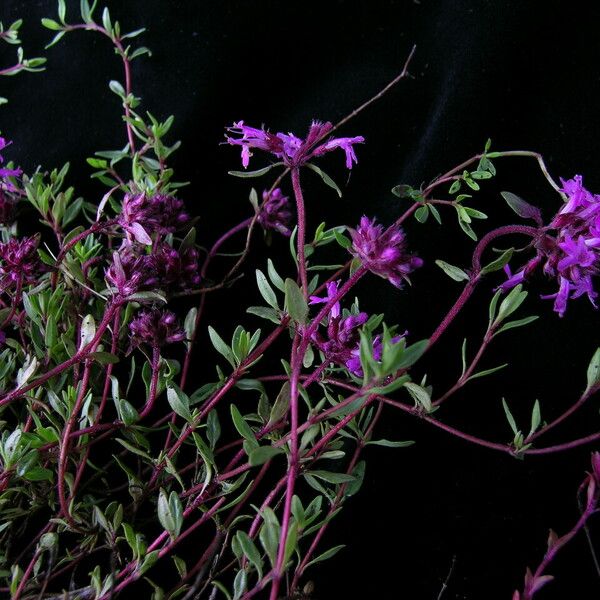
Plant Overview
Known as the "Himalayan Thyme," this aromatic mountaineer blankets the rocky slopes of the Hindu Kush and the Himalayas. Unlike its common Mediterranean cousins, this variety is a rugged survivor, often found clinging to cliffsides at altitudes where few other herbs dare to grow. It has been a staple in high-altitude cultures for centuries, used both as a flavorful spice and a soothing incense.
🔍 How to Identify
- 🍃 Linear Foliage: True to its name, the leaves are "linear"—distinctly long, narrow, and needle-like compared to the rounded leaves of common garden thyme.
- 🌸 Mauve Carpets: During mid-summer, the plant is almost entirely obscured by dense, flat clusters of tiny, tubular flowers ranging from pale pink to vibrant purple.
- 🌱 Prostrate Habit: It grows as a woody, creeping subshrub that forms a dense, fragrant mat, rarely rising more than a few inches off the ground.
🏡 In Your Garden
- 🪨 The Rock Specialist: Because it originates in mountain scree, this plant demands "sharp" drainage. It is the perfect candidate for rock gardens, stone walls, or the gaps between paving stones where water never pools.
- ☀️ High-Altitude Cravings: It requires the "Alpine experience"—maximum sunlight and excellent air circulation. In shade or high humidity, the plant may lose its compact shape and become "leggy."
- ✂️ Post-Bloom Grooming: To keep the mat thick and prevent the center from becoming woody and bare, it’s best to lightly shear the plant back after the flowers fade.
⚠️ Safety & Toxicity
- ✅ Safe for Humans: This thyme is generally safe for culinary use and is often used to flavor meats and teas in its native range.
- 🐾 Pet Considerations: While the plant itself is non-toxic to dogs and cats, the concentrated essential oils found in the leaves can cause stomach upset if ingested in very large quantities.
- 🌿 Skin Sensitivity: Like many aromatic herbs, the potent oils may cause mild skin irritation for people with sensitive skin during heavy pruning.
✨ Fun Fact
In the high-altitude regions of Nepal and India, bees that forage exclusively on Thymus linearis produce a rare, dark honey. This "Thyme Honey" is legendary among locals for its intense aroma and is often used as a traditional remedy for sore throats.

Detailed Care Instructions
To grow Thymus Linearis, also known as Woolly Thyme, follow these steps:
- Obtain Thymus Linearis seeds or plants: You can either purchase seeds from a garden center or nursery, or you can buy established Thymus Linearis plants and transplant them into your garden.
- Choose a suitable location: Thymus Linearis prefers a sunny location with well-drained soil. Ensure the area receives at least 6 hours of direct sunlight each day.
- Prepare the soil: Thyme plants prefer soil that is slightly alkaline with a pH between 6 and 8. If needed, amend the soil with lime to adjust the pH. Thoroughly loosen the soil to a depth of 6-8 inches and remove any weeds or rocks.
- Plant the seeds or transplants: If you are using seeds, scatter them over the prepared soil and lightly cover them with a thin layer of soil. If using transplants, dig holes that are slightly larger than the root ball of each plant and space them about 10-12 inches apart. Gently place the plants into the holes and backfill with soil, pressing it firmly around the roots.
- Water thoroughly: After planting, water the area thoroughly to ensure the soil is moist. Thyme plants require good drainage, so avoid overwatering as it can lead to root rot.
- Mulch the area: Apply a layer of organic mulch, such as wood chips or straw, around the base of the plants. This helps retain moisture, control weeds, and regulate soil temperature.
- Watering and care: Thyme plants don't require excessive watering. Water them deeply but infrequently, allowing the soil to dry out in between waterings. Once established, Thymus Linearis is drought-tolerant and won't need as much water. Be careful not to overwater, as it can lead to root rot.
- Prune and harvest: Prune your Thymus Linearis plants regularly to encourage bushier growth and prevent them from becoming too leggy. You can also harvest leaves as needed by cutting them close to the stem. Regular harvesting can stimulate new growth.
- Protect from harsh winter conditions: Thyme plants are hardy, but in colder climates, they might require protection from freezing temperatures. Mulch the base of the plants with straw or leaves to insulate them and prevent frost damage.
By following these steps, you can grow Thymus Linearis plants successfully in your garden.

Place in a bright room that is sun drenched almost all day. Or directly in a south-facing window.

To properly water Thymus Linearis, it is crucial to understand the specific needs of this plant. Thymus Linearis benefits from regular watering, but it is important not to oversaturate the soil. During the growing season, which typically spans from spring to early fall, it is recommended to water this plant thoroughly and deeply about once a week. This ensures that the water penetrates the soil and reaches the plant's roots.
When watering Thymus Linearis, you should aim to deliver water directly to the base of the plant, avoiding the leaves and stems as much as possible. This prevents excess moisture on the foliage, which can lead to the development of diseases or fungal infections.
Before watering, it is essential to check the moisture level of the soil. You can either use a moisture meter or simply insert your finger about an inch into the soil. If it feels dry at this depth, it is an indication that watering is required.
When watering, use a gentle and steady stream to prevent erosion or displacement of the soil. Ensure that the water reaches the root zone, watering until you see water draining out of the bottom of the pot or until the soil feels evenly moist.
Additionally, it is essential to take into account factors such as the climate and the plant's specific location. Environmental conditions, such as high temperatures or excessive sunlight, can cause the Thymus Linearis plant to dry out more quickly, necessitating more frequent watering. Conversely, cooler temperatures or increased humidity may reduce the need for watering, and it is crucial to adjust accordingly.
Overall, providing thorough but infrequent watering to Thymus Linearis, while keeping the leaves and stems as dry as possible, will help promote healthy growth and minimize the risk of plant diseases or rot.
To provide optimal fertilization for Thymus Linearis, follow the instructions below:
- Choose a balanced fertilizer with equal proportions of nitrogen (N), phosphorus (P), and potassium (K). Look for a fertilizer with an NPK ratio of 10-10-10 or similar.
- Dilute the fertilizer according to the package instructions. Typically, you will need to mix the fertilizer with water. Use the appropriate amount of water specified.
- Water the Thymus Linearis plant thoroughly a day before applying the fertilizer. This ensures that the soil is moist and ready to receive the nutrients.
- Slowly pour the diluted fertilizer onto the soil around the base of the plant. Avoid directly applying the fertilizer to the foliage. Start pouring at least 6 inches away from the stem and continue in a circular motion until the entire root zone is covered.
- After applying the fertilizer, water the plant again. This helps to distribute the nutrients throughout the soil and prevents any potential root burn that concentrated fertilizer may cause.
- Repeat the fertilization process every 4-6 weeks during the growing season, which is typically spring through early fall. Adjust the frequency based on the specific fertilizer instructions and the plant's response.
- Monitor the plant closely for any signs of nutrient deficiencies or excesses. These may include yellowing leaves, stunted growth, or leaf burn. If any of these symptoms occur, adjust the fertilization regimen accordingly or consult a gardening expert for further guidance.
Remember to always follow the specific instructions provided by the fertilizer manufacturer as different products may have slightly different application rates and guidelines.
Thymus Linearis is best grown in well-draining soil that is rich in organic matter. The ideal soil pH for this plant is slightly acidic to neutral, ranging from 6.0 to 7.5. The soil should be able to retain some moisture, but it should not become waterlogged, as excessive moisture can lead to root rot.
A suitable soil mix for Thymus Linearis can be created by combining equal parts of garden soil, compost, and sand. The garden soil provides essential minerals and nutrients, while the compost helps improve the soil structure and provides organic matter. The sand helps to improve drainage and prevents the soil from compacting.
It is recommended to prepare the soil prior to planting by loosening it with a garden fork or tiller. This helps the roots penetrate the soil easily and ensures better airflow to the roots. Additionally, adding some perlite or vermiculite to the soil mix can further increase its drainage ability.
Thymus Linearis is a drought-tolerant plant, so it is important to avoid excessive watering. When watering, it is best to allow the soil to dry out between waterings to prevent the plant from sitting in soggy soil. This will help establish a healthier root system and prevent root diseases.
In summary, Thymus Linearis thrives in well-draining, slightly acidic to neutral soil that is rich in organic matter. It is important to ensure proper soil preparation and avoid overwatering to maintain its health and vitality.
Thymus Linearis is a perennial herb that can be easily propagated through several methods. Here is a detailed description of how to propagate this plant:
- Division: Start by selecting a mature and healthy Thymus Linearis plant. Dig up the plant carefully to minimize root damage. Gently divide the plant into several smaller sections, ensuring that each section has sufficient roots and foliage. Plant the divided sections in well-draining soil, either directly in the garden or in pots. Water thoroughly and keep the soil evenly moist until the plant establishes itself.
- Stem Cuttings: Choose a healthy and non-flowering stem from the Thymus Linearis plant. Using a sharp and clean pair of garden shears, cut a 4-6 inch stem just below a leaf node. Remove the leaves from the lower half of the cutting. Dip the cut end in a rooting hormone powder to enhance rooting. Plant the cutting in a well-drained rooting medium, such as a mix of sand and peat moss. Keep the soil consistently moist and provide indirect light. After a few weeks, the cutting should develop roots. Transplant it into a pot or in the garden once it has established a good root system.
- Layering: Select a low-growing branch from the Thymus Linearis plant that is flexible enough to bend down to the ground. Remove the leaves from the bottom half of the selected branch. Dig a small hole in the ground where the stem will make contact with the soil. Gently bend the stem down and secure it in the hole using a U-shaped wire or a small rock. Cover the stem with soil and water thoroughly. The buried portion of the stem will develop roots over time. Once the roots have formed, cut the stem from the parent plant and transplant the new plant to its desired location.
- Seeds: Thymus Linearis can also be propagated from seeds. Collect the seeds from a mature plant when they have fully ripened. Prepare a seed tray or small pots with a well-draining potting mix. Moisten the soil and scatter the seeds evenly on the surface. Gently press the seeds into the soil without burying them. Cover the tray or pots with a clear plastic cover or place them in a plastic bag to create a mini green-house effect. Keep the soil consistently moist and provide indirect light. The seeds should germinate within a few weeks. Once the seedlings have grown a few inches tall, they can be transplanted into individual pots or in the garden.
Remember to provide the Thymus Linearis plant with adequate sunlight, well-draining soil, and regular water until it establishes itself. It is generally advisable to propagate during the plant's active growing season for the best results.








