Plant Overview
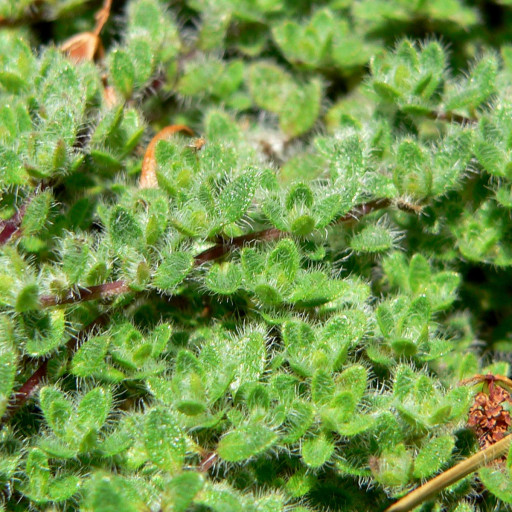
Often called the "Woolly Thyme" or "Silver Creeping Thyme," this Mediterranean native is the ultimate "living carpet" for fairy gardens and stone walkways. Unlike its upright culinary cousins, this variety grows into a dense, silver-grey mat that feels like soft velvet to the touch. It is widely loved by landscapers for its ability to soften the hard edges of garden paths and its ethereal, misty appearance in the early morning dew.
🔍 How to Identify
- 🌿 Tiny, Hairy Leaves: The most defining feature is the minute, oval foliage covered in dense, silvery-white hairs that give the plant its characteristic "woolly" texture and grey-green hue.
- 📏 Prostrate Growth: It is a true ground-hugger, rarely rising more than an inch off the ground, while its wiry stems spread outward to form a tight, springy cushion.
- 🌸 Pale Blossoms: Though it is grown primarily for its foliage, it occasionally produces very small, tubular flowers in shades of pale pink or lavender during the peak of summer.
🏡 In Your Garden
- 🏜️ The Drainage Rule: Because its fuzzy leaves are prone to trapping moisture, this plant is highly susceptible to root rot; it thrives best in gritty, poor soils where water can move away from the crown quickly.
- 👟 Steppable Resilience: It is one of the best plants for "inter-planting" between flagstones because it tolerates light foot traffic, releasing a subtle, earthy herbal scent whenever it is stepped on.
⚠️ Safety & Toxicity
- 🐾 Non-Toxic Status: Woolly Thyme is generally considered safe and non-toxic for dogs, cats, and horses, making it an excellent choice for pet-friendly backyard designs.
- 👅 Palatability: While it is technically edible and non-poisonous to humans, its "woolly" texture makes it unpleasant for culinary use, and it lacks the intense essential oils found in French or English Thyme.
✨ Fun Fact
The tiny hairs on the leaves are a brilliant evolutionary adaptation called "trichomes," which help the plant survive droughts by reflecting intense sunlight and trapping a micro-layer of moisture against the leaf surface.

Detailed Care Instructions
To grow Thymus pseudolanuginosus (woolly thyme), you can follow these steps:
- Choose the right location: Woolly thyme prefers full sun to partial shade. Make sure the location has well-draining soil.
- Prepare the soil: Before planting, prepare the soil by removing any weeds or grass. Loosen the soil to a depth of about 6 inches and amend it with compost to improve drainage.
- Select the right time: It is best to plant woolly thyme in spring after the last frost or in early fall. This will allow the plant to establish itself before extreme weather sets in.
- Planting: Dig a hole large enough to accommodate the plant’s root ball. Place the thyme in the hole, making sure to position it at the same level it was growing in the nursery pot. Backfill the hole with soil and gently pat it down to remove air pockets.
- Watering: Thyme prefers dry to medium moisture levels. Water the plant deeply after planting, and then allow the soil to dry out between waterings. Overwatering can cause root rot, so be careful not to overdo it.
- Mulching: Apply a layer of organic mulch, such as straw or bark chips, around the base of the thyme plant to retain moisture and suppress weed growth. Keep the mulch a few inches away from the stems to prevent rot.
- Pruning: To keep the plant compact and encourage bushier growth, trim the woolly thyme back after it has finished flowering. You can do this by cutting back about one-third of the plant using sharp pruning shears.
- Fertilizing: Woolly thyme generally does not require much fertilizer. However, you can apply a balanced organic fertilizer in early spring to provide some nutrients.
- Maintenance: Regularly monitor the plant for pests, such as aphids or spider mites, and treat them accordingly. Weeds should also be removed as they compete with the thyme for nutrients and water.
By following these steps, you can successfully grow Thymus pseudolanuginosus and enjoy its trailing, woolly foliage and fragrant pink flowers.

Place in a bright room that is sun drenched almost all day. Or directly in a south-facing window.

When it comes to watering the plant in question, it is important to keep a few factors in mind in order to ensure proper growth and health. First and foremost, it is important to avoid overwatering. This can lead to root rot and other issues that can undermine the plant's health. Experts suggest using a well-draining soil mix and allowing the top inch of soil to dry out before watering again.
When watering, be sure to pour the water slowly and directly onto the soil. Avoid watering the foliage, as this can lead to disease and other problems. Depending on the weather and other factors such as humidity levels and pot size, the plant may need to be watered every few days or every couple of weeks. It is important to monitor the soil moisture level and adjust the watering schedule as needed to ensure optimal health and growth. Overall, taking a measured and cautious approach to watering can help ensure that this plant thrives.
- Choose a well-draining soil mix for your plant.
- Fertilize your plant with a balanced organic fertilizer.
- Ensure you water your plant deeply after fertilizing.
- Fertilize your plant during its active growing season.
- Avoid fertilizing your plant during its dormant period.
- Dilute the fertilizer according to the instructions provided by the manufacturer.
- Try not to over-fertilize the plant as this can lead to burn or other health issues.
Thymus Pseudolanuginosus prefers well-draining soil, with a slightly alkaline pH level between 7.0 and 8.0. The soil should be a mix of sandy loam and gravel or small stones to facilitate drainage. The plant is drought-tolerant but does not do well in overly wet soil. Therefore, it is recommended to avoid heavy, clay soil that holds onto moisture. Organic matter in the soil is not crucial, but if desired, adding a small amount of compost or other organic matter can help improve soil structure and fertility. Overall, the key is to provide a soil mix that allows for adequate drainage and a slightly alkaline environment.
To propagate the plant commonly known as Thymus Pseudolanuginosus, you can follow these steps:
- Cut a stem from the parent plant with a sharp and sterile pruning shears. Make sure the stem is healthy, contains a few sets of leaves, and is about 3-4 inches long. Remove the leaves from the lower part of the stem.
- Dip the cut end of the stem into rooting hormone powder, tapping off the excess.
- Fill a small pot with moistened rooting mix. You can use a mixture of perlite, vermiculite, and peat moss or sand and potting soil.
- Make a small hole in the center of the potting mix and insert the stem into it, burying the bottom set of leaves.
- Water the potting mix until it is evenly moist and cover the pot with a plastic bag or plastic wrap to create a humid environment. Place it in a bright and warm spot where it can receive indirect sunlight.
- Check the pot daily and mist the stem and the potting mix to keep it moist. Avoid overwatering that can lead to rotting.
- After 4-6 weeks, gently tug on the stem. If you feel resistance, it means the roots have developed. Remove the plastic cover and gradually expose the new plant to normal indoor conditions.
- Transplant the newly rooted Thymus Pseudolanuginosus plant into a larger pot or outdoors in a well-draining soil mixture with full sunlight exposure.
Common pests of the english wild thyme include Spider mites, fungus gnats, aphids, thrips, whiteflies. Make a habit of checking your english wild thyme frequently for pests so that any infestations can be caught and managed early.







