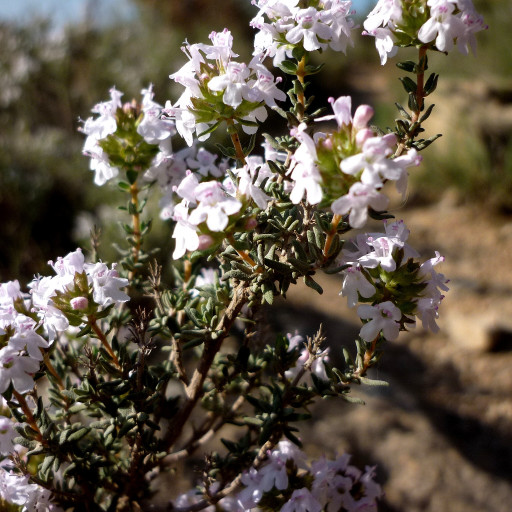
Plant Overview
Commonly known as Garden Thyme or English Thyme, this Mediterranean native is the quintessential "herb of courage." In ancient times, Roman soldiers bathed in thyme-infused water to gain strength, and it was often tucked into the cloaks of knights during the Middle Ages. Today, it is a staple for any sunny windowsill or gravel garden, prized for its aromatic oils and rugged resilience.
🔍 How to Identify
- 🌿 Tiny, Gray-Green Leaves: The leaves are very small, oval-shaped, and grow in dense pairs along the stems. They often have slightly curled edges.
- 🪵 Woody Structure: As the plant matures, it develops a shrub-like habit with tough, woody lower stems, while the new growth remains tender and green.
- 🌸 Dainty Blooms: In late spring and summer, the plant produces clusters of tiny, tubular flowers in shades of pale purple, pink, or white.
🏡 In Your Garden
- ☀️ Sun-Drenched Roots: Thyme craves the heat and full sun. It thrives in "lean" or poor soil; if you fertilize it too much, the plant grows quickly but loses its intense, signature flavor and aroma.
- 💧 Drainage is Key: This plant hates "wet feet." It is highly susceptible to root rot, so it’s better to underwater than overwater. It’s a perfect candidate for rock gardens or terracotta pots that breathe.
- ✂️ The Pruning Rule: Regular harvesting keeps the plant bushy and prevents it from becoming too "leggy." However, avoid cutting back into the old, hard wood, as the plant may struggle to sprout new leaves from the oldest branches.
⚠️ Safety & Toxicity
- 🍽️ Safe for Everyone: Common Thyme is non-toxic to humans, cats, and dogs. In fact, it is often used in pet health supplements for its natural antioxidant properties.
- 🧴 Oil Sensitivity: While the leaves are safe to handle and eat, concentrated thyme essential oil is extremely potent. It can cause skin irritation or digestive upset if used undiluted.
✨ Fun Fact
Ancient Greeks believed that thyme was a source of "thymos," a word meaning both smoke and courage. They burned it as incense in temples to clear the mind and invigorate the spirit of the worshippers.

Detailed Care Instructions
| Color | Green |
| Soil Ph | 6.0-8.0 |
| Humidity | Normal |
| Lighting | Full Sun |
| Toxicity | Non-Toxic |
| Soil Type | Loamy, Sandy |
| Bloom Time | Spring, Summer |
| Difficulty | Medium |
| Plant Type | Perennial |
| Hibernation | Cold Period |
| Mature Size | 6 To 12 Inches Tall |
| Native Area | Mediterranean |
| Temperature | 15°C - 21°C |
| Sun Exposure | Full Sun |
| Hardiness Zones | 5-9 |
To grow Thymus vulgaris, commonly known as thyme, you can follow these steps:
- Choose a suitable location: Thyme plants thrive in full sun, so select a spot in your garden that receives at least 6-8 hours of direct sunlight every day. Thyme prefers well-draining soil and is tolerant of poor soil conditions.
- Prepare the soil: Thyme prefers slightly alkaline soil with a pH between 6.0 and 8.0. If your soil is acidic, you can amend it by adding lime to raise the pH level. It's also a good idea to incorporate organic matter, such as compost or aged manure, into the soil to improve its structure and provide essential nutrients.
- Start from seeds or transplants: You have the option to start thyme from either seeds or transplants. If starting from seeds, sow them directly into the prepared soil, covering them lightly with a thin layer of soil. Thyme seeds usually germinate within 1-2 weeks. Alternatively, you can purchase thyme transplants from a local nursery and transplant them into your garden.
- Proper spacing: Thyme plants require adequate space to grow, so ensure you leave enough room between each plant. Space them around 8-12 inches apart to allow for proper air circulation and prevent overcrowding.
- Watering needs: Thyme plants prefer slightly dry conditions. Water them deeply once a week or when the top inch of soil feels dry. Avoid overwatering, as wet soil can lead to root rot.
- Mulch: Apply a layer of organic mulch, such as straw or wood chips, around the base of the plants to help retain soil moisture, suppress weed growth, and regulate soil temperature.
- Pruning and maintenance: Regularly prune thyme plants to encourage bushiness and prevent them from becoming leggy. Trim the plant back by about one-third once it reaches a height of 6 inches. You can also harvest the leaves for culinary or medicinal use as needed.
- Fertilization: Thyme is a low-maintenance herb and does not typically require heavy fertilization. However, you can apply a balanced organic fertilizer once or twice a year to provide additional nutrients.
- Pests and diseases: Thyme is usually not prone to severe pest or disease issues. However, it is susceptible to root rot if the soil becomes waterlogged. Ensure proper drainage and avoid overwatering to prevent this issue.
By following these steps, you can successfully grow Thymus vulgaris plants and enjoy their aromatic leaves for culinary purposes or as a decorative garden addition.

Place in a bright room that is sun drenched almost all day. Or directly in a south-facing window.

To water this plant, it's important to first check the soil moisture level by sticking your finger about an inch deep into the soil. If the soil feels dry, it's time to water. Use a watering can or hose to give the plant a thorough watering, making sure that the water reaches the roots. It's important not to over-water, as this can lead to root rot, so be sure to only water when the soil is dry. Additionally, make sure that the plant container has proper drainage to avoid water accumulation at the bottom.
For optimal growth and blooming of this plant, it is recommended to apply a balanced fertilizer in the early spring before new growth appears. The fertilizer should have equal parts nitrogen, phosphorus, and potassium. It is important not to over-fertilize, as this can lead to a decrease in flavor and aroma. Additionally, a layer of organic mulch around the base of the plant can help to retain moisture and provide nutrients.
The best type of soil to use for this particular plant is a well-draining and aerated soil that is high in organic matter. It should have a slightly acidic to neutral pH level, ideally between 6.0 and 7.5. Avoid using heavy, compacted soils like clay, and instead opt for a light, sandy loam soil. It's important to ensure that the soil stays moist, but not waterlogged, as this can cause root rot and other fungal diseases. Adding compost or peat moss to the soil can help improve its texture and fertility, which in turn will support the growth and health of this plant.
Thymus Vulgaris can be propagated through several methods. One popular method is through cuttings. Cut a young shoot from the parent plant, ensuring that it's free from diseases or pests. Remove the lower leaves and dip the cuttings in root hormone powder. Place the cuttings in well-draining soil and moisten them. Keep the soil and the cuttings moist and in indirect sunlight until the cuttings have rooted and have started to grow new leaves.
Another method is through division. This can be done when the plant has grown too large for its container. Carefully remove the plant, ensuring that the roots are intact. Then separate the plants into smaller sections, ensuring that each section has adequate roots and foliage. Plant the divided sections into separate pots or directly into the ground.
Seeds can also be used to propagate Thymus Vulgaris. Sow the seeds in well-draining soil, cover them lightly and keep them moist. Germination usually takes place within two to three weeks. Once the plants have grown to a sufficient size, they can be transplanted into their permanent location. However, it's important to note that this method is not the most reliable option as Thymus Vulgaris seeds can be finicky to germinate.
Common pests of the garden thyme include Spider mites, fungus gnats, aphids, thrips, whiteflies. Make a habit of checking your garden thyme frequently for pests so that any infestations can be caught and managed early.








