Plant Overview
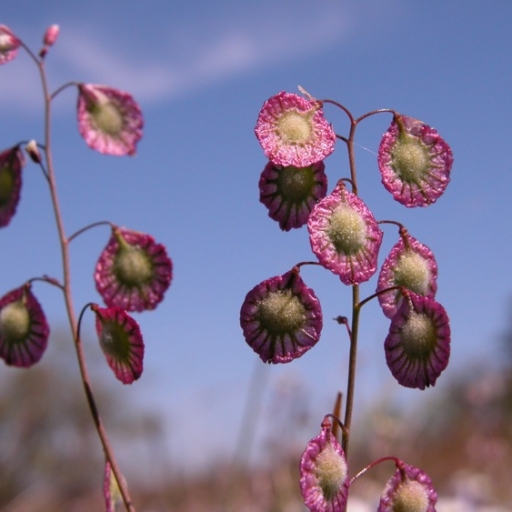
Commonly known as the Ribbed Fringepod, this delicate annual wildflower is a hidden gem of the Western United States. While its tiny blossoms are modest, the plant becomes a showstopper once it goes to seed, producing flat, disc-shaped pods that look like miniature lace doilies or stained-glass windows. In the wild, it is often found dancing in the breeze across grassy slopes and open woodlands, adding a touch of intricate geometry to the landscape.
🔍 How to Identify
- 🎡 The Seed Pods: The most striking feature; flat, circular pods (silicles) with distinct, spoke-like ribs radiating from the center to a papery, fringed edge.
- 🌸 The Flowers: Tiny, inconspicuous four-petaled flowers that range from white to a very pale lavender, clustered at the top of slender stems.
- 🍃 Folliage: It features a "basal rosette" (a circle of leaves at the ground level) and smaller leaves that "clasp" the stem higher up, almost looking like they are piercing through the leaf.
- 📏 Growth Habit: A slender, upright herb that usually reaches about 10 to 20 inches in height, often blending in with tall grasses until the sun hits its translucent pods.
🏡 In Your Garden
- 🌱 Wildflower Logic: As an annual, the Fringepod lives fast and dies young. It relies entirely on its "lace-wheel" seeds hitting the ground to return next spring, so avoid heavy mulching if you want them to naturalize.
- ☀️ Sun & Drainage: It thrives in rocky or sandy soils where water doesn't linger. It is perfectly adapted to "Mediterranean" climates—loving the winter rains and drying out gracefully as the summer heat sets in.
- 🦋 Pollinator Support: Though the flowers are small, they are a vital early-season nectar source for native bees and small butterflies during the transition from winter to spring.
⚠️ Safety & Toxicity
- ✅ Status: Generally considered non-toxic.
- 🐾 Details: There are no known records of toxicity to dogs, cats, or horses. As a member of the Mustard family (Brassicaceae), it is chemically similar to many garden vegetables, though it isn't cultivated for eating and should be enjoyed visually rather than culinarily.
✨ Fun Fact
The "ribs" on the seed pod aren't just for decoration—they provide structural integrity to the thin, papery wing. This allows the pod to catch the wind like a tiny frisbee, helping the plant "travel" to new areas far away from the parent stem!

Detailed Care Instructions
To grow Thysanocarpus Radians, also known as fringepod or lacepod, follow these steps:
- Climate and soil requirements: Thysanocarpus Radians prefers a mild climate with well-draining soil. It is native to coastal and mountainous regions, so it thrives in cool, damp conditions. Ensure your soil has good drainage to prevent waterlogging.
- Seed selection and preparation: Obtain Thysanocarpus Radians seeds either through seed banks or from mature plants. Fresh seeds tend to have higher germination rates. If you are using seeds collected from plants, allow them to dry thoroughly before storing.
- Germination: Plant the seeds in early spring or late fall, as these are the best times for germination. Scatter the seeds gently over the prepared soil and then lightly press them into the soil, ensuring they make good contact.
- Soil preparation: Prepare the planting area by removing any debris or weeds. Loosen the soil using a garden fork or tiller, making it easier for the roots to penetrate. Mix in organic compost to improve soil fertility and drainage.
- Watering: Provide consistent and even moisture to the seeds, keeping the soil moist until germination occurs. However, avoid over-watering or leaving the soil saturated, as this may cause the seeds to rot.
- Sunlight requirements: Thysanocarpus Radians thrives in partial shade to full sun. Choose a location that receives 4-6 hours of direct sunlight per day. Ensure that the plant receives some shade during the hottest part of the day if you live in an area with intense sunlight.
- Plant care: Once the seedlings emerge, thin them to allow enough space for growth. Space the plants about 6-12 inches apart to provide enough room for each plant to flourish. Water the plants regularly, especially during dry spells. Mulch can be used to help retain moisture and suppress weed growth.
- Pest and disease control: Thysanocarpus Radians is generally resistant to pests and diseases. However, keep an eye out for common garden pests such as aphids, snails, and slugs, and take appropriate measures to control them if necessary.
- Harvesting: Thysanocarpus Radians produces small, winged fruits. Allow the fruit to mature and dry on the plant until they turn brown. Collect the seeds for future propagation or leave the plants to self-seed if desired.
By following these guidelines, you should be able to successfully grow Thysanocarpus Radians in your garden or outdoor space.

Place in a bright room that is sun drenched almost all day. Or directly in a south-facing window.

Thysanocarpus Radians plant should be watered deeply, allowing the soil to become slightly dry in between waterings. It is best to use room temperature water and water the soil directly, avoiding getting water on the leaves. Watering should be adjusted depending on the humidity levels and light exposure of the plant's environment. Overwatering can cause root rot, so it is important to ensure proper drainage and not let the plant sit in standing water.
To fertilize this plant, you should use a balanced, slow-release fertilizer applied in the spring or summer months. Be sure to follow the packaging instructions for dosage and timing. It is also important to water the plant well before and after fertilizing to prevent burning the roots. Continue to monitor the plant's growth and adjust fertilization as necessary based on its needs.
Thysanocarpus Radians is a type of plant that requires well-draining soil, with a pH level between 5.5 to 6.5. The soil should be rich in nutrients, with a good amount of organic matter and minerals. It can thrive in sandy soil, loamy soil, or clayey soil, as long as it is not water-logged.
In order to ensure that the soil is adequately draining, it is important to mix in perlite or coarse sand. The addition of compost or aged manure can help to improve soil structure, adding nutrients and improving water retention. Soil should be kept moist but not saturated, with occasional deep watering.
It is important to avoid using soil that is overly compacted or heavy, as this can limit root growth and make it difficult for the plant to pull nutrients from the soil. Similarly, soil that is too acidic or alkaline can cause nutrient imbalances and inhibit optimal growth.
Overall, the key to successful growth of Thysanocarpus Radians is to provide a well-draining, nutrient-rich soil that is kept consistently moist. With proper soil preparation and care, this plant can thrive and produce beautiful blooms.
Thysanocarpus radians can be propagated through seed sowing. Collect mature seeds in the summer or fall from the plant's dried seed pods. Sow the seeds in a well-draining soil mix in a small pot. Press the seeds lightly into the soil, but do not cover them as they require light to germinate. Keep the soil moist and place the pot in a bright, warm location. The seeds usually germinate in 1-2 weeks.
Once the seedlings have grown to around 2-3 inches in height, they can be transplanted into larger containers or directly into the garden. When transplanting, make sure to space the plants at least 6 inches apart to allow for proper growth. Water the newly transplanted plants well and continue to keep the soil moist until they establish themselves.
Thysanocarpus radians can also be propagated through division, but this should only be done with mature plants. Carefully dig up the plant and separate the roots into smaller sections, making sure each division has enough roots attached. Replant the divided sections in a well-draining soil mix and provide them with plenty of water until they establish themselves.








