Plant Overview
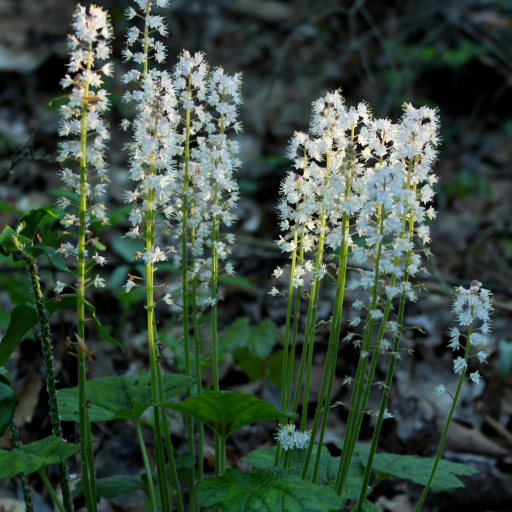
Known as the Foamflower or "Coolwort," this delicate woodland native transforms shady garden corners into a misty, ethereal landscape. Its name comes from the tiny, airy stamens that give the flower spikes a frothy, "foamy" appearance. In the wild, it forms a lush groundcover across Eastern North American forests, often found hugging mossy rocks and damp creek banks.
🔍 How to Identify
- 🍃 The Foliage: Look for heart-shaped or maple-like leaves that grow in low, mounding clumps. They often feature striking dark burgundy or chocolate-colored veining in the center.
- ☁️ The "Foam": In late spring, it sends up leafless stalks topped with fuzzy, star-shaped white or pale pink blossoms that look like a light dusting of sea spray.
- 🌱 The Runners: This specific variety (cordifolia) spreads via "stolons" (runners), similar to a strawberry plant, allowing it to knit together into a dense, weed-suppressing carpet.
🏡 In Your Garden
- 🌲 Mimicking the Forest: Because it evolved on the forest floor, it thrives in dappled shade and rich, organic soil. It hates "wet feet" in the winter but loves consistent moisture during the summer—think of the damp, spongy texture of a forest after a light rain.
- 🍂 Seasonal Color Shifting: While the flowers are the main event in spring, the leaves are the real workhorses. In the autumn and winter, the green foliage often transitions into deep bronze or reddish tones, providing visual interest when the rest of the garden is dormant.
⚠️ Safety & Toxicity
- 🛡️ Pet & Child Friendly: Tiarella is generally considered non-toxic to humans, cats, and dogs. It is a fantastic, "worry-free" alternative to more toxic shade plants like Lily of the Valley.
- 🦌 Deer Resistance: While no plant is 100% deer-proof, the fuzzy texture of the Foamflower is usually unappealing to deer and rabbits, who tend to bypass it for smoother-leaved treats like Hostas.
✨ Fun Fact
The genus name Tiarella is a diminutive of the Greek word tiara, which means "little turban." This refers to the unique shape of the tiny seed pods that appear after the "foam" of the flowers has faded!

Detailed Care Instructions
| Humidity | Normal |
| Difficulty | Medium |
| Hardiness Zones | 4 - 9 |
To grow Tiarella Cordifolia, also known as Foamflower, follow these steps:
- Choose a suitable location: Foamflower prefers partial to full shade, but it can tolerate some morning sun. Select a spot in your garden that receives a few hours of direct sunlight or dappled shade throughout the day.
- Prepare the soil: Tiarella Cordifolia thrives in moist, well-draining soil. Before planting, improve the soil's condition by adding compost or organic matter to enhance its moisture retention and fertility.
- Planting: Dig a hole slightly larger than the plant's root ball. Place the plant in the hole, ensuring the crown (where the roots meet the stems) is level with the soil surface. Backfill the hole with soil, gently pressing it around the roots.
- Watering: After planting, thoroughly water the foamflower to settle the soil and help the roots establish. Water regularly, keeping the soil consistently moist but not waterlogged. Make sure to water during dry periods or if the soil begins to dry out.
- Mulching: Add a layer of organic mulch around the plant, such as shredded bark or compost. Mulching helps retain moisture, suppresses weeds, and keeps the soil cool. Maintain a distance of a few inches between the stem and the mulch to prevent rot.
- Pruning: Prune faded or damaged foliage in late winter or early spring to encourage new growth. Cut back any dead or dying stems to the base of the plant.
- Fertilizing: Foamflower doesn't require heavy fertilization, but you can apply a balanced slow-release fertilizer in early spring if desired. Follow the manufacturer's instructions for the recommended amount.
- Propagation: Foamflower can be propagated through division. Every few years, dig up the plant, divide it into smaller sections, and replant them in suitable spots.
- Maintenance: Keep an eye out for pests and diseases, although foamflower is generally resistant to most common problems. Remove any damaged or diseased foliage promptly to prevent the issue from spreading.
- Enjoy the blooms: Tiarella Cordifolia produces delicate foam-like flowers in late spring to early summer. These white or pale pink blooms sit atop attractive foliage, providing a beautiful display in shaded areas of your garden.
By following these steps, you can successfully grow Tiarella Cordifolia and enjoy its charming flowers and foliage.

Place in a window with dappled sun or a spot in the middle of a room. Or directly in a window facing west or east.

Tiarella Cordifolia is a plant that requires regular watering to thrive. When watering this plant, it is important to ensure that the soil in which it is planted is moist but not overly saturated. One way to achieve this is to water the plant deeply once a week rather than lightly watering it more frequently.
Before watering, check the soil moisture level by inserting a finger into the soil. If the first inch of soil is dry, it is time to water. When watering, make sure to water at the base of the plant and avoid getting water on the leaves to prevent fungal growth.
In addition to regular watering, it is important to mulch around the base of the plant to help retain soil moisture and prevent weed growth. It is also important to monitor the plant for signs of stress, such as wilting or yellowing leaves, which can indicate that it needs more water. Overall, proper watering is essential for the health and growth of Tiarella Cordifolia.
To fertilize this plant, you may use a balanced fertilizer with equal parts nitrogen, phosphorus, and potassium. Apply the fertilizer to the soil around the base of the plant during the growing season, which is typically in spring and summer. Water the plant immediately after applying the fertilizer to help it dissolve and spread in the soil. Be careful not to over-fertilize, as it can lead to excessive growth and weak stems.
The best soil to use for the Tiarella Cordifolia plant is a well-draining loamy soil with a pH level between 5.5 and 7.0. The soil should be rich in organic matter, such as compost or well-rotted manure, to provide the necessary nutrients for plant growth. It is also important to ensure that the soil is moist but not waterlogged, as too much water can cause root rot and other issues. The plant prefers partial to full shade and can benefit from a layer of mulch around the base to help retain moisture and regulate soil temperature.
Tiarella Cordifolia is a perennial flowering plant that can be propagated through several methods. One way to propagate this plant is through division. To do this, first, select a healthy mature plant and dig it up from the ground. Carefully separate the roots and divide the plant into smaller sections, ensuring that each section has a healthy root system and enough foliage to support its growth. Plant each section in a new location, making sure to water and maintain them regularly.
Another method of propagating Tiarella Cordifolia is through stem cuttings. First, select a healthy stem from a mature plant and cut it at an angle close to the base of the stem. Remove the lower leaves from the cutting, leaving only a few at the top. Dip the cut end of the stem in rooting hormone and plant it in a pot filled with a mix of potting soil and sand. Water the cutting regularly and keep it in a shaded area until it forms roots. Once it has established roots, transplant the cutting into a larger pot or directly in the ground.
Lastly, Tiarella Cordifolia can also be propagated through seed. Collect the seeds from mature plants, and sow them in a pot filled with a mix of potting soil and sand. Keep the soil moist, and place the pot in a warm, bright area. Once the seedlings have developed a few leaves, transplant them into individual pots or directly in the ground.
Overall, propagating Tiarella Cordifolia can be achieved through division, stem cuttings, or seeds. Regardless of the method used, it is important to give the cuttings or seedlings proper care and attention to ensure their survival and successful growth.
Common pests of the heartleaf foamflower include Spider mites, snails. Make a habit of checking your heartleaf foamflower frequently for pests so that any infestations can be caught and managed early.








