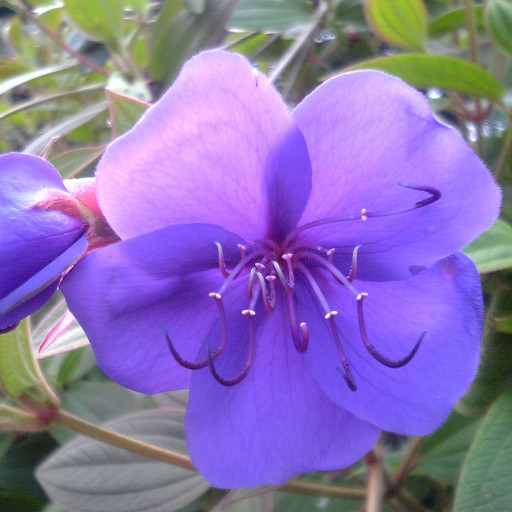
Plant Overview
Commonly known as the Princess Flower or Glory Bush, this Brazilian beauty is a showstopper in any landscape. Famous for its velvety, "pet-able" leaves and royal purple blossoms, it brings a touch of tropical grandeur to gardens. In its native South America, it is often celebrated for its vibrant color, which is so intense it almost looks painted on.
🔍 How to Identify
- 💜 The Bloom: Large, 3- to 4-inch wide flowers in a deep, electric purple. Look closely at the center to see long, hooked stamens that resemble spider legs.
- 🍃 The Leaf: Soft, oval-shaped leaves covered in fine, silvery hairs that give them a felt-like texture. They feature 3 to 7 prominent longitudinal veins.
- 🌿 The Stem: Squarish, reddish-tinted stems when young, which gradually become woody and brittle as the plant matures into a large shrub.
🏡 In Your Garden
- 🌬️ Wind Protection: Because its wood is remarkably brittle, the Princess Flower should be planted in a sheltered spot. A strong gust of wind can easily snap its branches, especially when heavy with blooms.
- 🧪 Acidic Cravings: This plant is an "acid-lover." If you notice the leaves turning yellow while the veins stay green, the soil is likely too alkaline. It thrives in rich, well-draining soil with a lower pH.
- ✂️ Shape Management: Left to its own devices, it can become "leggy" and sparse. Pruning it back by a third after the main flowering flush encourages a fuller, bushier habit and more flowers for the next season.
⚠️ Safety & Toxicity
- 🟢 Status: Generally Non-Toxic.
- 🐾 Details: The Princess Flower is considered safe for cats, dogs, and horses. While not intended for consumption, it doesn't contain the harmful alkaloids found in many other tropical ornamentals. The fuzzy hairs on the leaves may occasionally cause very mild skin irritation for humans with high sensitivity.
✨ Fun Fact
The Tibouchina relies on a fascinating method called "Buzz Pollination." The pollen is tucked away so tightly inside the stamens that ordinary bees can't get to it; only certain bees that can vibrate their flight muscles at a specific frequency can shake the pollen loose!

Detailed Care Instructions
| Color | Purple |
| Soil Ph | 7.0 Or Below |
| Lighting | Full Sun |
| Soil Type | Rich, Well-Drained, Acidic |
| Bloom Time | Year-Round |
| Plant Type | Perennial Evergreen Shrub Or Small Tree |
| Mature Size | 10 To 20 Feet Outdoors (Can Be Pruned To Be Compact), Two To Three Feet Indoors. |
| Native Area | Brazil |
| Sun Exposure | Full Sun, Though It Can Tolerate Some Afternoon Shade, Especially In The Hottest Zones. |
| Hardiness Zones | Zones 9 To 11 Are Best For This Shrub. It Can Be Grown In Zone 8, But Winter Frost Will Cause It To Die Back Until Warmer Temperatures Return. |
To grow a Tibouchina Urvilleana plant, also known as the princess flower or purple glory tree, you can follow these steps:
- Climate and Sunlight: Ensure that you live in a suitable climate for Tibouchina Urvilleana, which is USDA hardiness zones 9-11. It prefers full sun to partial shade.
- Soil: Choose well-draining soil rich in organic matter. The soil should be slightly acidic with a pH level of 5.5-6.5.
- Planting: Dig a hole twice as wide and deep as the root ball of the plant. Place the plant in the hole, backfill with soil, and gently pat it down. Water thoroughly after planting.
- Watering: Keep the soil consistently moist but not waterlogged. Water deeply whenever the top inch of soil feels dry.
- Mulching: Apply a layer of mulch around the base of the plant. This helps retain moisture, suppresses weed growth, and regulates soil temperature.
- Fertilizing: Feed Tibouchina Urvilleana with a balanced, slow-release fertilizer in spring and summer. Follow the instructions on the fertilizer packaging for optimal results.
- Pruning: Prune the plant in early spring to maintain its shape, remove dead or damaged branches, and enhance flowering. Pinching the tips of young plants encourages branching.
- Pests and Diseases: Regularly inspect the plant for pests like aphids, scales, and mites. Treat infestations with pest control sprays or soaps. Ensure good air circulation around the plant to prevent fungal diseases.
- Winter Care: If you live in a colder climate, where Tibouchina Urvilleana is not hardy, consider growing it as a container plant that can be brought indoors during winter or protect the plant with frost blankets.
- Propagation: Tibouchina Urvilleana can be propagated from cuttings taken in spring or by layering. Dip the cuttings in rooting hormone before planting them in a well-draining rooting medium.
Remember to regularly monitor the plant's health, provide proper care, and enjoy the beautiful purple blooms of Tibouchina Urvilleana.

Place in a bright room that is sun drenched almost all day. Or directly in a south-facing window.

To water the plant, it is important to first check the soil moisture level by sticking a finger about an inch into the soil. If the soil feels dry, it is time to water the plant. The plant should be watered thoroughly, allowing the water to reach the roots. However, it is important not to overwater the plant as this can lead to root rot. Allow the soil to dry out slightly before watering again. Provide enough water to prevent the soil from becoming bone dry but also ensure there is no standing water around the roots.
The best time to fertilize the plant is during its active growing season, which is typically in the spring and summer months. Use a balanced fertilizer that contains equal amounts of nitrogen, phosphorus, and potassium. You can also use a slow-release fertilizer that slowly releases nutrients into the soil over time. Apply the fertilizer according to the package instructions, being careful not to over-fertilize as this can burn the plant's roots. Water the plant thoroughly after fertilizing to help distribute the nutrients throughout the soil. Avoid fertilizing during the plant's dormant period, as this can lead to nutrient buildup and damage to the plant's roots.
The best type of soil to use for this particular plant is a well-draining, rich soil with a slightly acidic pH level. It should not be too heavy or compacted, as this can lead to excessive water retention and root rot. A soil mixture that contains a combination of compost, peat moss, and perlite or vermiculite is ideal for promoting healthy growth and development. Additionally, it is important to ensure that the soil is not too alkaline, as this can inhibit nutrient uptake and lead to yellowing of the leaves. A pH range of 5.5 to 6.5 is best for this type of plant.
To propagate this plant, take a cutting from the stem of the parent plant, making sure it is at least 4-6 inches long and has several leaves. Remove the lower leaves from the cutting, leaving only a few at the top. Dip the cut end in rooting hormone and plant it into a pot filled with well-draining soil. Keep the soil moist and place the pot in a shaded area until the cutting starts to root. Once the roots have formed, you can transplant the new plant into a larger pot or directly into the ground. Make sure to water the plant regularly and provide it with plenty of sunlight.
Common pests of the princess flower include Scale insect, mealybugs. Make a habit of checking your princess flower frequently for pests so that any infestations can be caught and managed early.








