Plant Overview
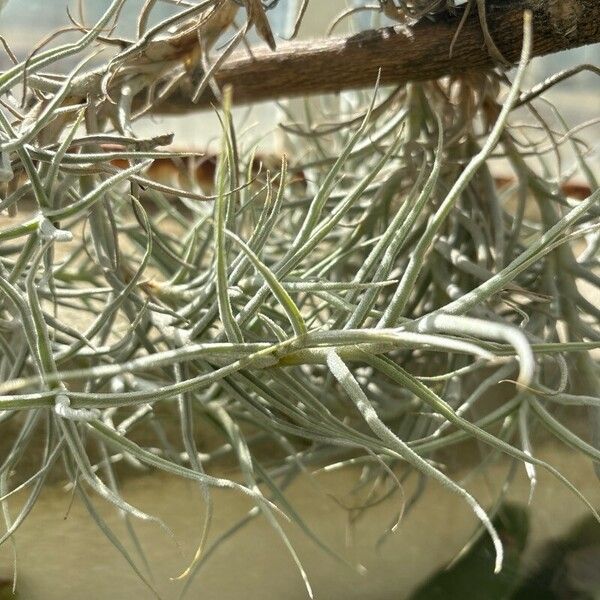
Often referred to as the "Rootless Air Plant," Tillandsia arhiza is a true botanical marvel that looks more like a piece of silver sea coral than a traditional garden inhabitant. Originating from the rocky outcrops of South America, specifically Bolivia and Argentina, this plant has evolved to live entirely on thin air and starlight. It is a favorite among minimalist decorators and terrarium enthusiasts who love its architectural, almost alien-like structure.
🔍 How to Identify
- ❄️ Silvery Sheen: The leaves are covered in a dense layer of "trichomes"—tiny silver scales that act like sponges to catch moisture and nutrients directly from the wind.
- 🌀 Twisting Form: It lacks a traditional stem; instead, its stiff, recurved leaves spiral outward, creating a compact and sculptural rosette shape.
- 🪨 Absent Roots: Living up to its name ("arhiza" means rootless), this species produces almost no root system at all, relying entirely on its foliage for survival.
🏡 In Your Garden
- 🌬️ Mounting Mastery: Because it doesn't use soil, you can get creative! It thrives when glued or wired to driftwood, cork bark, or even suspended in mid-air with fishing line to allow for 360-degree air circulation.
- 🚿 The Misting Method: Unlike other Air Plants that enjoy a long "dunk" in a bowl of water, Tillandsia arhiza prefers frequent, light misting. Its thick trichomes can trap too much water if submerged, which may lead to rot in the center of the plant.
⚠️ Safety & Toxicity
- ✅ Pet Friendly: This plant is generally considered non-toxic and safe for households with curious cats, dogs, or small children.
- 🚫 Choking Hazard: While not poisonous, its stiff and pointy leaves could cause physical irritation or be a choking hazard if a pet tries to use it as a chew toy.
✨ Fun Fact
The name Arhiza is derived from the Greek words "a" (without) and "rhiza" (root). While most plants use roots to drink, this rebel uses them only as "anchors" to hold onto rocks—and in the case of this specific species, it often does away with them entirely, letting the wind roll it across the ground until it finds a place to rest!

Detailed Care Instructions

Place in a window with dappled sun or a spot in the middle of a room. Or directly in a window facing west or east.

The water in these plants is absorbed and evaporated form the leaves. As a result, it is recommended that the leaves be submerged in water once a week or misted on a regular basis. Submerge your plant in water in a sink or holder for 30 minutes. Then gently shake the plant tossing and turning to dry it. Place your plant on a towel for a few hours and let it sit. It will evaporate any excess water. If the plants are kept in indoor conditions, they should be hydrated on a regular basis. It's simple to keep these plants hydrated all the time, but it takes a lot of work. Watering air plants early in the morning allows them to dry out and avoids disturbing their respiration activity at night. Chlorinated water causes the tips of the leaves to brown, so avoid it.
These plants scarcely crave for fertilizers. The choice of fertilizer, on the other hand, is quite important. Misting with right fertilizers will promote blooming. Fertilizers containing urea, zinc, and copper are toxic to plants and should be avoided at all costs. Nitrogen, phosphorus, and potassium should be present in the chosen fertilizer. Once a month, apply either bromeliad fertilizer or a diluted houseplant fertilizer with a 1/4 dilution. Moreover, don't forget to water your plants after the application of fertilizer.
You may use Orchid Food for your Tillandsia Arhiza
Common pests of the tillandsia arhiza include Mealybugs. Make a habit of checking your tillandsia arhiza frequently for pests so that any infestations can be caught and managed early.







