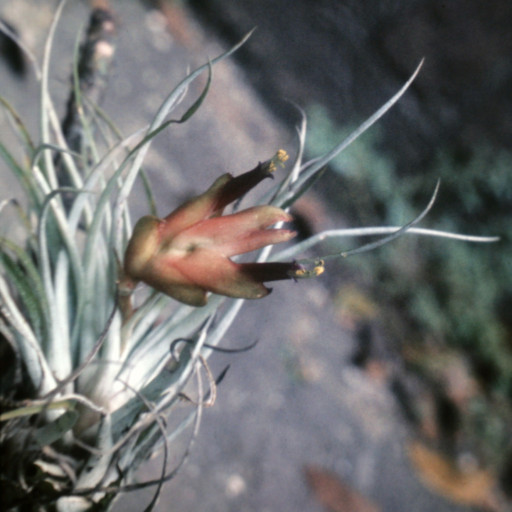
Plant Overview
Often called the "Medusa’s Head" of the air plant world, Tillandsia bulbosa is a mesmerizing epiphyte that looks like it crawled out of an alien kelp forest. Native to the humid tropical regions of Central and South America, this plant doesn't need soil to survive, instead clinging to tree branches and soaking up moisture from the air. Its twisting, tentacle-like leaves and deep purple hues make it a dramatic favorite for modern terrariums and minimalist displays.
🔍 How to Identify
- 🧅 The Pseudo-Bulb: It features a distinct, swollen base made of tightly overlapping leaf bases that form a hollow, bulbous chamber.
- 🐍 Twisted Leaves: The leaves are long, narrow, and cylindrical, curving and contorting in various directions like a head of snakes.
- 🎨 Vibrant Blushing: While typically a deep forest green, the upper leaves and floral bracts turn a brilliant cherry red or neon purple right before a violet flower emerges.
🏡 In Your Garden
- 💧 The "Upside Down" Rule: Because the base is hollow and bulbous, water can easily become trapped inside, leading to center rot. After its weekly soak, always hang it upside down or give it a vigorous shake to ensure no water stays pooled in the bulb.
- ☁️ High Humidity Craver: Unlike silvery air plants that tolerate drought, this smooth, green variety lacks heavy "fuzz" (trichomes). It prefers a humid environment and will appreciate frequent misting between deep waterings to keep its tips from browning.
⚠️ Safety & Toxicity
- ✅ Non-Toxic: Tillandsia bulbosa is completely safe for humans and pets. It contains no known toxins or irritants.
- 🐾 Pet Play: While safe, the wriggly, string-like leaves are very tempting for cats. Keep it out of reach to prevent your pet from "hunting" and damaging the delicate leaves.
✨ Fun Fact
🐜 Ant Apartments: In the wild, this plant is a "myrmecophyte." Its hollow bulbous base often serves as a cozy home for colonies of ants! The ants get a safe shelter, and in return, the plant absorbs nutrients from the ants' waste—a perfect tropical partnership.

Detailed Care Instructions
| Color | Violet |
| Humidity | Normal |
| Lighting | Part Sun |
| Toxicity | Non-Toxic |
| Bloom Time | Once Per Lifetime |
| Difficulty | Medium |
| Plant Type | Perennial Herbaceous |
| Mature Size | 4–7 Inches |
| Native Area | Mexico, Central And South America |
| Temperature | 10°C - 32°C |
| Sun Exposure | Bright, Indirect Light Or Part Shade |
| Hardiness Zones | 9-11 |
To grow Tillandsia bulbosa, commonly known as air plants, you need to follow these steps:
- Light: These plants prefer bright, indirect light. Place them near a window where they can receive bright, filtered sunlight for a few hours each day. Avoid direct sunlight, as it may damage or burn the leaves.
- Water: Air plants have unique water requirements. They absorb moisture through their leaves rather than their roots. Mist the plant with water 2-3 times a week, or soak it in water for 20-30 minutes once a week. Shake off any excess water after soaking to prevent rot. In dry climates or during hot weather, you may need to mist them more frequently.
- Humidity: Air plants thrive in humid conditions. If the air in your home is dry, use a humidifier or place a tray filled with water near the plants to increase the humidity around them.
- Air circulation: Good air circulation is important for the health of air plants. They require fresh air to thrive. Avoid placing them in enclosed spaces with poor ventilation.
- Temperature: Tillandsia bulbosa can tolerate a wide range of temperatures but prefers temperatures between 50°F to 90°F (10°C to 32°C). Protect them from extreme cold or heat, and avoid placing them near drafty areas like vents or open windows.
- Fertilizer: Air plants don't require regular fertilization. You can use a diluted, balanced orchid or bromeliad fertilizer once or twice a month during the growing season (spring and summer). Follow the instructions on the fertilizer label for proper dilution ratios.
- Display: Tillandsia bulbosa can be displayed in various ways. They can be mounted on driftwood, placed in terrariums, or simply placed in a decorative dish or pot. Ensure the plant is secure and doesn't fall or tip over.
Remember to regularly check the plant for any signs of distress, such as drying or browning of leaves. Adjust your care routine accordingly to maintain a healthy Tillandsia bulbosa plant.

Place in a window with dappled sun or a spot in the middle of a room. Or directly in a window facing west or east.
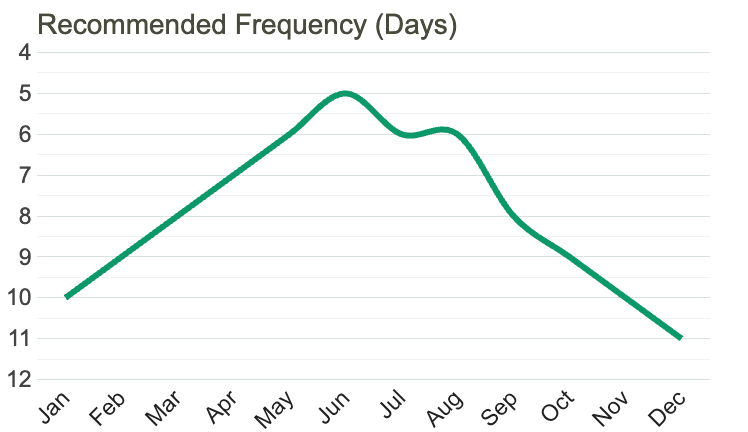
The Tillandsia Bulbosa plant is an epiphyte with small, silver-green leaves that grow in a rosette pattern. It is native to tropical regions and does not require soil to grow.
To water this plant, it is important to mist it regularly with a fine mist spray bottle or to soak it in water for about 20-30 minutes every week. When soaking the plant, it is important to allow the excess water to drain out completely to prevent root rot.
It is also important to avoid using tap water as the chemicals in it can harm the plant. Instead, use filtered, distilled, or rainwater.
Additionally, the Tillandsia Bulbosa plant requires bright, indirect light to thrive. It can be placed near a window with a sheer curtain or under grow lights. Avoid placing it in direct sunlight as this can burn the leaves.
Overall, caring for this plant involves regular misting or soaking, using the right type of water, and providing bright, indirect light.
- Prepare a fertilizer solution by diluting a balanced water-soluble fertilizer at half strength.
- Soak the Tillandsia Bulbosa plant in the fertilizer solution for 15-20 minutes.
- Gently shake off excess fertilizer solution and allow the plant to dry thoroughly.
- Repeat fertilization every 2-3 weeks during the growing season (spring/summer) and reduce frequency during the dormant season (fall/winter).
- Avoid applying fertilizer directly to the center of the plant, as this can cause rotting. Instead, focus on the leaves and base.
- Monitor the plant for any signs of fertilizer burn or over-fertilization, such as brown or black tips on the leaves, and adjust the frequency of fertilization accordingly.
Tillandsia Bulbosa plant requires a well-draining soil that is able to retain some moisture but not stay soggy. It is important to avoid soils that are too heavy or compact as they can restrict the plant's growth. A soil with a pH level between 5.5 and 7.0 is ideal for this plant. Additionally, it is recommended to use a soil that is rich in organic matter to promote healthy growth and provide the plant with necessary nutrients. The soil should be free of any harmful chemicals or pesticides that can negatively affect the plant's growth and health. Overall, a balanced and nutrient-rich soil that can provide adequate moisture and drainage is essential for the proper growth and development of Tillandsia Bulbosa plant.
Tillandsia Bulbosa plant can be propagated by separating the offsets or pups produced by the mother plant. Wait until the pups are about one-third the size of the mother plant before separating them.
To propagate, gently remove the pup from the mother plant by grasping its base and wiggling it until it comes free. Trim away any remaining foliage on the base of the pup until it is smooth and plant it in a separate container with proper Tillandsia growing medium.
It is important to mist the pup and keep it in a warm, humid location until roots develop. Avoid exposing it to direct sunlight until it is well established, and fertilize it according to its needs. With proper care and attention, the pup will grow into a mature Tillandsia Bulbosa plant.
Common pests of the bulbous airplant include Mealybugs. Make a habit of checking your bulbous airplant frequently for pests so that any infestations can be caught and managed early.








