Plant Overview
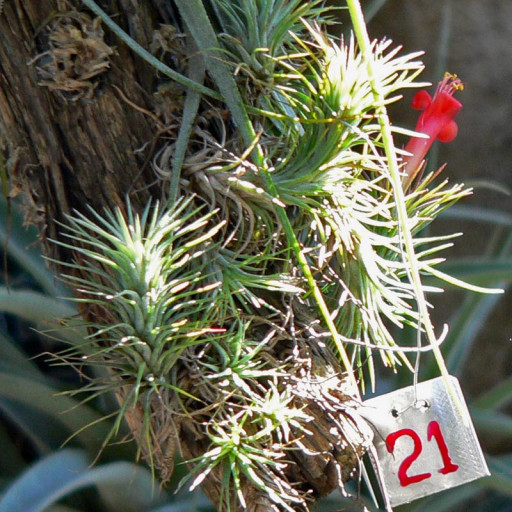
Meet the Tillandsia funckiana, a Venezuelan native that looks more like a prehistoric pine branch or a fuzzy caterpillar than a typical houseplant. Often called the "Funck's Air Plant," it is famous for its spiraling, needle-like leaves and stunning, tubular flowers that emerge like tiny crimson torches. Unlike many air plants that grow in a tight rosette, this species loves to trail and twist, making it a dramatic choice for hanging displays.
🔍 How to Identify
- 🌿 Spiraling Foliage: Features thin, needle-like leaves that grow in a dense spiral along a central, elongating stem.
- 🐍 Growth Habit: It has a "caulescent" habit, meaning it grows along a stem rather than staying in a clump; as it matures, it often twists and curves into unique shapes.
- 🔥 The "Torch" Bloom: Produces a single, vibrant scarlet or deep orange tubular flower at the very tip of the stem, which provides a startling contrast to its silvery-green leaves.
🏡 In Your Garden
- 🌬️ Airflow is King: Because this plant grows in long strands, it is prone to trapping water between its needle-thin leaves. It must be placed somewhere with excellent air circulation to ensure it dries out completely after misting.
- ☀️ Light Seekers: It thrives in bright, indirect light. While it can handle a little morning sun, too much direct afternoon heat will parch its thin leaves quickly, causing the tips to turn brown and crispy.
⚠️ Safety & Toxicity
- ✅ Pet & Human Safe: This plant is non-toxic to cats, dogs, and humans, making it a "worry-free" addition to any shelf.
- 🌵 Mechanical Irritation: While not poisonous, the dry, needle-like leaves can be a bit prickly. It’s best kept out of reach of curious kittens who might find the "crunchy" texture tempting to chew on, as it can be a choking hazard.
✨ Fun Fact
In its natural habitat, Tillandsia funckiana grows in massive, hanging colonies on vertical cliff faces. These colonies can consist of hundreds of individual stems, creating a living "green curtain" that turns bright red when the entire colony blooms at once!

Detailed Care Instructions
Growing Tillandsia funckiana (also known as Air Plant) is relatively easy if you follow these steps:
- Light: Tillandsia funckiana prefers bright, indirect light. Place it near a window with filtered sunlight or use artificial grow lights.
- Temperature: Maintain a temperature range of 50-90°F (10-32°C). Avoid extreme heat or cold, especially freezing temperatures.
- Watering: Unlike traditional plants, Tillandsia funckiana is an epiphyte, meaning it absorbs water and nutrients through its leaves. Soak the plant in water for about 20-30 minutes every 1-2 weeks. Shake off excess water afterward to prevent rotting. Mist the plant occasionally between soakings, especially in drier environments or during hot weather.
- Air circulation: Good air circulation is crucial for Tillandsia funckiana's health. Place it in an area with decent airflow to prevent moisture buildup and minimize the risk of rot.
- Humidity: Tillandsia funckiana prefers moderate to high humidity levels (around 50-70%). If the air in your home is dry, you can create a humid environment by using a humidifier or placing a tray of water near the plant to increase humidity through evaporation.
- Fertilizer: Feed your Tillandsia funckiana once every 2-3 months with a diluted bromeliad or air plant fertilizer. Follow the package instructions for the proper dilution.
- Mounting: Tillandsia funckiana is often mounted on driftwood, rocks, or other decorative objects. Secure it in place using non-toxic glue, fishing line, or wire. Ensure good contact between the plant's roots and the mounting surface.
- Care: Regularly inspect the plant for any signs of pests, such as mealybugs or spider mites. If pests are present, gently remove them with a cotton swab dipped in rubbing alcohol or treat the plant with a natural insecticidal soap.
With proper care and maintenance, your Tillandsia funckiana should thrive and grow into a beautiful air plant.

Place in a window with dappled sun or a spot in the middle of a room. Or directly in a window facing west or east.
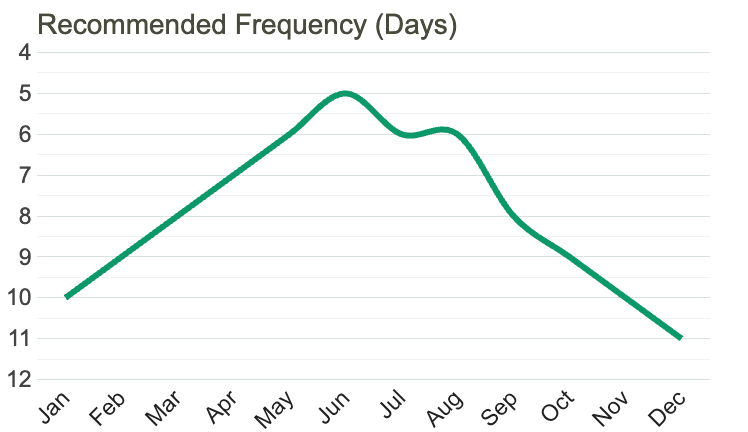
Tillandsia Funckiana is a type of plant that belongs to the family of Bromeliads. This plant, unlike other plants, does not require soil to grow. It is an air plant, which means it can absorb nutrients and moisture from the air and the environment around it. Watering this plant needs to be done carefully as overwatering can lead to rotting.
To water the Tillandsia Funckiana plant, you will need to mist it regularly with a spray bottle. Alternatively, you can also soak it in a bowl or sink filled with room temperature water for about 30 minutes once a week. After soaking, gently shake off any excess water from the plant and let it dry in a well-ventilated area. Avoid using hard or mineral-heavy water as it can damage the plant.
It is crucial not to let the water sit in the center of the plant as it can lead to rotting. Ensure that the plant is completely dry before placing it back on its holder or pot. Tillandsia Funckiana plants prefer a humid environment, so it is best to keep them in a location with a humidity level of at least 50%.
In summary, water the Tillandsia Funckiana plant by misting it regularly or by soaking it in water once a week. Ensure that the plant is completely dry before placing it back in its holder/pot, and avoid letting water sit in the center of the plant to prevent rotting.
- Prepare a diluted fertilizer solution using a fertilizer appropriate for air plants.
- Remove the plant from its container and rinse it thoroughly under running water.
- Place the plant in a container filled with the diluted fertilizer solution.
- Soak the plant in the solution for 20-30 minutes.
- Remove the plant from the container and shake off excess water.
- Allow the plant to dry completely before returning it to its usual growing location.
- Fertilize the plant once a month during the growing season or as needed.
- Do not over-fertilize the plant as it can lead to burnings and other health issues.
Tillandsia Funckiana plant prefers a well-draining soil mixture that is light and airy. The soil should not retain moisture for too long as it can cause the roots to rot. A good soil mixture for this plant can include a blend of materials such as orchid bark, perlite, pumice, or sand. These materials will provide good air circulation, drainage, and prevent the soil from drying out too quickly. It is important to note that Tillandsia Funckiana plant is an epiphyte, which means it grows on other plants and does not need soil to survive. Therefore, when planting, it is important to provide a substrate where the roots can anchor themselves, rather than a soil mixture where they can grow.
Propagation of this plant can be done through various methods such as division, offsets, and seed propagation. However, the most common method is through offsets. To propagate the plant through offsets, one should identify the offsets (small plants growing out of the base of the parent plant) and carefully separate them from the parent plant using a sharp, sterile tool. The offsets can then be planted in their own containers or grouped together in a larger container filled with well-draining soil or medium. It is important to keep the soil moist but not wet and to provide the plant with bright, indirect light until it establishes roots and begins to grow on its own.
Common pests of the tillandsia funckiana include Mealybugs. Make a habit of checking your tillandsia funckiana frequently for pests so that any infestations can be caught and managed early.








