Plant Overview
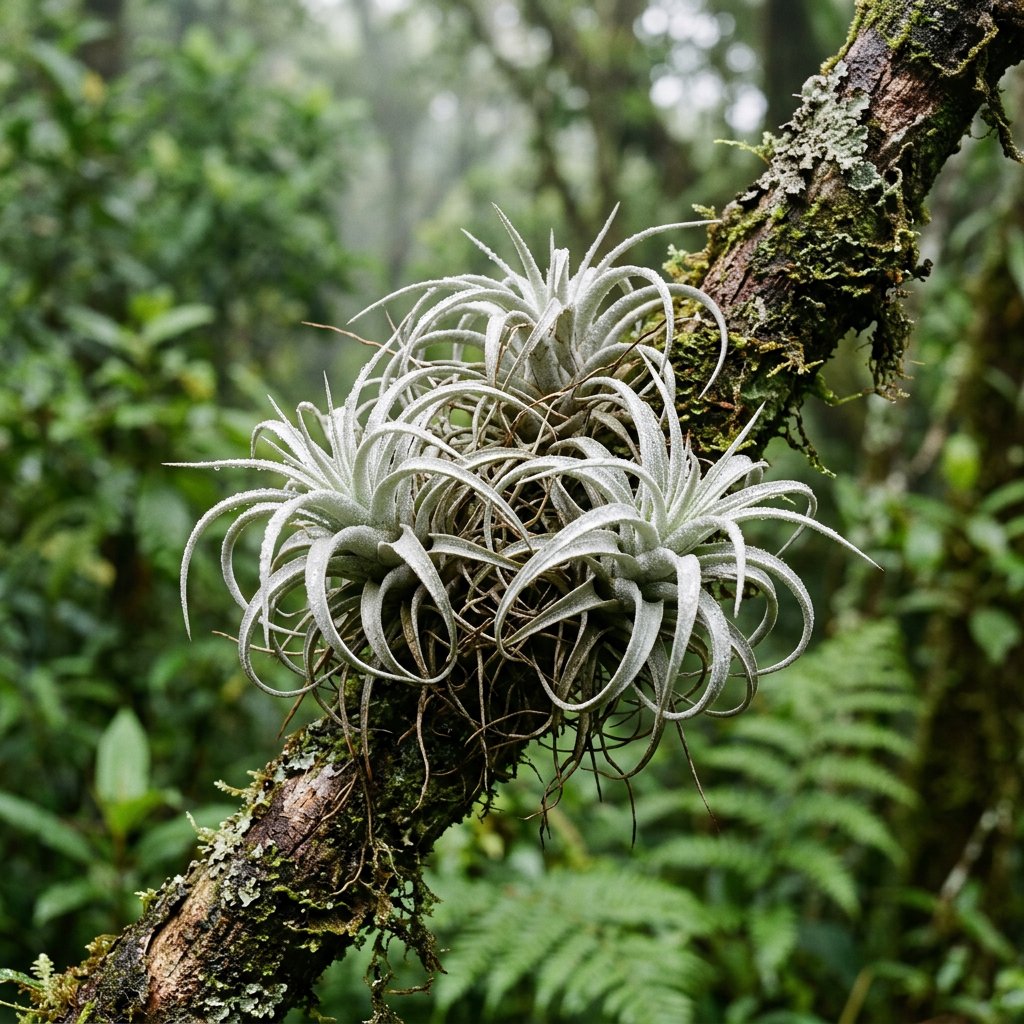
Affectionately known as the "Velvety Air Plant," Tillandsia gardneri looks like a piece of frozen silver plucked from a Brazilian forest. It is one of the softest-looking members of the Bromeliad family, often mistaken for a delicate sea creature or a frosted succulent. Because it lacks a traditional root system, it lives its life suspended in the air, catching moisture and nutrients directly from the breeze.
🔍 How to Identify
- 🍃 Foliage Texture: The leaves are covered in an exceptionally dense layer of silver scales (trichomes) that give the plant a soft, suede-like feel and a shimmering "frosted" appearance.
- 📐 Growth Form: It typically grows into a symmetrical, fountain-like rosette of thin, tapering leaves that arch gracefully outward and downward.
- 🌸 The Bloom: When ready to flower, it produces a stout, pale pink flower spike with small, tubular flowers that peek out from between the bracts.
🏡 In Your Garden
- 🌬️ Air Circulation is Key: Because its dense "fuzz" traps moisture so effectively, this plant is highly susceptible to rot. It must be kept in a spot with excellent airflow to ensure it dries out quickly after watering.
- 💧 The "Upside Down" Rule: While it loves high humidity, you should never let water pool in the center of the rosette. After misting or soaking, shake the plant gently and let it dry upside down to prevent the core from turning mushy.
⚠️ Safety & Toxicity
- 🐾 Non-Toxic: Tillandsia gardneri is completely safe and non-toxic for cats, dogs, and other household pets.
- 🌱 Physical Fragility: While not dangerous, the leaves are quite thin and can be easily creased or snapped. It is best kept in a hanging display where it won't be bumped by passing traffic.
✨ Fun Fact
Those "fuzzy" silver scales (trichomes) are actually microscopic hydraulic systems. They act like a sponge to suck in water when it’s available, but once they dry, they stand up at an angle to reflect harsh sunlight, acting as a built-in "sunblock" for the plant!

Detailed Care Instructions
To grow Tillandsia gardneri (also known as Gardner's Air Plant), you can follow these steps:
- Lighting: Place the plant in a bright, indirect light location. It can tolerate some direct sunlight but avoid placing it under harsh afternoon sun.
- Temperature: Tillandsia gardneri prefers moderate temperatures between 60-80°F (15-27°C). Avoid exposing it to extreme cold or heat.
- Watering: Air plants absorb moisture through their leaves, so water them by misting them thoroughly 2-3 times a week. Alternatively, you can soak them in room temperature water for about 20-30 minutes once a week, then shake off excess water to avoid rotting.
- Humidity: Air plants prefer higher humidity levels. You can enhance humidity by placing the plant on a tray filled with pebbles and water, ensuring the water level is below the bottom of the pot to avoid root rot.
- Air circulation: Good air circulation is vital for Tillandsia gardneri's health. Ensure the plant is in an area with adequate air movement to prevent the buildup of stagnant air.
- Fertilizing: Feed the plant with a bromeliad or air plant fertilizer once a month. Follow the instructions on the fertilizer packaging for application rates.
- Mounting options: You can mount Tillandsia gardneri on various surfaces, including driftwood, cork bark, or decorative rocks using non-toxic glue or fishing line. Make sure to avoid blocking the base of the plant to allow proper air circulation.
- Maintenance: Remove any dead or yellowing leaves by gently pulling them off from the base.
- Flowering: Tillandsia gardneri produces beautiful lavender or violet flowers with pink bracts. Flowering occurs once the plant reaches maturity, usually after a few years of healthy growth.
Remember to adjust care recommendations based on your specific climate and indoor conditions. With proper care, your Tillandsia gardneri should thrive and grow happily.

Place in a window with dappled sun or a spot in the middle of a room. Or directly in a window facing west or east.

To water this plant, it is important to use tepid or room temperature water to avoid shocking the plant. You can either mist the leaves or soak the plant in water for 1-2 hours, then shake off excess water and allow it to dry completely before placing it back in its container. The frequency of watering will depend on the humidity levels and temperature in your environment, but typically once every 1-2 weeks is sufficient. Lack of proper watering can lead to dehydration and damage to the leaves overtime.
To fertilize this epiphytic plant, you can mix a water-soluble orchid fertilizer at half strength and lightly mist the leaves once every two to three weeks. Alternatively, you can soak the plant in a bath of diluted fertilizer solution for 20-30 minutes once a month. Be sure to flush the plant thoroughly with clean water after fertilizing to prevent buildup and burning of the leaves.
Tillandsia Gardneri is an epiphytic plant that can be grown without soil. However, if you prefer to plant it in soil, it is best to use a well-draining soil mixture that is low in nutrients. A mixture of coarse sand, perlite, and fir bark can be used as a suitable soil substitute. The plant's roots need air circulation, so it is crucial to avoid using heavy soils that hold water, as they can lead to root rot. Furthermore, it is important to not bury the plant's roots too deeply in the soil, as these plants generally prefer to grip onto a surface using their roots rather than being buried under soil.
Tillandsia Gardneri plant is a type of air plant that can be propagated easily by division. To begin with, choose a healthy and mature Tillandsia Gardneri plant with several offsets growing on it. Carefully remove the offsets from the parent plant by gently tugging at them while holding onto their stems.
Once you have separated the offsets, wait for a few hours for the wounds to dry and callus over. This helps to prevent rotting when planted in soil. Then, prepare a pot or container filled with a well-draining soil mix. Place the offsets on top of the soil and gently press them down to secure them in place.
Water the soil moderately, ensuring that the plant does not sit in water. You can also mist the plant with water every few days to maintain its moisture levels. Place the pot in a bright and sunny location, but keep it away from direct sunlight.
In a few weeks, you should begin to see new growth emerging from the offsets. As the Tillandsia Gardneri plant grows, you can move it to a larger pot or divide it again to grow even more plants.
Common pests of the airplant include Mealybugs. Make a habit of checking your airplant frequently for pests so that any infestations can be caught and managed early.








