Plant Overview
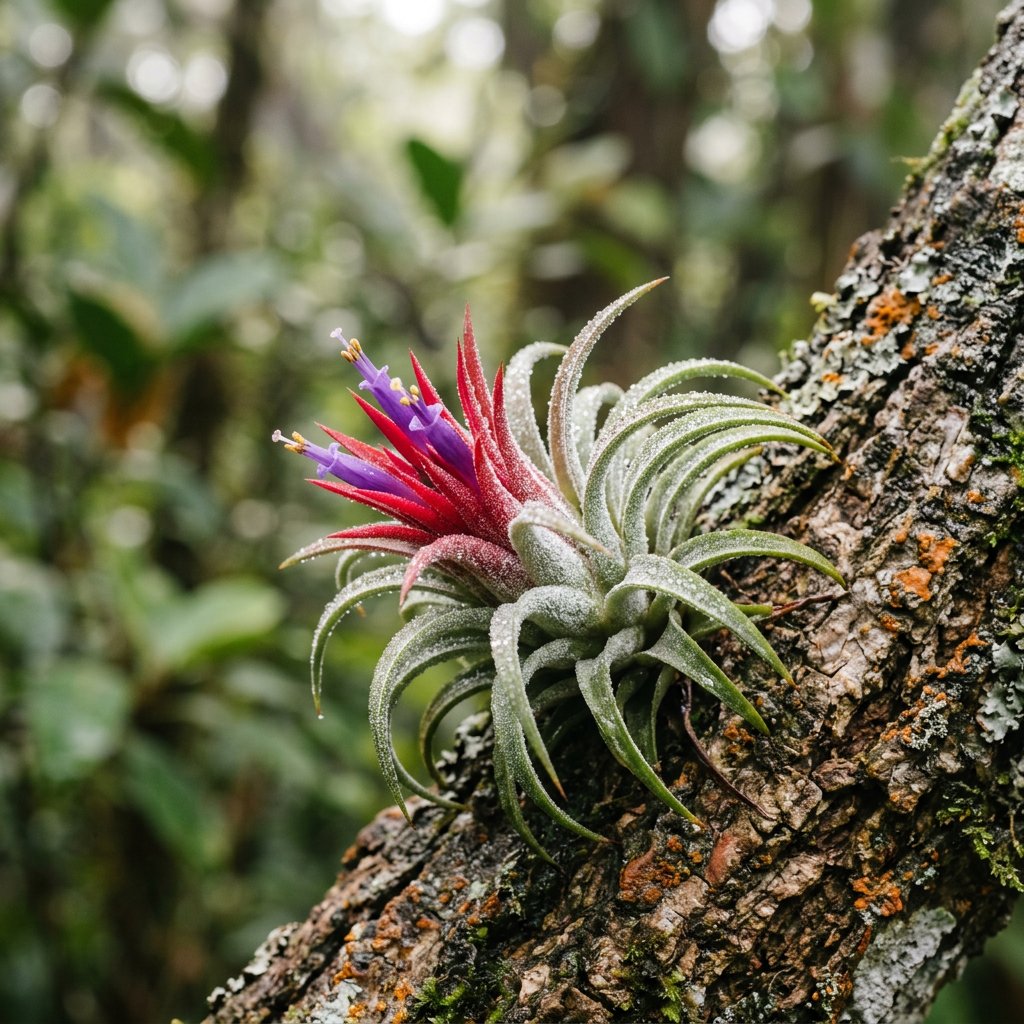
Commonly known as the Sky Plant, Tillandsia ionantha is the quintessential "Air Plant" that has captured the hearts of minimalists and urban gardeners alike. Native to the rugged mountains and forests of Mexico and Central America, these tiny survivors don’t need a single pinch of soil to thrive. Instead, they spend their lives perched on tree branches, looking like miniature green pineapples that have decided to take a vacation in the canopy.
🔍 How to Identify
- 🌿 The Rosette Form: It grows in a compact, spiky rosette shape, usually staying quite small (between 1 to 3 inches).
- ❄️ Silvery Trichomes: The leaves are covered in tiny, silvery-grey scales called trichomes. These aren't just for decoration; they are specialized cells that drink water directly from the air.
- 🎨 The "Blush": When the plant is ready to bloom, the inner leaves undergo a dramatic transformation, changing from dusty green to a vibrant, fiery red or hot pink to attract pollinators.
- 💜 Violet Tubular Flowers: Small, deep purple tubular flowers emerge from the center, often tipped with bright yellow pollen.
🏡 In Your Garden
- 🌬️ Air, Not Earth: The most common mistake is planting it in soil. As an epiphyte, its roots are purely for anchoring itself to rocks or trees. It prefers to be tucked into glass terrariums, mounted on driftwood, or even hung by a wire.
- 💧 The "Dip and Dry" Ritual: While it loves humidity, stagnant water is its enemy. It thrives when soaked in a bowl of water for 20-30 minutes once a week, but it must be shaken out and dried upside down. If water sits in the "cup" of the plant, it will rot from the inside out.
- ☀️ Light Logic: In the wild, they live under the dappled shade of tree canopies. In your home, they want bright, indirect light. If the tips turn brown and crispy, it’s a sign of "sunburn" or extreme thirst.
⚠️ Safety & Toxicity
- ✅ Status: Non-toxic and safe.
- 🐾 Details: Tillandsia ionantha is generally considered safe for cats, dogs, and children. However, because the spiky texture and "grass-like" appearance are very tempting for cats to chew on, it’s best to keep them out of reach to protect both the pet’s stomach and the plant’s delicate leaves.
✨ Fun Fact
Unlike most plants that drink through their roots and breathe through their leaves, Tillandsia ionantha uses a rare "CAM metabolism." They keep their pores tightly shut during the heat of the day to save water and only "breathe" (exchange CO2) at night!

Detailed Care Instructions
| Color | Purple, Red, Pink |
| Humidity | High |
| Lighting | Part Sun |
| Bloom Time | Fall |
| Difficulty | Medium |
| Plant Type | Perennial, Succulent |
| Hibernation | Cold Period |
| Mature Size | Up To 6 In. Tall |
| Native Area | Central And South America |
| Temperature | 16°C - 27°C |
| Sun Exposure | Partial Shade |
| Hardiness Zones | 9-11 |
To successfully grow a Tillandsia Ionantha plant, follow these steps:
- Light: Place your plant in a location with bright, indirect light. It should receive at least 3-4 hours of filtered sunlight every day. Avoid direct sunlight, especially during the hottest hours of the day, as it can burn the leaves.
- Air circulation: Tillandsias thrive in environments with good air circulation. Ensure that the plant is placed in an area with sufficient air movement. You can also gently shake or fan the plants occasionally to mimic the wind.
- Watering: Mist the plant 2-3 times a week with a spray bottle filled with filtered or purified water. Ensure all parts of the plant, especially the base and the underside of leaves, are thoroughly wetted. Alternatively, you can immerse the plant in water for 1-2 hours once a week, allowing excess water to drain off afterwards. It's crucial to let the plant dry completely within 4 hours, as excessive moisture can lead to rotting.
- Fertilization: Tillandsias are epiphytic plants that absorb nutrients from the air and rainwater. They do not require regular fertilization, but if you want to provide some additional nutrition, you can dilute a balanced, water-soluble fertilizer to 1/4 strength and apply it every 2-3 months.
- Temperature and humidity: Tillandsias thrive in temperatures between 50-90°F (10-32°C). They can withstand occasional temperature fluctuations, but avoid exposing them to extreme cold or heat. Maintaining a relative humidity of 40-60% is ideal, which can be achieved by misting the plant or placing it in a humidity tray.
- Careful handling: Avoid touching the plant excessively, as the oils from your skin can clog the trichomes on the leaves, hindering nutrient absorption. If possible, use tweezers or wear gloves when moving or arranging the plant.
- Display options: Tillandsia Ionantha is a versatile plant that can be displayed in various creative ways. You can mount it on driftwood, place it in a terrarium, or simply put it in a decorative container filled with decorative rocks or sand.
Remember to monitor your plant's health regularly. If the leaves are turning brown or curling, it may indicate inadequate watering or excessive exposure to direct sunlight. Adjust the care accordingly to ensure the well-being of your Tillandsia Ionantha plant.

Place in a window with dappled sun or a spot in the middle of a room. Or directly in a window facing west or east.

To properly water this plant, you should first remove it from its container or hanging location. You can then soak the plant in a dish or container of water for approximately 30 minutes. After soaking, gently shake off any excess water and allow the plant to completely dry before returning it to its location. It is important not to let water collect in the center of the plant, as this can cause rot. Depending on the humidity and temperature of your environment, you may need to water this plant every 1-2 weeks.
To properly fertilize your plant, dilute a water-soluble fertilizer at a concentration of 1/4 strength and apply to the base of the plant or mist it onto the leaves every two weeks during the growing season. Avoid fertilizing during the winter months when the plant is dormant.
The Tillandsia Ionantha plant requires a well-draining soil that is airy and porous. It is recommended to use a mix of fine bark, coconut coir, and perlite or pumice to provide the necessary drainage and aeration. The soil should be moist but not overly wet, as the plant utilizes air moisture to absorb nutrients and water. Avoid using heavy soils or those that retain too much moisture, as this can lead to root rot and other issues. It is also important to fertilize the plant regularly with a balanced fertilizer to support its growth and health.
To propagate this plant, you will need a healthy and mature specimen. Take a pair of clean and sharp pruning shears and snip off the offsets, or baby plants, that have grown on the main plant. Make sure that each offset has at least two leaves and a short stem.
Once you have your offsets, you can either plant them directly in soil or hold them in place with pins or a glue gun on a piece of wood or a shell. If you choose to plant them in soil, use a well-draining mix and water them sparingly, as this plant can easily rot.
If you decide to mount them, choose a piece of wood or a shell that is large enough to support the growing plant. You can then glue or pin the offset to the support and mist it regularly. Within a few weeks, the roots will start to develop, and the plant will begin to grow.
Common pests of the air plant include Mealybugs. Make a habit of checking your air plant frequently for pests so that any infestations can be caught and managed early.








