Plant Overview
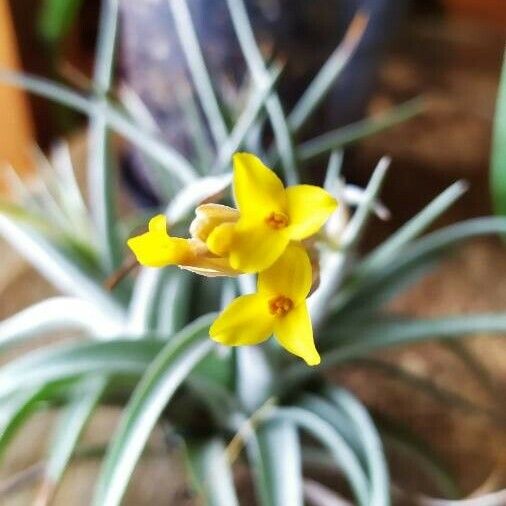
Known for its stunningly rare yellow blossoms, Tillandsia ixioides is a hardy gem native to the dry forests and cliffs of Bolivia, Argentina, and Paraguay. Unlike many of its cousins that sport purple or red flowers, this "Air Plant" stands out with its buttery-gold petals and stiff, metallic-looking foliage. It is a favorite for collectors who appreciate a low-maintenance sculptural piece that feels like a piece of living silver.
🔍 How to Identify
- 🍃 Rigid Rosette: The leaves are thick, stiff, and succulent-like, growing in a classic rosette shape that often curves gracefully to one side.
- 🥈 Frosted Coating: The entire plant is covered in a dense layer of silver scales (trichomes) that give it a shimmering, frosted appearance and help it absorb moisture from the air.
- 🌼 Golden Blooms: Its most distinctive feature is the flower spike, which produces bright, lemon-yellow flowers—a color that is famously rare within the Tillandsia genus.
🏡 In Your Garden
- ☀️ Light Lover: Because of its heavy coating of silver trichomes, this plant is built to handle much brighter light than "green" air plants. It thrives in spots with high light intensity and can even handle some direct morning sun.
- 🌬️ The Need for Speed (Drying): As a "xeric" species from drier climates, it is highly sensitive to trapped moisture. After watering or misting, it must be placed in a spot with excellent air circulation so it can dry completely within a few hours to prevent "heart rot."
- 🪵 Mounting Style: It prefers being mounted on cork bark or driftwood rather than sitting in a glass globe, as the increased airflow around the base mimics its natural cliffside habitat.
⚠️ Safety & Toxicity
- ✅ Safe for All: Tillandsia ixioides is non-toxic and safe for households with cats, dogs, and curious children.
- 🌵 Physical Texture: While safe to touch, the leaves are quite rigid and can be slightly sharp at the tips. Place it in a location where it won't be brushed against frequently to avoid poking passersby or damaging the plant's silver coating.
✨ Fun Fact
The name ixioides literally means "looking like Ixia." It was named this because its bright yellow flowers reminded early botanists of the Corn Lily (Ixia), a plant in the Iris family that shares a similar sunny hue!

Detailed Care Instructions

Place in a window with dappled sun or a spot in the middle of a room. Or directly in a window facing west or east.
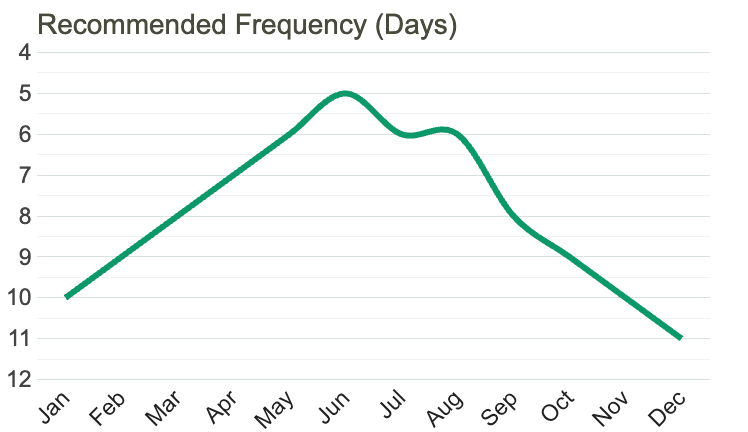
Tillandsia Ixioides is an air plant that does not require soil for its growth. It can survive on air and moisture alone. To water Tillandsia Ixioides, you should mist it with water every two to three days. When misting, make sure to wet the leaves thoroughly without soaking them in water. You can also soak the plant once a week by submerging it in water for about 20 minutes, making sure there is enough water to cover the roots and base of the plant. After soaking, shake off any excess water and allow the plant to dry completely before returning it to its display area. Avoid using tap water as it can contain minerals that can damage the plant. Instead, use distilled or rainwater. Also, place the plant in a well-ventilated area with adequate air circulation and bright, indirect sunlight.
These plants scarcely crave for fertilizers. The choice of fertilizer, on the other hand, is quite important. Misting with right fertilizers will promote blooming. Fertilizers containing urea, zinc, and copper are toxic to plants and should be avoided at all costs. Nitrogen, phosphorus, and potassium should be present in the chosen fertilizer. Once a month, apply either bromeliad fertilizer or a diluted houseplant fertilizer with a 1/4 dilution. Moreover, don't forget to water your plants after the application of fertilizer.
You may use Orchid Food for your Tillandsia Ixioides
Common pests of the tillandsia ixioides include Mealybugs. Make a habit of checking your tillandsia ixioides frequently for pests so that any infestations can be caught and managed early.








