Plant Overview
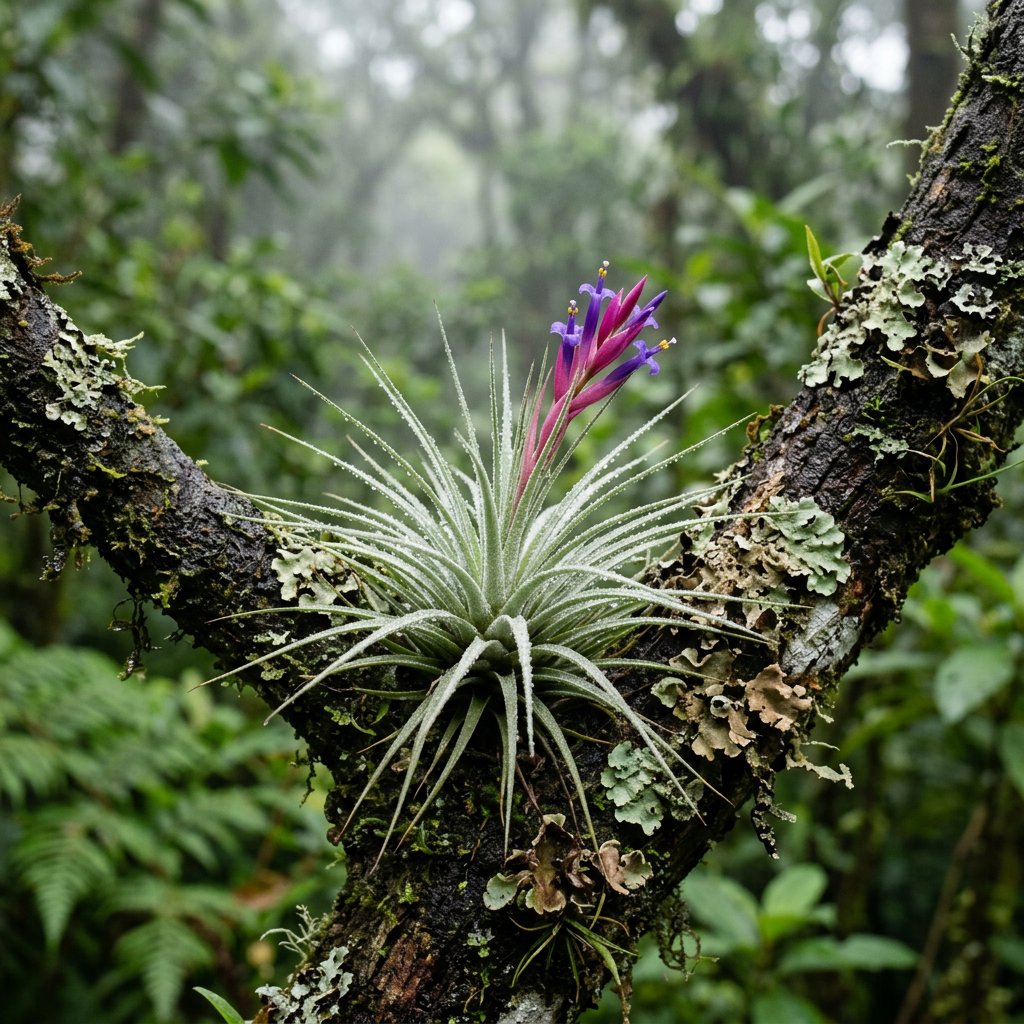
Known as the "Grass Leaf Air Plant," Tillandsia juncea is a master of disguise. At first glance, it looks like a common clump of field grass, but this hardy epiphyte lives its entire life suspended in the air without a grain of soil. Native to the forests of Central and South America, it is a favorite for minimalist decor due to its striking, architectural silhouette and vertical growth.
🔍 How to Identify
- 🌾 Foliage Structure: It features long, thin, needle-like leaves that grow in a tight, upright cluster, creating a fountain-like shape.
- 🌫️ Silvery Sheen: The leaves are covered in "trichomes"—tiny silvery scales that capture moisture and nutrients directly from the wind.
- 🌸 The Bloom: When it reaches maturity, it produces a tall, stiff floral spike. Small, tubular purple flowers emerge from colorful bracts that can range from green to deep red.
🏡 In Your Garden
- 💨 Airflow is Key: Because the base of this plant is very dense, it is prone to trapping water. After misting or soaking, it is vital to shake it gently and let it dry upside down to prevent "center rot."
- ☀️ Light & Resilience: Unlike softer, greener air plants, the stiff leaves of T. juncea allow it to handle slightly brighter light and longer periods of drought. If the leaves start to curl inward like a straw, it’s signaling that it’s thirsty.
⚠️ Safety & Toxicity
- ✅ Pet & Child Safe: This plant is non-toxic to cats, dogs, and humans. It is an excellent choice for a "pet-friendly" home.
- 👐 Physical Texture: While not poisonous, the leaf tips can be quite pointy and stiff. Place it in a location where it won't be accidentally brushed against to avoid "poking" injuries or damage to the plant.
✨ Fun Fact
The name juncea is derived from the Latin word juncus, meaning "rush." It was named this because of its uncanny resemblance to the rushes and grasses found in marshy wetlands, despite living high up in the tree canopy!

Detailed Care Instructions
To grow Tillandsia Juncea (also known as the "Air Plant"), follow these steps:
- Choose a suitable location: Tillandsia Juncea can be grown both indoors and outdoors. If you choose to grow it indoors, place it near a bright window where it can receive indirect sunlight for a few hours per day. Outdoors, a shaded or partially shaded area is ideal.
- Provide the right temperature and humidity: These plants prefer moderate temperatures between 60-80°F (15-26°C). Additionally, they thrive in humid environments, so misting them regularly or placing a humidifier nearby can be beneficial.
- Watering: Tillandsia Juncea is an epiphytic plant, which means it doesn't need to be planted in soil. Instead, it absorbs moisture and nutrients through its leaves. To water it, mist the plant thoroughly using a spray bottle or soak it in water for 10-15 minutes once a week. After watering, shake off any excess water to prevent rotting.
- Fertilization: Air plants require little to no fertilizer, but you can occasionally provide them with a weak, water-soluble orchid fertilizer. Use about 1/4 or 1/2 of the recommended concentration once every few months. Avoid overfertilizing, as it can harm the plant.
- Air circulation: Good air circulation is important for Tillandsia Juncea, as it prevents stagnant air and helps prevent rot and fungal issues. Ensure there is enough airflow in the room or outdoor area where you have placed the plant.
- Light exposure: Tillandsia Juncea needs bright, indirect light to thrive. Avoid placing it in direct sunlight, as it can scorch the leaves. Supplemental lighting with fluorescent or grow lights can be provided if natural light is insufficient.
- Trim dead or dried leaves: As with any live plant, remove any dead or dried leaves from the plant to maintain its health and appearance. Use sharp, sterilized scissors to avoid spreading disease.
Overall, Tillandsia Juncea is relatively low maintenance and can be a beautiful addition to your indoor or outdoor space. Be patient with its growth and care for it consistently, and you will be rewarded with a healthy and thriving Air Plant.

Place in a window with dappled sun or a spot in the middle of a room. Or directly in a window facing west or east.
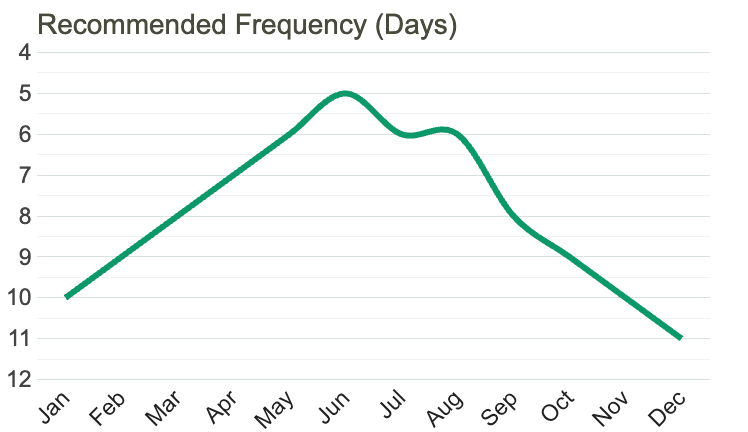
Tillandsia Juncea plant belongs to the family of epiphytes, which means they can grow without soil and absorb nutrients through their leaves. Here are some tips on how to properly water this plant:
1. Use filtered or rainwater - Tillandsia Juncea is sensitive to chemicals found in tap water, so it's best to use filtered or rainwater for watering.
2. Soak or mist - There are two ways to water Tillandsia Juncea: soaking or misting. Soaking involves submerging the plant in water for at least half an hour, while misting involves spraying water on the foliage.
3. Do not overwater - Overwatering can cause the plant to rot, so it's essential to let it dry out completely before watering again. The frequency of watering depends on the humidity and temperature of the environment. In general, once a week is enough.
4. Ensure proper drainage - If soaking the plant, ensure that there is proper drainage to avoid standing water in the container.
5. Consider fertilization - Tillandsia Juncea needs nutrients to thrive, so you can consider fertilizing it once a month during the growing season (March to September) with a balanced fertilizer specifically made for air plants.
Remember that air plants are low maintenance, and it's essential not to overcare for them. Follow these tips, and your Tillandsia Juncea will thrive and reward you with beautiful spikes of delicate flowers.
- Choose a fertilizer with a balanced ratio of NPK (nitrogen, phosphorus, and potassium).
- Dilute the fertilizer according to the manufacturer's instructions.
- Use a spray bottle to spray the diluted fertilizer onto the leaves of the plant.
- Do not fertilize the plant too often, as this can lead to over-fertilization and damage to the plant.
- Depending on the temperature and humidity in your environment, fertilize the plant once every 1-3 months.
The ideal soil for Tillandsia Juncea plant is a well-draining, gritty mix that allows for good airflow and prevents water from getting trapped around the plant's roots. The soil should be porous enough to allow water and nutrients to flow freely through it without becoming waterlogged or compacted. It is recommended to use a blend of sand, peat moss, and perlite for best results, as this mixture will provide the right balance of nutrients, moisture, and drainage for the plant to thrive. Additionally, it is important to avoid using heavy, dense soils or soils that retain too much moisture, as this can lead to root rot and other issues. Overall, the soil for Tillandsia Juncea plant should be well-draining, airy, and nutrient-rich to ensure optimal growth and health.
Tillandsia Juncea plant can be propagated by removing its offsets which grow from the base of the parent plant. To do this, gently push the offset away from the main plant and ensure that it has a few roots. Then, leave the offset in a dry and shady spot for a couple of days to allow it to callus over. After that, you can plant the offset in a well-draining soil mix and mist it with water or dip it in water once every week. The plant should begin to grow roots and leaves within a few weeks.
Common pests of the rush-like air plant include Mealybugs. Make a habit of checking your rush-like air plant frequently for pests so that any infestations can be caught and managed early.








