Plant Overview
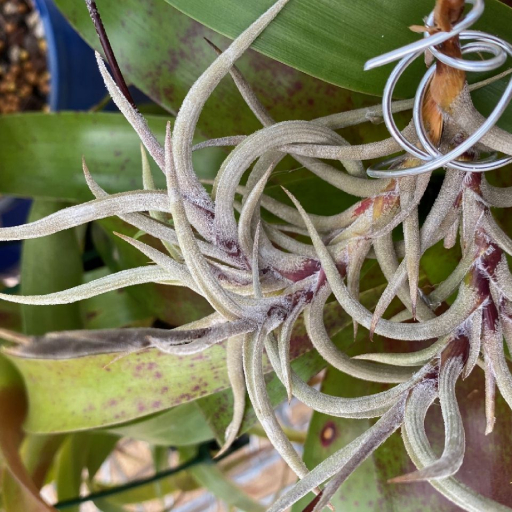
Commonly known as the Mouse Tail Air Plant, Tillandsia myosura is a charismatic little epiphyte native to the arid regions of South America. Unlike the lush, wide-leafed air plants many are used to, this species looks like a tiny, silver-scaled braid or a scurrying tail climbing up a branch. In its natural habitat, it clings to rocks and trees in dry forests, surviving on little more than a whisper of morning dew and a breeze.
🔍 How to Identify
- 🐭 The "Mouse Tail" Shape: The plant grows in a long, slender, and slightly curved fashion, mimicking the anatomy of a small rodent's tail.
- 📏 Distichous Leaves: The leaves are arranged in two neat, opposing rows (distichous), giving the plant a distinctly flattened, two-dimensional appearance.
- 🌫️ Silvery Trichomes: The entire body is covered in a dense coat of fine, silvery-grey scales called trichomes, which are specialized cells used to absorb moisture and nutrients from the air.
- 🌼 Tiny Blooms: It produces small, subtle flowers that range from pale yellow to a warm honey-brown, typically appearing at the very tip of the growth.
🏡 In Your Garden
- 🌬️ Airflow is King: Because it hails from dry environments, this plant is highly sensitive to stagnant air. It thrives when placed in a spot with excellent circulation, such as near a window or a fan.
- 💧 Misting vs. Soaking: Unlike many other Tillandsias, the Mouse Tail prefers frequent light misting over long deep-water soaks. Because its leaves are so tightly packed, trapped water can quickly lead to rot if the plant doesn't dry out within a few hours.
- ☀️ Sun Seeker: Its heavy coating of silver scales acts as a natural sunblock, meaning it can handle (and often prefers) brighter light than its greener, smoother cousins.
⚠️ Safety & Toxicity
- ✅ Pet & Child Safe: Like most members of the Bromeliad family, Tillandsia myosura is non-toxic to cats, dogs, and humans.
- 🧤 Fragile Scales: While safe to touch, try to handle it by the base. Touching the leaves too much can rub off the silvery trichomes, which the plant needs to "breathe" and stay hydrated.
✨ Fun Fact
The name myosura comes from the Greek words myos (mouse) and oura (tail). It is part of a group of air plants known as "diaphoranthemas," which are famous among collectors for their miniature size and ability to form impressive, tangled clusters over several years!

Detailed Care Instructions

Place in a window with dappled sun or a spot in the middle of a room. Or directly in a window facing west or east.
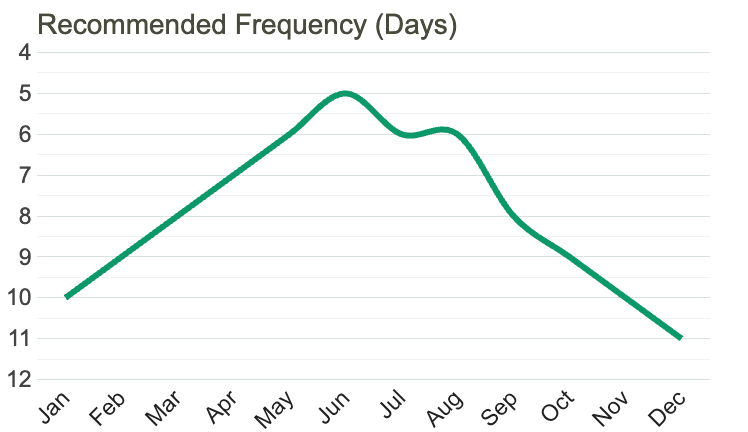
The water in these plants is absorbed and evaporated form the leaves. As a result, it is recommended that the leaves be submerged in water once a week or misted on a regular basis. Submerge your plant in water in a sink or holder for 30 minutes. Then gently shake the plant tossing and turning to dry it. Place your plant on a towel for a few hours and let it sit. It will evaporate any excess water. If the plants are kept in indoor conditions, they should be hydrated on a regular basis. It's simple to keep these plants hydrated all the time, but it takes a lot of work. Watering air plants early in the morning allows them to dry out and avoids disturbing their respiration activity at night. Chlorinated water causes the tips of the leaves to brown, so avoid it.
These plants scarcely crave for fertilizers. The choice of fertilizer, on the other hand, is quite important. Misting with right fertilizers will promote blooming. Fertilizers containing urea, zinc, and copper are toxic to plants and should be avoided at all costs. Nitrogen, phosphorus, and potassium should be present in the chosen fertilizer. Once a month, apply either bromeliad fertilizer or a diluted houseplant fertilizer with a 1/4 dilution. Moreover, don't forget to water your plants after the application of fertilizer.
You may use Orchid Food for your Tillandsia Myosura
Common pests of the tillandsia myosura include Mealybugs. Make a habit of checking your tillandsia myosura frequently for pests so that any infestations can be caught and managed early.








