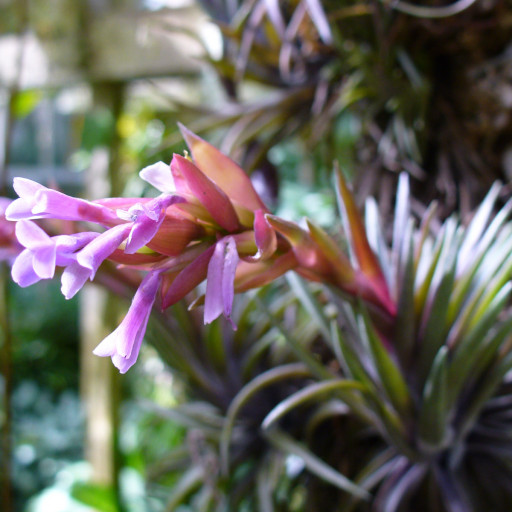
Plant Overview
Often found clinging to the sun-drenched coastal rocks of Brazil, Tillandsia neglecta is a hardy air plant that defies the typical "soft" look of its cousins. Despite its name—which implies it was "overlooked" by early botanists—it is a standout performer in any collection due to its stiff, architectural form. It is a slow grower that eventually forms impressive, cascading clusters that look like living sculptures.
🔍 How to Identify
- 🌿 The Foliage: Features thick, rigid, and succulent-like leaves that are dark green to silvery-grey, often curving backward in a "recurved" shape.
- 📏 Growth Habit: Unlike many rosette-shaped air plants, this species is "caulescent," meaning it grows along a visible stem, creating a columnar or elongated appearance over time.
- 🌸 The Bloom: When it flowers, it produces a striking rose-pink floral bract (spike) from which small, vivid indigo-blue or violet flowers emerge.
🏡 In Your Garden
- 🌊 Coastal Roots: Because it originates from the rocky shores of Rio de Janeiro, it thrives on high humidity and bright, filtered light. It prefers "wet-dry" cycles, meaning it loves a good soak but must dry out completely within a few hours to prevent rot.
- 🪨 Mounting Mastery: Since it is a lithophyte (rock-dweller) by nature, it is much happier mounted on cork bark, driftwood, or stones rather than sitting in a glass globe where air circulation might be limited.
- 👯 The Clumping Effect: This plant is famous for producing "pups" (offsets) along its stem. If you leave them attached, it will eventually form a 360-degree ball of plants that can be hung from a wire.
⚠️ Safety & Toxicity
- ✅ Pet Friendly: Like almost all members of the Bromeliad family, Tillandsia neglecta is non-toxic to cats, dogs, and horses.
- 🚫 Physical Safety: While not "sharp" like a cactus, the leaves are very stiff and pointed; keep it away from eye-level walkways to avoid accidental pokes.
✨ Fun Fact
The name "neglecta" was given to the plant because it was "neglected" or misidentified for many years as a different species before finally being recognized as its own unique Brazilian treasure in the 1930s.

Detailed Care Instructions
To grow a Tillandsia Neglecta plant, follow these guidelines:
- Lighting: Place your Tillandsia Neglecta in bright but indirect sunlight. They can tolerate direct sunlight for a few hours each day, but avoid exposing them to intense, hot afternoon sun.
- Temperature: These plants prefer temperatures between 60-80°F (15-27°C). Keep them away from cold drafts and extreme temperature fluctuations.
- Watering: The Tillandsia Neglecta plant is an air plant, meaning it absorbs moisture through its leaves rather than through roots. Mist your plant 2-3 times a week with water to keep it hydrated. Alternatively, you can soak it upside down in water for about 15-20 minutes once a week. Allow the plant to dry completely before returning it to its display location.
- Humidity: Air plants thrive in humid environments. If your home is dry, create humidity by misting them more frequently or using a humidifier nearby.
- Air circulation: Tillandsia Neglecta plants require good air circulation to prevent rotting. Place them in areas with enough ventilation, or provide a fan to keep the air flowing.
- Fertilization: Provide your Tillandsia Neglecta with nutrients by misting it with a diluted bromeliad or air plant fertilizer once every 1-2 months. Follow the recommended dosage on the fertilizer package.
- Display: Tillandsia Neglecta plants can be displayed in a variety of ways. They can be mounted on a piece of driftwood, placed in a terrarium, or used as a decorative element in plant arrangements. Ensure that the chosen display method allows good air circulation.
- Maintenance: Remove any dead or dried leaves to keep the plant healthy and aesthetically appealing. If your plant produces offsets or "pups," you can separate them from the parent plant once they have grown to approximately half its size.
Following these steps should help you successfully grow a Tillandsia Neglecta plant.

Place in a window with dappled sun or a spot in the middle of a room. Or directly in a window facing west or east.

Tillandsia Neglecta is a type of air plant that requires regular watering to thrive. To water this plant, begin by running water over it for several minutes to thoroughly wet the leaves. Be sure to remove any excess water from the base of the plant to prevent rotting.
Depending on the humidity in your area, you will want to water this plant every week or two. If the air is dry, you may need to water more frequently. If you notice the leaves starting to curl, this is a sign that the plant needs more water.
To water the plant, you can mist it with a spray bottle or submerge it in a bowl of water for several hours. After soaking, be sure to let the plant dry completely before placing it back in its container or hanger.
Avoid using tap water, which can contain chemicals that can harm the plant. Instead, use distilled or filtered water. Alternatively, you can leave tap water out for a few hours to allow the chlorine and other chemicals to evaporate.
Overall, Tillandsia Neglecta is a low maintenance plant that requires minimal care. With proper watering and occasional fertilization, this plant can be a unique and beautiful addition to any home or office.
To properly fertilize this plant, you should mix a water-soluble fertilizer with water and lightly mist the plant's leaves. Be careful not to saturate the plant with too much fertilizer, as this can cause damage to the plant. It is best to fertilize this plant once a month during its growing season.
The Tillandsia Neglecta plant prefers a well-drained soil that allows for air circulation and does not retain excess moisture. It is recommended to use a soil mix that is primarily composed of organic matter, such as bark, coconut coir, or sphagnum moss. The soil mix should also be slightly acidic, with a pH between 5.5 and 6.5. It is important to avoid using heavy soils or soils that contain high amounts of nutrients, such as potting soil, as this can harm the plant. Additionally, the Tillandsia Neglecta plant can also be grown without soil, attached to a substrate such as a piece of driftwood or a rock.
To propagate this plant, take a mature plant and carefully remove the offsets or pups that have grown at the base of the plant. Ensure that the offsets have grown at least one-third the size of the mother plant before removing. Use a sharp and sterile knife or scissors when detaching them.
Next, place the detached pups in a shallow container filled with water at room temperature. Change the water every 2-3 days to ensure it stays fresh. Alternatively, you can also use wet sphagnum moss, coconut coir, or perlite to propagate the plant.
Place the container in a bright location, but avoid direct sunlight. Maintain a humidity level of 40-50% to keep the pups moist. Within a few weeks, the pups will begin to produce their own roots. Once they have developed their root system, carefully transplant them into their own containers or mount them onto a suitable material.
Until the pups have established their root system, avoid fertilizing them. Over-fertilizing can damage the roots and delay the growth. Once the plants have rooted and started to grow, you can use an orchid or bromeliad fertilizer and feed them sparingly every few months.
Common pests of the tillandsia neglecta include Mealybugs. Make a habit of checking your tillandsia neglecta frequently for pests so that any infestations can be caught and managed early.








