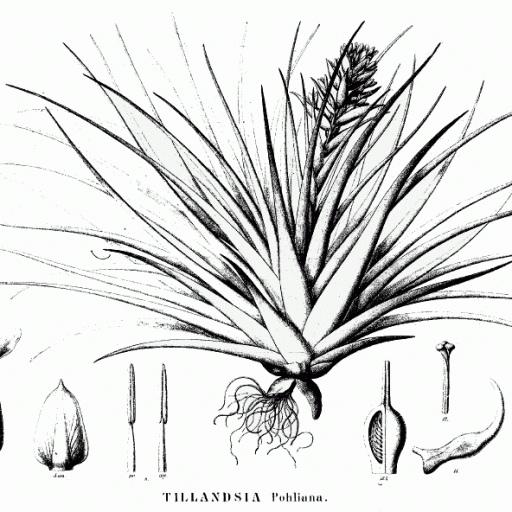
Plant Overview
Known as "Pohl’s Air Plant," this South American native is a master of the high-wire act. Found clinging to trees in the forests of Brazil and Argentina, it is a true epiphyte that lives entirely off moisture and nutrients filtered from the air. It is highly prized by collectors for its elegant, silvery "frosted" appearance and its surprisingly fragrant blossoms.
🔍 How to Identify
- 🍃 Silvery Foliage: The leaves are densely covered in trichomes—tiny, hair-like scales—giving the plant a soft, velvety texture and a distinctive metallic silver-green color.
- 🌀 Symmetrical Rosette: It grows in a classic funnel shape, with stiff, tapering leaves that arch outward gracefully as the plant matures.
- 🌼 Creamy Blooms: Unlike many air plants that produce purple flowers, Tillandsia pohliana produces a sturdy flower spike featuring delicate, creamy-white or pale yellow petals.
🏡 In Your Garden
- 💨 The Need for Breeze: Because it lacks a traditional root system to drink from, it "breathes" and drinks through its leaves. It requires excellent air circulation to ensure it dries out completely within a few hours of watering.
- ☀️ Sun Protection: That silver coating acts like a natural sunscreen. This species can handle much brighter light than its greener cousins, making it perfect for bright windowsills or well-lit terrariums.
- 💧 Soak, Don't Plant: Never put this plant in soil! It prefers a weekly 20-minute soak in rainwater or dechlorinated tap water, followed by a vigorous "shake" to remove trapped droplets from its core.
⚠️ Safety & Toxicity
- 🐾 Pet Friendly: This plant is non-toxic to cats and dogs, making it a worry-free addition to any pet-loving household.
- 👶 Kid Safe: It is generally safe for children, though the tips of the leaves can be somewhat stiff and pointy, so it is best displayed hanging or on a high shelf.
✨ Fun Fact
Tillandsia pohliana is one of the rare "fragrant" air plants. While many Tillandsias rely on bright colors to attract birds, this species emits a subtle, sweet scent to attract specific insect pollinators during the twilight hours.

Detailed Care Instructions
Here are some tips to help you grow Tillandsia Pohliana plant successfully:
- Light: Place your Tillandsia Pohliana in a location with bright, indirect sunlight. Avoid direct sunlight, as it can scorch the leaves. A south-facing window or a spot near a bright window would be ideal.
- Temperature: These plants prefer temperatures between 60-85°F (15-29°C). Protect them from freezing temperatures and extreme heat sources, such as heaters or air conditioning vents.
- Watering: Tillandsia Pohliana is an epiphytic air plant that absorbs water and nutrients through its leaves. Mist the plant with water 2-3 times a week, ensuring that the leaves get thoroughly damp but avoiding soaking the base of the plant. Alternatively, you can also soak the plant in a bowl of water for 15-30 minutes once a week. After watering, shake off excess water and allow the plant to dry completely before placing it back in its display.
- Humidity: Maintain a humid environment for Tillandsia Pohliana by providing occasional misting or by placing a tray with water below the plant. Avoid excessive humidity, as it can lead to rotting.
- Air circulation: Good air circulation is essential for the health and growth of Tillandsia Pohliana. Ensure that the plant is not placed in an area with stagnant air. Avoid placing it in closed terrariums or containers.
- Fertilizer: Tillandsia Pohliana is not a heavy feeder, but you can provide a diluted liquid fertilizer formulated for epiphytic plants once a month during the growing season (usually spring and summer). Use a quarter or half of the recommended strength.
- Display: Tillandsia Pohliana looks great mounted on driftwood, rocks, or other porous surfaces. Avoid planting it in soil, as it may cause root rot.
Remember to monitor the health and condition of your plant regularly. If you notice any signs of distress, such as wilting or browning, adjust your care routine accordingly.

Place in a window with dappled sun or a spot in the middle of a room. Or directly in a window facing west or east.

To properly care for this type of plant, it is important to water it regularly. Rather than using soil, this plant absorbs water and nutrients through its leaves. This means that it should be misted or soaked in water once a week or more frequently in dryer environments. It is important to use non-chlorinated water, as the chemicals in tap water can damage the plant. After watering, the plant should be allowed to dry completely before being placed back in its holder, as excess moisture can lead to root rot. In addition to watering, this plant should be placed in a brightly lit area, but not in direct sunlight, and should be fertilized with a specialized bromeliad or air plant fertilizer every 2-3 weeks.
To fertilize the Tillandsia Pohliana plant, use a water-soluble fertilizer with a low concentration of nitrogen. Mix the fertilizer with water at a ratio of 1:1 and apply it to the plant's leaves and roots. Avoid over-fertilizing as it can damage the plant. Fertilize once every one to two months during the growing season and reduce fertilization during the dormant period. Use a gentle spray bottle or watering can to apply the fertilizer solution evenly to the plant.
Tillandsia Pohliana plant prefers well-draining soil with good aeration. The soil should have a neutral to slightly acidic pH level, between 6.0 and 7.0. Organic matter such as coconut coir or leaf mold can be added to the soil to improve moisture retention. However, the soil should not be too rich to avoid over-fertilization. It is also important to ensure that the soil is not waterlogged as it can lead to root rot. Tillandsia Pohliana plant can also be grown without soil, as it is an epiphyte that can absorb nutrients and moisture directly from the environment.
The propagation method for this plant involves dividing the offsets or pups that grow from the base of the parent plant. Carefully remove the pup from the parent plant using a sharp, clean tool, such as a knife or scissors. Ensure that the pup has its own roots and is at least 1/3 the size of the parent plant before separating it. Place the pup in a new location or pot with well-draining soil, such as a mix of orchid bark and sphagnum moss. Water the pup by misting it with filtered or rainwater, being sure not to soak the soil or roots. Keep the plant in a bright but indirect light and monitor for signs of growth and health.
Common pests of the tillandsia pohliana include Mealybugs. Make a habit of checking your tillandsia pohliana frequently for pests so that any infestations can be caught and managed early.








