Plant Overview
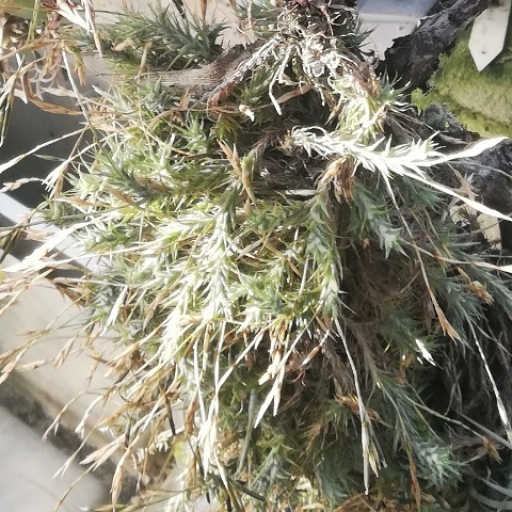
Often called the "Shaggy Air Plant" or the "Miniature Tillandsia," Tillandsia tricholepis is a tiny botanical jewel that looks more like a clump of ancient moss or a fuzzy pipe cleaner than a typical bromeliad. Hailing from the dry forests and rocky cliffs of South America, this "micro-Tillandsia" is a favorite among terrarium enthusiasts and minimalist collectors who appreciate its delicate, intricate architecture.
🔍 How to Identify
- 🌿 The Foliage: Unlike larger air plants with sweeping leaves, this species features tiny, awl-shaped leaves that grow in a dense, spiral pattern along a thin stem.
- ☁️ The Texture: The entire plant is heavily coated in silver-grey trichomes (tiny scales), giving it a distinctively "shaggy" or frosted appearance.
- 🌼 The Bloom: It produces incredibly small, inconspicuous flowers that are typically yellow or pale green. These blooms are so tiny they are often missed unless viewed up close!
- 🎾 The Growth Habit: It is a prolific "clumper." Over time, individual stems will weave together to form a dense, spherical ball that can eventually resemble a living tumbleweed.
🏡 In Your Garden
- 🌬️ Airflow is Vital: Because this plant grows in tight, shaggy clumps, it can trap water deep within its center. It requires excellent air circulation to dry out quickly after watering, or it may succumb to "heart rot."
- 💧 Misting Over Soaking: While many air plants love a long bath, Tillandsia tricholepis often fares better with frequent, heavy misting. Its small size means it absorbs water rapidly, and a full soak can sometimes be too much for its delicate core to handle.
- ☀️ Light Seekers: To keep its silver "shag" bright and healthy, it prefers bright, filtered light. If the plant starts to look dull green or "leggy," it is likely signaling that it needs a sunnier spot.
⚠️ Safety & Toxicity
- ✅ Status: Non-toxic and safe.
- 🐾 Pet Friendly: This plant poses no chemical threat to curious cats, dogs, or even reptiles in a terrarium. However, because it grows in small, breakable clumps, it is best kept out of reach of playful paws to avoid a choking hazard or damage to the plant.
✨ Fun Fact
Tillandsia tricholepis is often cleistogamous, meaning it has the fascinating ability to self-pollinate. Sometimes, the plant will produce seeds and reproduce without its tiny flowers ever actually opening to the world!

Detailed Care Instructions
To grow Tillandsia Tricholepis plant, follow these steps:
- Choose a suitable location: Tillandsia Tricholepis plants can thrive both indoors and outdoors, but they need bright but indirect sunlight. Depending on your climate, you may need to bring them indoors during colder months.
- Watering: Tillandsia Tricholepis plants are epiphytes, meaning they obtain nutrients and moisture from the air through their leaves rather than through their roots. Mist the leaves with water using a sprayer or dunk the entire plant in water for about 10-15 minutes once a week. Make sure to shake off any excess water to prevent rotting.
- Air circulation: Good air circulation is crucial for Tillandsia Tricholepis plants as it helps prevent moisture build-up and enhances their growth. Place them in a well-ventilated area or use a fan to improve air movement around the plant.
- Temperature and humidity: Tillandsia Tricholepis plants prefer temperatures between 60-85°F (15-29°C). They also require a humid environment, so if you live in a dry climate, consider using a humidifier or placing the plant near a tray of water to increase humidity.
- Fertilizing: While they mostly derive nutrients from the air, you can occasionally feed them with a diluted bromeliad or orchid fertilizer. Follow the instructions on the fertilizer package for the proper dosage and frequency.
- Repotting: Tillandsia Tricholepis plants typically don't need repotting, as they do not grow in soil. However, if you notice the plant becoming crowded or the base of it getting soft, you can divide it carefully by gently pulling the plant apart into smaller clumps.
Remember to observe your Tillandsia Tricholepis plant regularly and adjust its care accordingly. With proper care, you can enjoy the unique and fascinating growth of this plant.

Place in a window with dappled sun or a spot in the middle of a room. Or directly in a window facing west or east.

Tillandsia Tricholepis plant is an epiphytic plant that belongs to the Bromeliaceae family. As an epiphyte, it does not require soil to grow and can survive on its own. One way to water this plant is to lightly mist it with water using a spray bottle. It is recommended to use room temperature or lukewarm water and thoroughly soak the plant, making sure that the water reaches every inch of the plant's surface.
Alternatively, you can also submerge the Tillandsia Tricholepis plant in water for about 20-30 minutes. After soaking, remove the plant from the water and gently shake off any excess water to prevent rotting.
It is important not to overwater the Tillandsia Tricholepis plant, as it can lead to root rot, which can be fatal to the plant. Therefore, it is recommended to water this plant once or twice a week during the summer months and once every two to three weeks during the winter months. Additionally, since this plant does not require soil, it is important to allow it to dry completely before watering it again.
To fertilize this plant, use a liquid fertilizer diluted to 1/4 strength once a month. Apply the fertilizer by misting it onto the leaves. Do not allow the fertilizer to pool in the plant's center as this can cause damage. In the winter months, reduce fertilizing to every other month.
Tillandsia Tricholepis plant prefers a well-draining soil mixture that is airy and does not retain water for too long. A mixture of coarse sand, bark, and perlite is ideal for this plant as it mimics its natural habitat. It can also be grown in sphagnum moss or mounted on a piece of driftwood. It should be planted in a pot with drainage holes to prevent water from accumulating at the roots. The soil should be allowed to dry out between watering as the plant absorbs moisture through its leaves. It is important not to overwater this plant as it can lead to root rot.
Propagation of this plant can be done through the removal of offsets or pups that are produced by the mother plant. These pups will grow from the base of the mother plant and develop their own root systems over time.
To remove the pup, gently pull it away from the mother plant using a twisting motion. Be careful not to damage the roots or root system of either plant during this process. Once the pup has been removed, allow it to dry in a bright, but not direct, light for a few days to allow the wound to callous over.
Once the pup has calloused, it can be planted in its own container. Use a well-draining soil or grow medium that will allow air to circulate around the roots. The plant should be misted regularly and kept in bright, filtered light until it has established its own root system and is growing well.
It is important to note that this plant can take several years to reach maturity and produce its own pups, so propagation can be a slow process. However, with proper care and attention, the new generation of pups can eventually become full-grown and produce their own offspring.
Common pests of the hairy tilland (గుఱ్ఱం జుట్టు) include Mealybugs. Make a habit of checking your hairy tilland (గుఱ్ఱం జుట్టు) frequently for pests so that any infestations can be caught and managed early.








