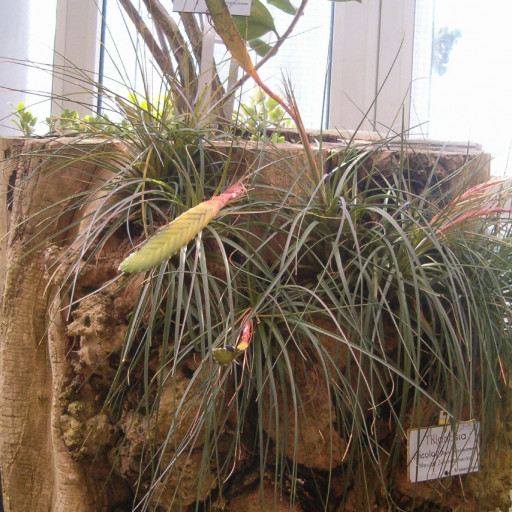
Plant Overview
Known as the "Living Rainbow" of the air plant world, Tillandsia tricolor is a striking epiphyte native to the humid forests of Mexico and Central America. Unlike most houseplants, this botanical acrobat spends its entire life suspended in the air, clinging to tree branches rather than digging into the dirt. It is famous for its dramatic "blushing" phase, where its foliage transitions through a vivid spectrum of colors to signal its upcoming bloom.
🔍 How to Identify
- 🌿 The Foliage: Features stiff, needle-like leaves that are dark green at the tips and transition into a deep, mahogany-brown or purple at the base.
- 🗼 Growth Habit: It grows in an upright, fountain-like rosette shape that can reach up to 12 inches in height, making it one of the more architectural air plants.
- 🎨 The "Tricolor" Bloom: When it matures, it produces a tall, multi-colored flower spike (bract) displaying vibrant reds, greens, and yellows, which eventually gives way to delicate tubular purple flowers.
🏡 In Your Garden
- 🌬️ Air, Not Earth: Because this plant is an epiphyte, it lacks traditional roots for drinking. It "breathes" through tiny silver scales on its leaves called trichomes. If you plant it in soil, it will suffocate and rot within days.
- 💧 The Soaking Ritual: While it loves humidity, it needs a deep "bath" once a week. Submerge it in room-temperature water for 20 minutes, then—crucially—shake it upside down to ensure no water sits in the center of the rosette, which can cause "heart rot."
- ☀️ Light Sensitivity: It prefers bright, filtered light. In the wild, it lives under the dappled canopy of trees; direct afternoon sun can scorch its thin leaves, while too little light will prevent it from achieving its famous tricolor bloom.
⚠️ Safety & Toxicity
- ✅ Pet Friendly: Tillandsia tricolor is considered non-toxic to cats, dogs, and horses. It is a safe choice for households with curious nibblers.
- 👶 Child Safe: It is perfectly safe for children, though the tips of the leaves can be quite pointy and stiff, so keep it out of reach to avoid accidental pokes to the eyes.
✨ Fun Fact
The Tillandsia genus was named after Elias Tillandz, a Swedish physician who famously hated traveling by sea because it made him seasick. Ironically, these "air plants" are often transported across the globe by wind and water, surviving entirely on what they can catch from the atmosphere!

Detailed Care Instructions
To grow Tillandsia Tricolor, also known as the Variegated Air Plant, you can follow these steps:
- Select a healthy Tillandsia Tricolor plant: Look for a plant with bright-colored leaves and no signs of damage or pests.
- Light: Place the plant in bright, indirect light. Avoid direct sunlight as it can burn the leaves. A bright spot near a window or under fluorescent lights is ideal.
- Temperature and Humidity: Tillandsia Tricolor plants thrive in temperatures between 50-90°F (10-32°C). They prefer high humidity levels, so mist the plant with water daily or place it in a humid environment like the bathroom or near a humidifier.
- Watering: Soak your Tillandsia Tricolor in water for 15-30 minutes once a week. You can use tap water, rainwater, or distilled water. After soaking, gently shake off any excess water and allow the plant to dry completely before placing it back in its spot.
- Fertilizing: Feed your air plant once a month with a diluted bromeliad or orchid fertilizer. Mix the fertilizer with water according to the instructions and mist or soak the plant in the solution. Avoid over-fertilization as it can damage the plant.
- Air Circulation: Tillandsia plants appreciate good air circulation. Ensure there is fresh air circulating around your plant for proper growth and to prevent rot.
- Mounting: Tillandsia Tricolor can be mounted on various objects like driftwood, rocks, or shells. You can use non-toxic glue or wire to attach the base of the plant to the object. Ensure the roots are attached securely but not constricted.
- Blooming: Tillandsia Tricolor can produce beautiful purple or pink blooms with proper care. The blooms usually appear in spring or summer and may last for several weeks.
- Maintenance: Regularly inspect your air plant for signs of pests or diseases. Remove any dead or yellowing leaves to prevent rot and improve air circulation.
By following these care instructions, you can enjoy the growth and beauty of Tillandsia Tricolor in your home or garden.

Place in a window with dappled sun or a spot in the middle of a room. Or directly in a window facing west or east.

To water this plant, you should fill a container with water and submerge the plant in it for about 15-30 minutes. After this time has passed, remove the plant from the water and shake off any excess water. It is important to make sure that the plant is completely dry within four hours of watering to prevent rotting. You should repeat this process once a week. Additionally, it is important to avoid using hard water or water that has been treated with fertilizers or chlorine, as this can harm the plant.
To fertilize this plant, use a water-soluble, balanced fertilizer that is formulated for air plants. Dilute the fertilizer to half strength and apply it to the plant's leaves every two to four weeks during the growing season (spring to fall). Use a misting bottle to apply the fertilizer, making sure to saturate the leaves but not soak them. Avoid fertilizing during the dormant season (winter) and avoid using fertilizer on dry or dehydrated plants.
Tillandsia Tricolor plant prefers a well-draining soil with good aeration. A mixture of coarse sand, perlite, and peat moss or bark is suitable for this plant. The soil should be slightly acidic with a pH range of 5.5 to 6.5. It is important to avoid using heavy and compacted soils as this can lead to waterlogging and root rot. The plant also benefits from occasional fertilization with a balanced fertilizer diluted to half strength. Overall, the soil for Tillandsia Tricolor plant should be light, airy, and well-draining to ensure optimal growth and health.
Tillandsia Tricolor plant can be propagated through the process of division. To do this, carefully remove the plant from its pot and gently separate the offsets or pups that have grown from its base. Each pup should have its own set of roots and can be planted into a new container or onto a new surface. It's important to let the cuttings or pups dry for a few hours before replanting them to prevent rotting. Once planted, the Tillandsia Tricolor plant should be watered regularly, but not too much as it is susceptible to root rot. The plant prefers bright, indirect light and moderate humidity. With proper care, the Tillandsia Tricolor plant will thrive and produce new pups over time.
Common pests of the air plant include Mealybugs. Make a habit of checking your air plant frequently for pests so that any infestations can be caught and managed early.








