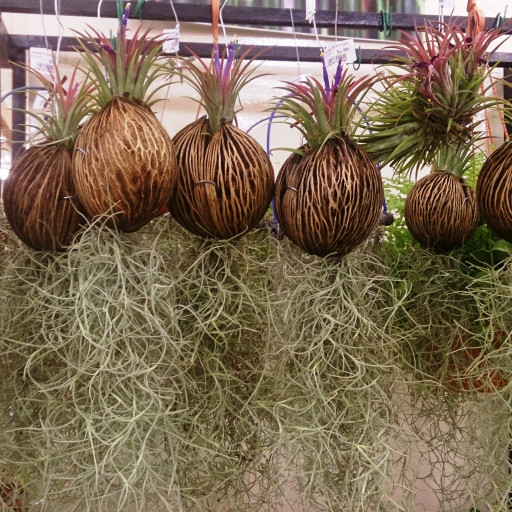
Plant Overview
Often called "Old Man’s Beard" or "Spanish Moss," this plant is a master of disguise—it is neither Spanish nor a moss. It is actually a fascinating member of the Bromeliad family, making it a botanical cousin to the pineapple! Cloaking the ancient oaks of the American South in silver-gray veils, it creates a ghostly, romantic atmosphere straight out of a Southern Gothic novel.
🔍 How to Identify
- 🌿 Growth Habit: It grows in long, pendulous festoons that can reach up to 20 feet in length, lacking any traditional root system or "true" soil-bound roots.
- 🌫️ Surface Texture: The thin, curling stems and leaves are covered in tiny, silver-gray scales called trichomes. These act like microscopic sponges to trap moisture and nutrients directly from the air.
- 🌸 Hidden Blooms: Look very closely in the spring; it produces tiny, three-petaled flowers that are pale green or yellow and give off a surprisingly sweet fragrance at night.
🏡 In Your Garden
- 💨 Air Circulation is King: Because it has no roots to pull water from soil, it relies entirely on air movement to dry out between drinks. In a home setting, hanging it in a spot with stagnant air will quickly lead to "inner rot" where the strands overlap.
- 💧 The "Dunk" Ritual: While misting is helpful, this plant thrives on a weekly 15-minute deep soak in rainwater or dechlorinated tap water. You’ll know it’s happy when the silver scales turn a vibrant, emerald green.
- ☀️ Light Nuance: It loves bright, filtered light. In the wild, it sits under the canopy of large trees; indoors, a spot near a bright window—but out of the scorching afternoon sun—is perfect.
⚠️ Safety & Toxicity
- 🐾 Pet Friendly: Spanish Moss is non-toxic to cats, dogs, and horses, making it a safe choice for low-hanging decorative displays.
- 🐜 The "Wild" Risk: If you are tempted to collect it from nature, be warned! In its natural habitat, the dense clumps are famous hiding spots for "chiggers" (tiny biting mites), spiders, and even bats. For indoor use, always purchase heat-treated or greenhouse-grown specimens.
✨ Fun Fact
In the early 20th century, Spanish Moss was harvested on an industrial scale. It was used as a stuffing material for everything from mattresses and pillows to the upholstery of the original Ford Model T cars!

Detailed Care Instructions
| Color | Gray-Green Colored Leaves With Yellowish Flowers |
| Soil Ph | Na |
| Humidity | High |
| Lighting | Part Sun |
| Toxicity | Non-Toxic |
| Soil Type | Na |
| Bloom Time | From Spring To Fall |
| Difficulty | Medium |
| Plant Type | Perennial Herb |
| Mature Size | 20-25 Feet Long |
| Native Area | North, Central, And South America |
| Temperature | 16°C - 27°C |
| Sun Exposure | Bright Indirect Sunlight |
| Hardiness Zones | 7-11 |
Growing Tillandsia Usneoides, also known as Spanish moss, is relatively easy as it is an epiphytic plant that does not require soil. Here are some tips to help you grow Tillandsia Usneoides:
- Light: Place your Tillandsia Usneoides in bright, indirect sunlight. It thrives in bright light conditions but should be protected from direct sunlight, as it can cause the plant to dry out.
- Water: Spanish moss is very tolerant of drought conditions. Mist your Tillandsia Usneoides with water every few days or soak it in water for about 30 minutes once a week. Make sure to shake off any excess water afterwards to prevent rotting.
- Humidity: Tillandsia Usneoides prefers a humid environment. If you live in a dry climate, you can mist the plant more frequently or place it in a bathroom or kitchen where humidity is naturally higher.
- Air circulation: These plants prefer good air circulation. Avoid placing them in excessively stagnant areas. Outdoor environments with gentle air movement are ideal.
- Display: Tillandsia Usneoides can be displayed in various ways. You can hang it from a tree branch, display it in a glass terrarium or vase, or even create a living wall by attaching the plant to a wire mesh or other porous supports.
- Fertilizer: Although Spanish moss can survive without regular fertilization, you can provide it with a diluted liquid fertilizer once every few months. Use a bromeliad or air plant fertilizer, following the instructions on the packaging.
- Care: Remove any dead or dried out portions of the plant to promote better growth and appearance. Gently pull apart tangled strands of Spanish moss to ensure good air circulation and prevent any mold or rotting.
With proper care, Tillandsia Usneoides can grow and thrive, adding a unique touch to your indoor or outdoor space.

Place in a window with dappled sun or a spot in the middle of a room. Or directly in a window facing west or east.

To water this plant, you should first fill a container with water and place the plant inside. Alternatively, you can mist the plant with water from a spray bottle. Be sure to thoroughly saturate the plant with water, and allow it to dry completely before watering again. It is important not to overwater this plant, as it can lead to root rot. Additionally, ensure that the plant is receiving adequate light and ventilation to promote healthy growth.
To fertilize this plant, make sure to dilute the fertilizer solution to a quarter strength and use a spray bottle to mist the leaves once every month during the growing season. It's important to avoid getting any fertilizer on the base of the plant as this can cause damage. Make sure to use a well-balanced fertilizer that is specially formulated for epiphytic plants.
For Tillandsia Usneoides plant, it is recommended to use a well-draining soil mixture that is a blend of organic matter and inorganic particles. The ideal pH range for the soil is between 5.5 and 7.0. The soil mixture should contain a combination of peat moss, coconut coir, perlite, vermiculite, and sand to ensure proper drainage and aeration. It is important to avoid using heavy soils that can retain too much moisture and cause root rot. The soil must be kept slightly moist, but this plant prefers to receive more water through misting and soaking rather than through the soil. Adding a slow-release fertilizer to the soil mixture can also be beneficial.
To propagate this plant, you will need to first identify the type of cutting you want to take. This plant can be propagated through the use of offsets, stem cuttings or tissue culture.
To propagate stem cuttings, select a healthy stem from the parent plant and carefully cut off a section that is about 4-6 inches in length. Make sure the cutting has several nodes (places where leaves emerge) and a few leaves attached. Remove the lower leaves, then dip the cut end in rooting hormone and plant it in a container filled with well-draining soil mix. Water the cutting and keep it in a location with bright, indirect sunlight.
To propagate through offsets, wait for the plant to produce small baby plants (or pups) at the base of the parent plant. Once they are large enough to handle, gently separate them from the parent plant using a clean, sharp knife. Pot the offsets in their own containers with well-draining soil mix, and water them lightly. Allow to root and establish themselves before putting them in a permanent location.
To propagate through tissue culture, take a small portion of the plant tissue such as a leaf or stem. Clean the tissue with alcohol solution and place in a sterile culture medium. Allow the tissue to grow and develop roots and leaves in this environment. Once the tissue has established roots and leaves, you can transplant it into a container with well-draining soil mix.
Overall, while propagation can be a slow process, with a bit of patience and care, your Tillandsia Usneoides plant should thrive!
Common pests of the old man's beard include Mealybugs. Make a habit of checking your old man's beard frequently for pests so that any infestations can be caught and managed early.








