Plant Overview
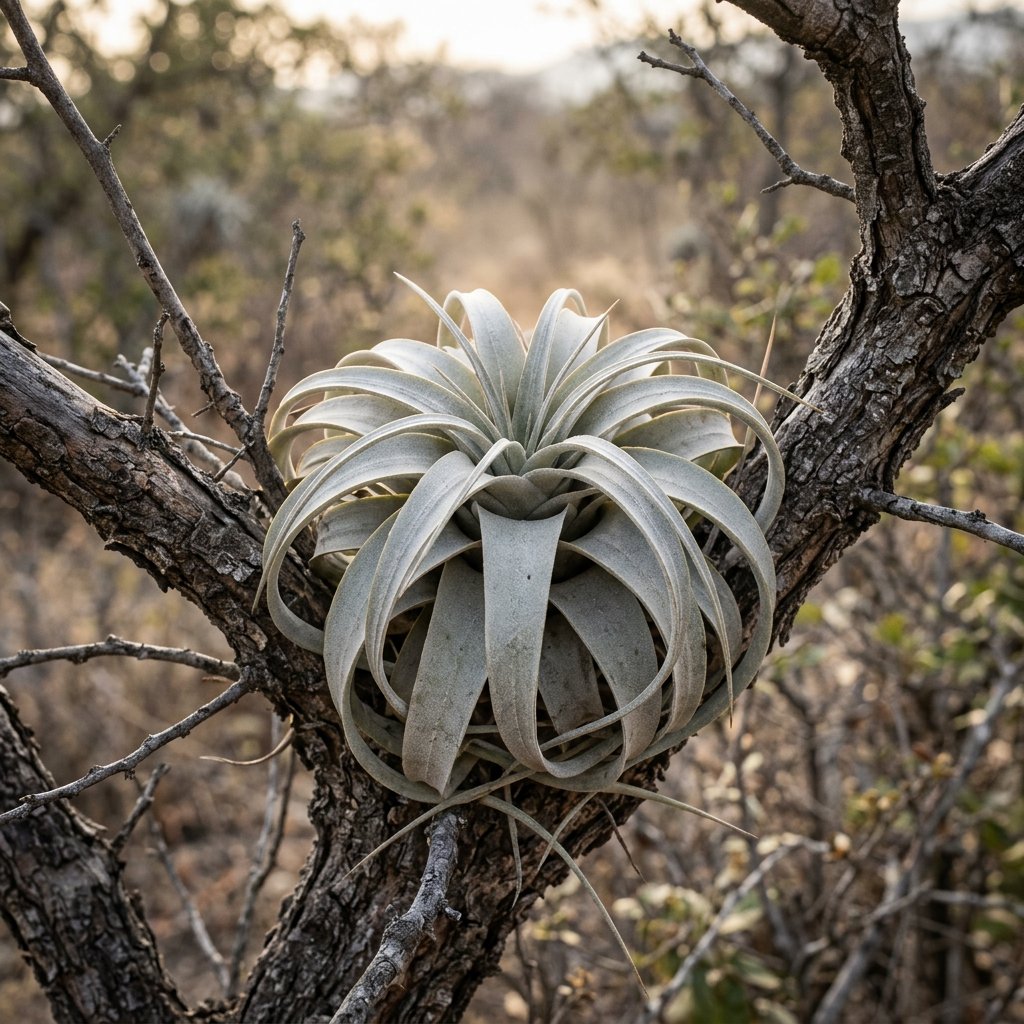
Often hailed as the "King of Air Plants," the Tillandsia xerographica is a true botanical masterpiece. Native to the semi-deserts of Guatemala and Mexico, this silvery-green wonder looks more like a living sculpture than a traditional plant. Unlike many of its cousins that hide in humid rainforests, this "Xeric" species has evolved to thrive in bright, dry environments, earning its crown through its majestic size and dramatic, curling leaves.
🔍 How to Identify
- 🌀 The Rosette: It forms a large, spherical rosette of thick, tapering leaves that can grow up to 3 feet in diameter in the wild.
- ❄️ The Coating: The leaves are covered in a dense layer of silvery-grey trichomes (tiny scales) that give the plant a frosted appearance and help it absorb moisture from the air.
- 🌸 The Bloom: When it matures, it produces a spectacular, long-lasting floral spike with bright green, yellow, and red bracts that eventually sprout small purple flowers.
🏡 In Your Garden
- ☀️ Light & Air: This plant is a sun-lover. Because it originates from dry forests, it requires much brighter light than most air plants and thrives in spots with excellent air circulation to prevent moisture from trapped between its leaves.
- 💧 The "Shake" Method: While it needs hydration, it is highly susceptible to crown rot. Instead of long soaks, give it a quick dunk or heavy misting, then—most importantly—turn it upside down and shake it vigorously to ensure no water sits in the center.
- 🪴 Mounting: Since it has no traditional root system, it doesn't need soil. It is best displayed "naked" on a shelf, nestled in a piece of driftwood, or suspended by a wire.
⚠️ Safety & Toxicity
- ✅ Non-Toxic: Good news for pet owners! Tillandsia xerographica is completely non-toxic to cats, dogs, and humans.
- 🧤 Gentle Touch: While it isn't dangerous, avoid handling the leaves too frequently; the natural oils from your hands can rub off the silvery trichomes that the plant uses to "breathe" and stay hydrated.
✨ Fun Fact
The Tillandsia xerographica is one of the slowest-growing air plants in the world and is protected under CITES (Convention on International Trade in Endangered Species). This means that every legally sold plant should be nursery-grown rather than harvested from the wild to protect its natural habitat!

Detailed Care Instructions
| Humidity | High |
| Lighting | Part Sun |
| Difficulty | Medium |
| Plant Type | Perennial, Succulent |
| Mature Size | Height: 1 - 3 Ft. |
| Native Area | South America |
| Temperature | 16°C - 27°C |
| Sun Exposure | Partial Shade |
| Hardiness Zones | 11 And Above |
Here are some guidelines to help you grow Tillandsia xerographica plants:
- Light: Tillandsia xerographica requires bright, indirect light. Place the plant near a window where it can receive filtered sunlight. Avoid exposing it to direct sunlight as it can cause leaf burn.
- Air circulation: These plants thrive in environments with good air circulation. Place them in a well-ventilated area, or use a fan to keep the air moving around the plant.
- Watering: Tillandsia xerographica is an epiphytic plant that absorbs most of its nutrients and moisture from the air. Watering can be done by misting the plant with room temperature water every few days. Alternatively, you can soak the plant in a bowl of water for 15-30 minutes once a week, then let it dry completely before placing it back in its usual spot.
- Humidity: High humidity levels are beneficial for Tillandsia xerographica. You can increase humidity by misting the plant more frequently or placing a humidity tray filled with water near the plant.
- Temperature: These plants thrive in temperatures between 50-90°F (10-32°C). Protect them from extreme heat or cold, as it can damage the plant.
- Fertilizer: Tillandsia xerographica does not require much fertilizer. However, you can use a bromeliad or orchid fertilizer diluted to half strength and apply it once every few months during the growing season.
- Potting medium: In their natural habitat, Tillandsia xerographica grows on trees or rocks, not in soil. Therefore, instead of planting them in soil, they are often displayed in decorative containers, mounted on driftwood, or placed in glass terrariums without soil.
- Maintenance: Remove any dead or yellowing leaves to maintain the plant's aesthetics and health. Additionally, inspect the plant for pests such as mealybugs or scale insects. If you notice any infestation, treat it with an appropriate pesticide or insecticidal soap.
By following these care guidelines, you can successfully grow a Tillandsia xerographica plant and enjoy its unique beauty.

Place in a window with dappled sun or a spot in the middle of a room. Or directly in a window facing west or east.
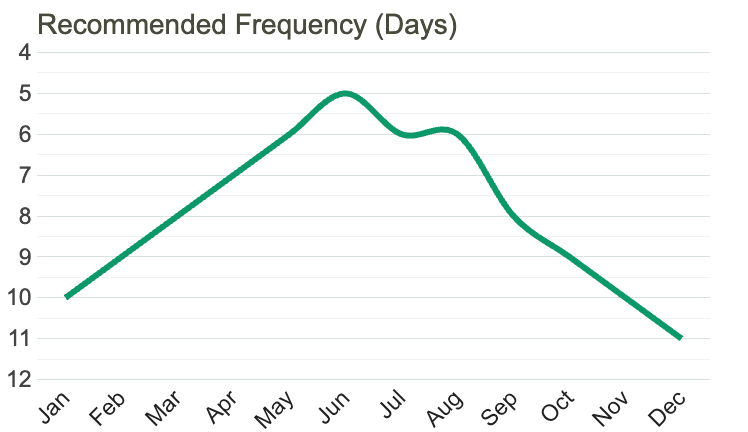
To properly hydrate this plant, you should mist it thoroughly several times a week, making sure to properly drench the leaves on all sides. Additionally, you can fill a bowl with water and completely submerge the plant for a few minutes, allowing it to absorb water through its leaves. Be sure to shake off any excess water and let it dry completely before placing it back in its display area. It's important to avoid letting water collect in the center of the plant, as this can cause root rot. If you live in a particularly dry climate, you may need to water it more frequently.
To fertilize this plant, first, dilute a water-soluble fertilizer in water according to the package instructions. Then, thoroughly moisten the leaves and roots of the plant with this mixture. Repeat this process every two to three weeks during the growing season, which generally runs from early spring to late summer. Be sure to avoid fertilizing during the dormant season, which occurs in the fall and winter. Additionally, always use a fertilizer specifically formulated for air plants and avoid over-fertilizing, as this can harm the plant.
It is best to use a well-draining soil mix that contains a combination of organic and inorganic components for this plant. The ideal soil mix should not retain moisture for long periods of time, as Tillandsia Xerographica is susceptible to root rot and other fungal diseases in excessively moist soil. A blend of orchid bark or other coarse materials, such as sand or perlite, with peat moss or coco coir could be a good option. It is also recommended to fertilize the plant regularly with a low-strength balanced fertilizer, as Tillandsia Xerographica absorbs nutrients through its leaves and does not require a great deal of fertilizer.
Tillandsia Xerographica can be propagated by removing offsets or pups that grow from the base of the plant. To do this, gently twist and pull the pup away from the mother plant, being careful not to damage the roots. The best time to do this is in the spring or summer when the plant is actively growing.
Once you have removed the pup, shake off any excess soil and let it sit in a shaded area for a few days to allow the wound to dry and callus over. After it has callused, you can plant the pup in well-draining soil or attach it to a piece of wood, cork, or other porous material using a little bit of wire or adhesive. Mist the pup regularly and keep it in a bright, but indirect light until it has established itself.
It's important to note that propagating Tillandsia Xerographica by seed is difficult, as the plant requires a specific type of pollinator to produce viable seeds. Therefore, propagating by removing offsets is the most common and reliable method.
Common pests of the giant tillandsia include Mealybugs. Make a habit of checking your giant tillandsia frequently for pests so that any infestations can be caught and managed early.








