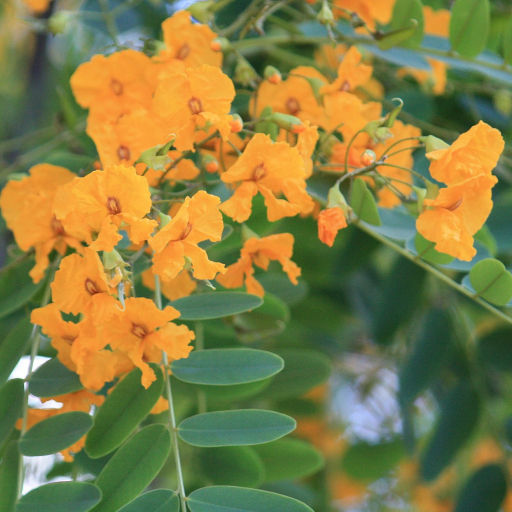
Plant Overview
Often called the "Pride of Bolivia" or the "Yellow Jacaranda," the Tipu tree is a majestic shade provider known for its explosive golden blooms. In the peak of summer, its canopy turns into a sea of yellow, eventually carpeting the ground below in a vibrant floral rug. It’s a favorite in warm climates for its ability to transform a scorched backyard into a cool, dappled sanctuary in record time.
🔍 How to Identify
- 🌿 The Foliage: Features large, feathery compound leaves made up of many small, oval leaflets. The canopy creates a soft, airy texture that lets "filtered" sunlight through.
- 🌼 The Flowers: Produces bright yellow, pea-shaped blossoms that grow in long clusters. Look closely and you’ll see a tiny reddish-orange spot at the center of each petal.
- 🚁 The "Helicopters": Unlike most legumes that produce typical pods, the Tipu grows single-winged seeds (samaras) that spin through the air like little helicopters when they drop.
🏡 In Your Garden
- 🚀 A Fast Grower: This tree is a "speed demon" of the plant world. It can grow several feet a year, making it excellent for new homeowners who need shade quickly, but it requires regular pruning to manage its size.
- 🏗️ Root Awareness: The Tipu has a very aggressive and shallow root system. It is notorious for lifting sidewalks, cracking driveways, and invading pipes. Always plant it at least 15–20 feet away from any permanent structures.
- 🧪 Soil Helper: As a member of the legume family, it "fixes" nitrogen in the soil. This means it actually improves the soil quality around it, acting as a natural fertilizer for its neighbors.
⚠️ Safety & Toxicity
- ✅ Safe Status: The Tipuana tipu is generally considered non-toxic to humans, dogs, and cats.
- 🚲 Physical Hazard: The primary safety concern is the "trip hazard" caused by its surface roots and the slippery layer of fallen flowers, which can become slick on pavement after rain.
✨ Fun Fact
The Tipuana tipu is a "one-of-a-kind" plant! It belongs to a monotypic genus, meaning it is the only species within its entire genus. In the world of botany, it truly has no close siblings.

Detailed Care Instructions
To grow a Tipuana Tipu plant, you can follow these steps:
- Choose a suitable location: Tipuana Tipu prefers full sun and well-drained soil. Select a spot in your garden that receives at least 6-8 hours of direct sunlight every day.
- Prepare the soil: The soil should be moderately fertile with a pH level of 5.5 to 7.5. If the soil is heavy or drains poorly, amend it with organic matter such as compost or well-rotted manure to improve drainage.
- Planting: Dig a hole that is about twice the width of the root ball of the plant. Place the plant in the hole and backfill it with soil, gently firming it around the base of the plant. Make sure the plant is planted at the same depth it was in its container.
- Watering: After planting the Tipuana Tipu, water it thoroughly to settle the soil. During the establishment period, typically the first year, water the plant regularly, providing enough moisture for the roots to develop. Once established, the tree is relatively drought-tolerant but will still benefit from occasional deep watering during dry spells.
- Pruning: Tipuana Tipu may require periodic pruning to maintain its shape and remove dead or damaged branches. Prune in late winter or early spring before new growth begins.
- Fertilizing: Tipuana Tipu generally does not require much fertilization. However, you can apply a balanced slow-release fertilizer in spring to promote healthy growth. Follow the package instructions for the recommended dosage.
- Mulching: Apply a layer of organic mulch around the base of the plant to help retain moisture, inhibit weed growth, and regulate soil temperature.
- Pests and Diseases: Tipuana Tipu is generally resistant to most pests and diseases. However, it can occasionally be susceptible to aphids or leaf-eating caterpillars. Regularly inspect the plant for any signs of infestation and treat accordingly with insecticidal soap or appropriate measures.
Remember to monitor the growth of the plant and address any issues promptly. With proper care and maintenance, your Tipuana Tipu plant should thrive and provide an attractive addition to your garden.

Place in a bright room that is sun drenched almost all day. Or directly in a south-facing window.

To properly water this species of plant, it is important to first understand its watering needs and habits. This tree requires regular watering, especially during periods of dry weather. It prefers moist soil but can tolerate some drought.
When watering, ensure that the water reaches the deeper roots by watering slowly and deeply, instead of just surface watering. Overwatering can lead to root rot and other diseases, so it is essential not to leave the soil too wet or water too frequently.
It is also important to consider the drainage of the soil to prevent waterlogging since this species of plant does not do well in waterlogged soils. Ideally, the soil should be well-draining with good air circulation to ensure healthy roots.
One tip is to water this tree in the early morning or late evening, instead of during midday, to avoid excessive evaporation.
Lastly, it is always a good idea to regularly check the soil moisture levels by sticking your finger about two inches into the soil. If the soil feels dry, it's time to water, and if it's wet, hold off on watering until it dries out a bit.
- Obtain a complete, slow-release fertilizer with a balanced N-P-K ratio.
- Apply the fertilizer in early spring before new growth appears.
- Spread the fertilizer evenly around the drip line of the tree.
- Water the area thoroughly after applying the fertilizer.
- Repeat fertilization once a year in the early spring.
The preferred soil type for this plant should be well-drained and fertile. The pH level should be mildly acidic to neutral (between 5.5 and 7.5). It is best to avoid heavy clay soils or those with poor drainage as they can lead to root rot. Additionally, the plant prefers a sandy-loam soil with organic matter incorporated to help retain moisture and nutrients. It is recommended to amend the soil with compost or other organic material before planting to improve soil structure and fertility.
Propagation of this plant can be done through two methods - seed propagation and vegetative propagation.
Seed propagation involves harvesting mature seeds from the plant and sowing them in a well-draining potting soil mix. Germination can take several weeks, but once the seedlings have developed a few sets of leaves they can be transplanted into individual containers.
Vegetative propagation involves taking cuttings from the plant and rooting them in a rooting hormone and well-draining potting soil mix. A node, or an area where leaves attach to the stem, is needed for the cutting to root properly. Once rooted, the cutting can be planted in a larger container or in the ground.
It is important to keep the soil moist but not waterlogged during both the seed and cutting propagation processes. Additionally, the propagated plants should be kept in a warm and bright location, out of direct sunlight until they have developed a strong root system.
Common pests of the tipu tree include Mealybugs, spider mites, whiteflies. Make a habit of checking your tipu tree frequently for pests so that any infestations can be caught and managed early.








