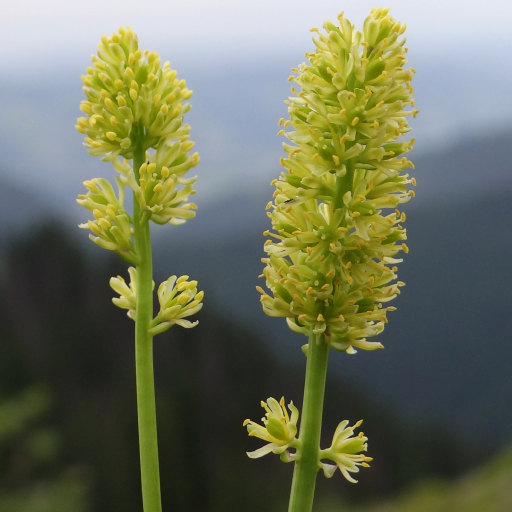
Plant Overview
Known affectionately as Tofield's Asphodel, this elegant alpine inhabitant is a master of the "sweet" bog. While many marsh plants prefer acidic peat, this resilient perennial thrives in lime-rich, calcium-heavy wetlands and damp mountain meadows. Its presence is often a sign of a healthy, undisturbed ecosystem where the water runs cool and clear.
🔍 How to Identify
- 🌼 The Bloom: Small, star-shaped flowers range from creamy white to a pale, sulfurous yellow. They are crowded together in a dense, cylindrical spike at the tip of the stem.
- ⚔️ The Foliage: The leaves are flat and sword-like, arranged in a neat fan shape at the base of the plant, closely resembling a miniature Iris or a tuft of stiff grass.
- 🥖 The Stem: The flowering stalk is upright and mostly leafless, often featuring tiny, sticky glands just below the flower head that help protect the nectar from crawling insects.
🏡 In Your Garden
- ⛰️ The Lime Requirement: This species is a "calcicole," meaning it craves alkaline conditions. In a garden setting, it will struggle in typical acidic potting mixes; it needs limestone grit or "sweet" soil to feel at home.
- 💧 Soggy Bottoms: It thrives with "wet feet." It is an ideal candidate for the edge of a pond or a dedicated bog garden, provided the water is oxygenated and doesn't become stagnant and overheated in the summer sun.
⚠️ Safety & Toxicity
- ✅ Generally Safe: Tofieldia calyculata is not known to be toxic to humans, dogs, or cats.
- 🚫 Handle with Care: While safe, it is a delicate species that does not tolerate heavy trampling or frequent transplanting. Its sticky stems can also collect dust and debris, which may cause mild skin irritation for those with very sensitive skin.
✨ Fun Fact
Tofieldia calyculata is considered "sub-carnivorous." The sticky hairs on its stem trap small gnats and flies. While it doesn't "eat" them through its leaves like a Sundew, the nutrients from the decaying insects eventually wash down into the soil, providing a "liquid fertilizer" boost to the plant’s roots!

Detailed Care Instructions

Place in a bright room that is sun drenched almost all day. Or directly in a south-facing window.

To water this particular plant, it is important to first assess the soil moisture level. The soil should be kept consistently moist but not waterlogged. It is best to water deeply and infrequently rather than lightly and frequently. Consider watering every 7-10 days, thoroughly soaking the soil and allowing excess water to drain away. Be careful not to water the foliage or flowers, as this can lead to fungal issues. Use room temperature water and water in the morning to allow any excess moisture on the leaves to evaporate before evening. Adjust watering frequency as needed based on weather conditions and plant growth.
It is recommended to plant Tofieldia Calyculata in acidic soil with good drainage. The soil should be rich in organic matter and slightly moist but not waterlogged. Sandy loam or peaty soils are ideal for this plant. Avoid heavy clay soils or those with alkaline pH levels. Incorporating leaf mould or well-rotted compost can improve soil quality. Mulching around the plant can help retain moisture and suppress weeds. Amend the soil periodically with fertilizer that is low in nitrogen but high in phosphorus and potassium. Overall, Tofieldia Calyculata thrives in well-draining, acidic soil with a rich organic content.








