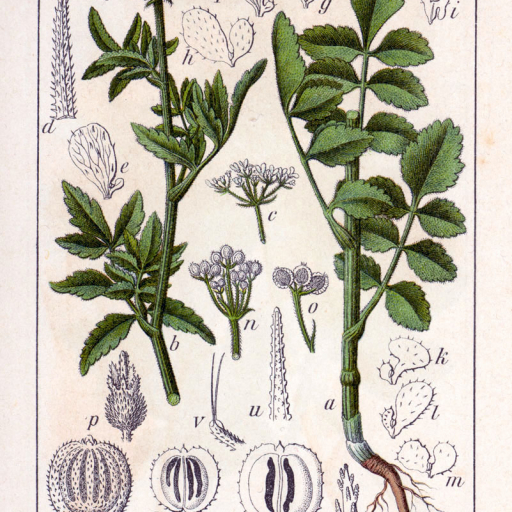
Plant Overview
The Great Hartwort, scientifically known as Tordylium maximum, is a tall, elegant member of the carrot family that looks like a piece of intricate Victorian lace dropped into a wild meadow. Often called the "Bristly Tordylium," it is a rare sight in many parts of Northern Europe, favored by botanists for its striking, asymmetrical flowers. In the wild, it acts as a skyscraper for pollinators, standing tall above the grasses to offer a landing pad for traveling insects.
🔍 How to Identify
- 🌸 The "Halo" Flowers: Unlike many of its cousins, the outer petals of the outermost flowers in each cluster are significantly larger and deeply lobed, creating a beautiful, ragged white border.
- 🪒 Bristly Stems: The stems are covered in stiff, downward-pointing hairs that feel rough or "bristly" to the touch, distinguishing it from smoother meadow plants.
- 🍃 Coarse Foliage: Its leaves are pinnate (divided) with oval, tooth-edged leaflets that look somewhat like a rugged version of flat-leaf parsley.
🏡 In Your Garden & Habitat
- ☀️ Sun-Drenched Meadows: This plant thrives in warm, open spots with chalky or limestone-heavy soil. It is a specialist of "disturbed" ground, often found on the sunny edges of hedgerows or steep grassy banks.
- 🐝 A Pollinator Party: Because of its broad, flat flower heads (umbels), it is an incredibly efficient feeding station. You will often see hoverflies, solitary bees, and small beetles congregating on the white platforms.
- 🌱 Deep Root System: Like most members of the Apiaceae family, it develops a strong taproot. It generally dislikes being moved once it has sprouted, so it’s best to let it self-seed where it stands.
⚠️ Safety & Toxicity
- 🧴 Skin Sensitivity: While not as dangerous as Giant Hogweed, the sap of many plants in this family can cause "phytophototoxicity." This means if sap gets on your skin and is then exposed to sunlight, it may cause a mild rash or irritation.
- 🐾 General Caution: It is not considered highly toxic to pets, but it is best to discourage chewing, as the bristly texture can irritate the mouth and throat of curious dogs or cats.
✨ Fun Fact
The name "Hartwort" has ancient roots; it was once believed that a "Hart" (an old English term for a male deer) would seek out this plant to eat if it had been wounded by a poisonous arrow, believing the herb had the power to draw out toxins!

Detailed Care Instructions
To grow Tordylium maximum (commonly known as hartwort), you can follow these steps:
- Purchase seeds: Obtain Tordylium maximum seeds from a reputable garden center, plant nursery, or online supplier.
- Choose the planting location: Hartwort prefers full sun to partial shade and well-draining soil. Select a spot in your garden that receives several hours of direct sunlight each day.
- Prepare the soil: Clear the planting area of weeds and rocks. Loosen the soil using a garden fork or tiller. Add organic matter, such as compost or well-rotted manure, to improve soil fertility and drainage.
- Sow the seeds: Directly sow the seeds into the prepared soil in early spring, as soon as the soil can be worked. Slightly press the seeds into the soil, ensuring good seed-to-soil contact. Space the seeds about 6-12 inches apart.
- Watering: Keep the soil evenly moist during the germination period, which usually takes about 2-3 weeks. After that, gradually reduce watering but make sure the plants receive sufficient water during dry spells.
- Thinning: Once seedlings have emerged and are large enough to handle (typically when they have 2-3 true leaves), thin them to a spacing of about 18-24 inches apart. This will give the remaining plants enough space to grow.
- Mulching: Apply a layer of organic mulch, such as straw or wood chips, around the plants to help retain moisture, suppress weed growth, and keep the roots cool.
- Maintenance: Remove any weeds that may compete with the plants for nutrients and water. Monitor the plants for pests or diseases and take appropriate measures if needed.
- Harvesting: Tordylium maximum is generally grown as an ornamental plant, but you can also collect the seeds to replant for future growth.
Overall, Tordylium maximum is a hardy plant that does not require much maintenance once established. With proper care, it should grow well in your garden.

Place in a bright room that is sun drenched almost all day. Or directly in a south-facing window.

To properly water this plant, you should first make sure that the soil is slightly damp before watering again. You can test this by sticking your finger into the soil about an inch deep and checking how moist it feels. It's important not to overwater, as this can lead to root rot. Instead, water thoroughly but infrequently, allowing the soil to dry out between waterings. Using a watering can or a drip irrigation system is recommended to avoid disturbing the soil and potentially damaging the plant. Additionally, make sure to water the plant at the base and avoid getting water on the leaves to prevent fungal growth.
To fertilize this plant, you should apply a slow-release, balanced fertilizer in the late winter or early spring. During the growing season, you can use a liquid fertilizer every two weeks. Be sure to follow the manufacturer's recommended application rates and avoid over-fertilizing, as this can damage the plant. Water the plant thoroughly after fertilizing.
Tordylium Maximum plant prefers a well-draining soil that is not too heavy or compacted. The soil should be fertile and nutrient-rich, with a pH level that ranges between slightly acidic to slightly alkaline. A mix that contains a blend of loam, sand, and organic matter is ideal, as it allows for good drainage while also providing enough moisture and nutrients. It is important to avoid using soils that are too heavy or clay-based, as they can lead to waterlogged roots and stunt the growth of the plant. Additionally, adding some compost or aged manure to the soil will help improve its overall quality, promoting healthy growth and development of the plant.
To propagate this plant, you will need to collect seeds from the mature plant when they are ripe. Soak the seeds in water for a few hours to soften their outer coating, which will help the seeds to germinate more easily.
Next, fill a small pot with rich and well-drained soil, ensuring that the pot has drainage holes at the bottom. Scatter the seeds evenly over the soil, and cover them lightly with a layer of soil. Water the pot, being careful not to disturb the seeds.
Place the pot in a warm and bright spot, but not in direct sunlight. Keep the soil moist, but not soggy, by watering regularly.
The seeds should germinate within a few weeks, and small seedlings will begin to emerge. Once they have grown several sets of leaves, transplant them to larger containers or into the garden, making sure to space them appropriately. Continue to provide them with plenty of water and sunlight, and they should continue to grow into mature plants that can produce their own seeds.








