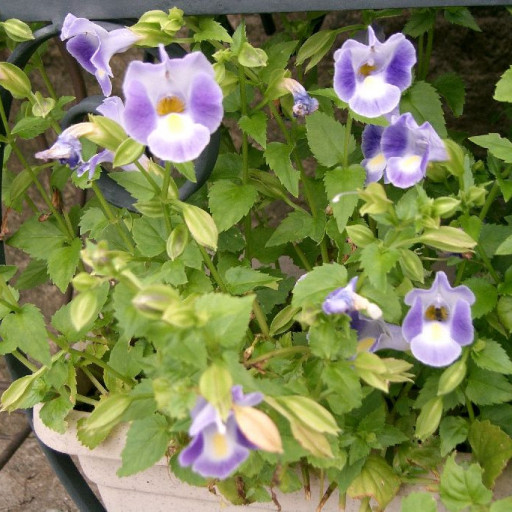
Plant Overview
Often called the Wishbone Flower or the Clown Flower, Torenia fournieri is a charming, shade-loving annual that looks like a miniature snapdragon. Native to Southeast Asia, it is a garden favorite for its "painted" face and its ability to thrive in the humid, shaded spots where other flowers might struggle. Its nickname comes from the pair of stamens inside the flower that curve and join at the top, perfectly mimicking a tiny chicken wishbone.
🔍 How to Identify
- 🌸 The Bloom: Look for two-lipped, trumpet-shaped flowers that typically feature deep velvety purple or blue outer petals and a pale lavender or white throat.
- 🟡 The "Yellow Tongue": Each flower features a distinct, bright yellow blotch on the lower petal, which acts as a landing pad for visiting pollinators.
- 🍃 The Foliage: The leaves are bright green, heart-shaped (ovate), and have finely serrated or "toothed" edges that give the plant a textured, bushy appearance.
🏡 In Your Garden
- ☁️ The Shade Hero: While many flowering plants demand full sun, Torenia is a "shade specialist." It performs best in filtered light or morning sun, as the intense afternoon heat can scorch its delicate, thin leaves.
- 💧 Humidity Lover: Because of its tropical origins, this plant dislikes drying out. It prefers soil that is consistently moist but not soggy; if the soil dries completely, the plant will wilt dramatically to let you know it’s thirsty.
- 🌱 Self-Cleaning: One of the best features for hobbyists is that Torenia is "self-cleaning," meaning it drops its old blooms naturally without the need for constant deadheading to keep it looking tidy.
⚠️ Safety & Toxicity
- 🐾 Non-Toxic: Torenia fournieri is considered non-toxic to dogs, cats, and horses, making it an excellent choice for pet owners who want a vibrant garden without the worry.
- 👶 Gentle Nature: The plant does not have thorns, prickles, or irritating saps, though like any ornamental plant, it should not be ingested by children.
✨ Fun Fact
The "wishbone" inside the flower isn't just for luck—it's a clever reproductive strategy! When a bee crawls inside to reach the nectar, its back rubs against the "wishbone" stamens, perfectly positioning pollen to be carried away to the next flower.

Detailed Care Instructions
| Color | Blue-Purple, White, Pink With Yellow Markings |
| Soil Ph | 6.0 To 6.5 |
| Humidity | Normal |
| Lighting | Part Sun |
| Soil Type | Loamy, Well-Drained |
| Bloom Time | June To Frost |
| Difficulty | Medium |
| Plant Type | Annual Flowering Plant |
| Mature Size | 6 To 12 Inches Tall, 6 To 9 Inches Wide |
| Native Area | Asia |
| Temperature | 18°C - 25°C |
| Sun Exposure | Partial Shade, Full Shade |
| Hardiness Zones | 2 To 11 |
To grow Torenia Fournieri, also known as the wishbone flower, you can follow these steps:
- Choose a suitable location: Torenia prefers a partially shaded area with morning sun and afternoon shade. It thrives in moist, well-draining soil.
- Prepare the soil: Ensure the soil is loose, fertile, and rich in organic matter. You can amend the soil with compost or well-rotted manure to improve its quality.
- Start seeds indoors (optional): Torenia can be started from seeds indoors about 8-10 weeks before the last frost date. Sow the seeds lightly on the surface of the soil and make sure the temperature remains around 70-75°F (21-24°C) for optimal germination.
- Direct sowing (alternative method): Torenia can also be directly sown outdoors after the danger of frost has passed and the soil has warmed up. Plant the seeds about 4-6 inches apart and cover them lightly with soil.
- Provide consistent moisture: Torenia requires even moisture levels, so make sure the soil remains consistently moist but not waterlogged. Water deeply whenever the top inch of soil feels dry to the touch.
- Mulching: Applying a layer of organic mulch around the plants will help retain soil moisture and suppress weed growth.
- Fertilizer: Torenia benefits from regular feeding. You can use a balanced, water-soluble fertilizer every two to three weeks during the growing season, following the package instructions for dilution and application rate.
- Pinch back or deadhead flowers: To encourage bushier growth and prolong blooming, pinch back the tips of each stem when the plant is about 4-6 inches tall. Additionally, remove spent flowers regularly to promote continuous bloom.
- Pests and diseases: Torenia is generally resistant to pests and diseases, but you should still monitor for common issues like aphids, slugs, or powdery mildew. Treat accordingly if any problems arise.
- Overwintering (if applicable): In areas with frost, Torenia is often grown as an annual. However, in mild climates, it may survive as a perennial. Apply a layer of mulch around the base of the plant before winter to protect it from freezing temperatures.
By following these steps, you can enjoy the beautiful flowers of Torenia Fournieri in your garden.

Place in a window with dappled sun or a spot in the middle of a room. Or directly in a window facing west or east.

1. Before watering, always check the soil moisture level by touching the surface or using a moisture meter.
2. Water only when the soil is dry to the touch, as overwatering can harm the plant.
3. Provide enough water to thoroughly moisten the soil, without creating waterlogged conditions.
4. Water at the base of the plant, avoiding getting water on the leaves or flowers.
5. Use a watering can or gentle spray from a hose to avoid disturbing the soil or plant roots.
6. During hot or dry weather, increase the frequency of watering.
7. Avoid watering during rainy periods or when soil is already moist to prevent waterlogging.
8. Be mindful of any drainage issues in the container or soil, as excess water can accumulate and harm the plant.
To fertilize this plant, it is recommended to use a balanced fertilizer with equal parts nitrogen, phosphorus, and potassium. Apply the fertilizer once a month during the growing season, which is typically during the spring and summer months. It is important to follow the recommended dosage on the fertilizer package, as over-fertilizing can harm the plant. Additionally, it is recommended to water the plant before applying the fertilizer to prevent the plant from being burned by the fertilizer.
Torenia Fournieri thrives in a well-draining soil mixture that has a pH level of between 5.5 and 6.5. The soil should be rich in nutrients but not too heavy, as the plant prefers loose, porous soil that allows for efficient root penetration and oxygenation. A good soil mixture for Torenia Fournieri may include compost, peat moss, and perlite or vermiculite to ensure good drainage. This will help prevent root rot and ensure that the plant remains healthy and vibrant throughout the growing season.
Torenia Fournieri plant can be propagated through stem cuttings. First, take a healthy stem that is about 4-6 inches long and has several nodes. Remove any leaves from the bottom of the stem, leaving only a few at the top. Dip the cut end of the stem in rooting hormone powder to encourage root growth.
Plant the stem in a pot filled with a well-draining soil mix. Water the soil well and cover the pot with a plastic bag or a clear plastic container to create a mini greenhouse. Place the pot in a warm, humid area that receives bright, indirect light. Check the soil periodically and water as needed to keep it moist but not waterlogged.
After several weeks, the stem should develop roots and new growth. Once the plant has become established, it can be transplanted into a larger pot or directly into the garden.
Common pests of the wishbone-flower include Spider mites, aphids, whiteflies. Make a habit of checking your wishbone-flower frequently for pests so that any infestations can be caught and managed early.








