Plant Overview
Often called the Knotted Hedge Parsley, this low-growing traveler is a master of the "hitchhike." While it looks like a delicate miniature lace-flower, it is actually quite hardy and persistent. Originally from the Mediterranean, it has spread across the globe by clinging to the fur of passing animals and the socks of unsuspecting hikers.
🔍 How to Identify
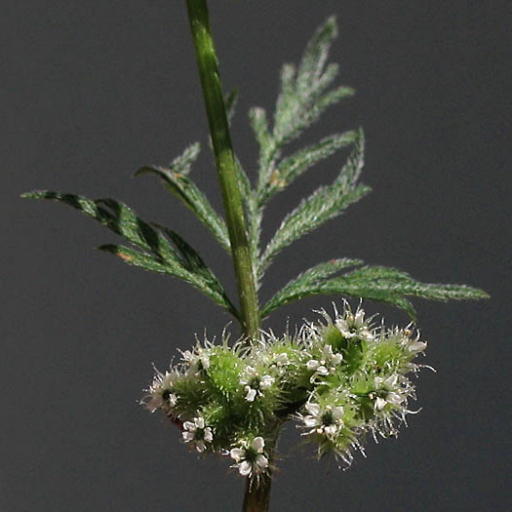
- 🌸 The "Knotted" Flowers: Unlike other parsley relatives that have long-stalked flower umbrellas, this plant’s tiny white-to-pink flowers grow in tight, stalkless "knots" directly against the stem.
- 🌿 Fern-like Foliage: The leaves are finely divided and feathery, resembling a very small version of a carrot top or a fern.
- 🪝 Prickly Fruit: After blooming, it produces small, oval fruits covered in hooked bristles (burrs) that are designed to snag onto anything that brushes past.
🏡 In Your Garden
- 🌱 Disturbed Soil Specialist: You’ll likely find this plant in "rough" areas—cracks in the pavement, along garden paths, or in dry, grassy patches. It loves soil that has been recently turned or trampled.
- ⚓ Taproot Strength: It anchors itself with a sturdy taproot. Because of this, it does not transplant well; if you want to move it (or remove it), you must do so while it is very young before the root dives deep.
⚠️ Safety & Toxicity
- 🟢 Generally Non-Toxic: There are no widespread reports of toxicity for Torilis nodosa. However, it is a member of the Apiaceae family, which contains some of the world’s most poisonous plants (like Poison Hemlock).
- 🐾 Physical Irritant: The primary "danger" is the prickly seed pods. These can become painfully tangled in long-haired pets' fur or stuck in a dog’s paw pads, sometimes requiring a grooming session to remove.
✨ Fun Fact
This plant practices a clever survival strategy called heterocarpy. The seeds on the outside of the cluster have long hooks to travel far away on animals, while the seeds on the inside have shorter hooks, ensuring they fall right at the parent plant's feet to keep the local colony going!

Detailed Care Instructions
To grow Torilis nodosa (Knotted hedge-parsley), follow these steps:
- Select an appropriate planting location: Torilis nodosa prefers full sun to partial shade. Choose a spot with well-draining soil.
- Prepare the soil: Loosen the soil using a garden fork or tiller. Remove any weeds or rocks from the area.
- Sow the seeds: Scatter the seeds evenly over the prepared soil surface. Torilis nodosa is an annual plant, so direct sowing is generally recommended. The ideal time for sowing is in spring or early summer.
- Lightly cover the seeds: Use a rake or your hand to gently cover the seeds with a thin layer of soil. The seeds are small and should only be lightly covered.
- Water the seeds: After sowing, water the area lightly to ensure the soil is moist. Avoid overwatering as it may cause the seeds to rot.
- Maintain moisture: Regularly check the moisture level of the soil and water whenever the top inch feels dry. Keep the soil evenly moist but not overly saturated.
- Thin the seedlings: Once the seedlings emerge and grow to a few inches tall, you may need to thin them out to provide enough space for each plant to grow. Leave the healthiest and strongest seedlings spaced about 6-12 inches apart.
- Control weeds: Regularly remove any weeds around your Torilis nodosa plants to prevent competition for nutrients and space.
- Provide support (optional): If you want to promote more upright growth, you can provide support such as stakes or cages around the plants.
- Monitor for pests and diseases: Watch out for common garden pests such as aphids or caterpillars. If necessary, use appropriate organic pest control methods to protect your plants from damage.
- Harvest or allow to self-seed: Torilis nodosa will produce small white flowers and later seedheads. You can collect the seeds for future planting, or you can allow the plant to self-seed and spread naturally.
By following these steps, you should be able to successfully grow Torilis nodosa plants in your garden.

Place in a bright room that is sun drenched almost all day. Or directly in a south-facing window.

To water this particular plant, it is important to first assess the soil moisture level by sticking a finger into the soil to a depth of around 2 inches. If the soil feels dry to the touch, then it is time to water the plant.
When watering, it is advisable to do so at the base of the plant, aiming for the soil rather than the leaves or stem. This helps to avoid getting water on the foliage, which can increase the risk of disease.
To ensure that the plant gets a good soak, water until water begins to drip out of the drainage holes in the pot or container. It is important not to let the plant sit in water, as this can also lead to root rot.
In general, it is better to water Torilis Nodosa moderately and consistently, rather than giving it infrequent heavy waterings. This helps to encourage healthy root growth and prevent issues like wilting or leaf drop.
To promote healthy growth and flowering of this plant, it is recommended to fertilize it with a balanced, soluble fertilizer once a month during the growing season. Use a fertilizer with an N-P-K ratio of 10-10-10 or similar. Mix the fertilizer according to package instructions and apply it to the soil around the base of the plant. Be careful not to over-fertilize, as this can damage the roots and foliage. Additionally, consider adding organic matter to the soil before planting to improve soil fertility and moisture retention.
The ideal soil for this particular plant should have excellent drainage, be well-aerated, and rich in nutrients. It should be slightly acidic to neutral in pH, with a range of 6.0 to 7.0. The soil should have ample organic matter to improve its fertility and moisture-holding capacity. A mix of loam, sand, and peat moss will be perfect for this plant. Avoid using heavy clay or sandy soils that do not hold moisture or nutrients well. Also, make sure that the soil does not become waterlogged, which can lead to root rot. Finally, the soil should be loosely packed to allow oxygen to penetrate the roots.
To propagate this plant, take 3 to 5-inch softwood cuttings from the parent plant in early spring or summer. Cut the stem just below a node. Remove any leaves on the lower half of the cutting and dip the cut end into rooting hormone. Place the cuttings into a pot filled with a well-draining potting mix and keep them in a bright but sheltered area. Water the cuttings regularly, keeping the soil moist but not waterlogged. After a few weeks, the cuttings should have rooted and can be potted up individually. Alternatively, the plant can also self-seed and propagate naturally in the right growing conditions.








