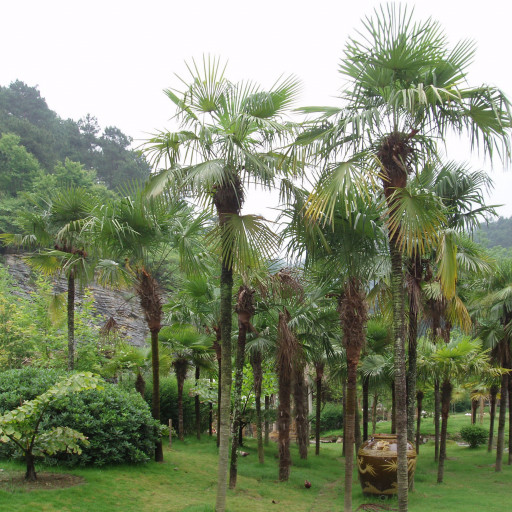
Plant Overview
Often called the Windmill Palm or the Chusan Palm, this resilient beauty is a legend in the gardening world for its "superpowers" against the cold. Native to the high altitudes of China, it is one of the few palms that can withstand a blanket of snow, allowing gardeners in temperate climates to create a tropical oasis where other palms would perish. Its name honors Robert Fortune, a plant hunter who famously smuggled tea plants out of China.
🔍 How to Identify
- 🌪️ The Fan Fronds: It features large, dark green leaves that are "palmate" (shaped like a hand or a fan) and can grow up to 3 feet wide, creating a distinct windmill-like silhouette in the breeze.
- 🧶 The Hairy Trunk: Unlike the smooth trunks of tropical palms, this species is wrapped in a thick, brown, burlap-like fiber. This "hairy" layer acts as a natural winter coat, protecting the core of the tree from freezing temperatures.
- 🌼 Yellow Blooms: In the spring, mature trees produce large, drooping clusters of bright yellow flowers. On female plants, these turn into small, dark blue, kidney-shaped fruits by autumn.
🏡 In Your Garden
- ❄️ The Snow-Proof Palm: While most palms crave the heat, Trachycarpus fortunei thrives in USDA zones 7-11. It is incredibly tough; even if the leaves get scorched by a deep freeze, the heart of the plant usually survives and pushes out fresh green growth in the spring.
- 🌬️ Wind Protection: While it is wind-tolerant, strong or salty coastal winds can shred the delicate tips of the fan leaves, making the plant look a bit "tattered." Planting it near a fence or wall helps maintain its pristine, manicured appearance.
- 💧 The "Wet Feet" Warning: It is very forgiving of different soil types but absolutely hates sitting in stagnant water. Ensure your soil is well-draining, as "wet feet" can lead to root rot faster than a cold snap ever could.
⚠️ Safety & Toxicity
- ✅ Pet & Human Safe: Good news for families! The Windmill Palm is considered non-toxic to dogs, cats, and humans. It is a very safe choice for backyard landscaping.
- 🌵 Mechanical Dangers: While not toxic, the edges of the leaf stalks (petioles) can be quite stiff and occasionally have small, dull teeth. Wear gloves when pruning dead fronds to avoid minor scratches or skin irritation.
✨ Fun Fact
In its native China, the thick, fibrous hair covering the trunk has been harvested for centuries to create durable, waterproof raincoats, traditional hats, and even high-strength ropes! This natural "burlap" is so strong it resists decay even in constant moisture.

Detailed Care Instructions
| Invasive | Weed |
| Lighting | Full Sun |
| Plant Type | Dioecious Tree |
| Mature Size | Most Specimens Will Be 10 To 20 Feet |
| Native Area | Burma And China |
| Sun Exposure | Part Sun |
| Hardiness Zones | 7-11 |
To grow Trachycarpus Fortunei, also known as the Windmill Palm, you can follow these steps:
- Choose a suitable location: Trachycarpus Fortunei prefers full sun to partial shade. Select a location that receives at least 6-8 hours of direct sunlight per day. It should also have well-drained soil.
- Prepare the soil: Trachycarpus Fortunei can tolerate a range of soil types, but it prefers loamy soil with good drainage. Add some organic matter, such as compost or well-rotted manure, to improve the soil's fertility and drainage.
- Planting: Dig a hole that is twice as wide and deep as the root ball of the plant. Place the plant in the hole and backfill with soil, ensuring that the roots are covered. Gently firm the soil around the plant to remove any air pockets.
- Watering: Initially, water the plant thoroughly to help establish the root system. Afterward, water regularly but make sure not to overwater, as Trachycarpus Fortunei is susceptible to root rot. During dry periods, provide deep watering once a week.
- Mulching: Apply a layer of mulch around the base of the plant to help retain moisture, regulate soil temperature, and suppress weed growth. Keep the mulch about 2-3 inches away from the trunk to prevent rot.
- Fertilization: Fertilize the plant once or twice a year, in early spring and mid-summer, using a slow-release palm fertilizer. Follow the instructions on the fertilizer packaging for proper application rates.
- Pruning: Trachycarpus Fortunei generally requires minimal pruning. Remove any dead or damaged fronds to maintain the plant's appearance. Be cautious when trimming or pruning, as the plant's trunk can be easily damaged.
- Protection during extreme cold: While Trachycarpus Fortunei is relatively cold-hardy, young plants may require protection during severe cold spells. Consider wrapping the trunk with burlap or protecting it with a frost cloth.
- Patience: The Windmill Palm is a slow-growing species, especially when young. It may take several years for the plant to reach its full height and display its characteristic fan-shaped fronds.
- Maintenance: Regularly monitor the plant for any signs of pests or diseases, such as scale insects or fungal infections. Treat any issues promptly using appropriate methods or consult a local gardening expert for assistance.
Remember to research and follow any specific guidelines or recommendations for your particular climate and growing conditions.

Place in a window with dappled sun or a spot in the middle of a room. Or directly in a window facing west or east.

To water this particular plant, you should moisten the soil around it, making sure not to overdo it. The soil should not be allowed to completely dry out before watering again, but it should also not be left sitting in water as this can lead to root rot. The frequency of watering will depend on various factors such as temperature, humidity, and soil type. It is important to note that this plant prefers well-draining soil and does not do well in waterlogged areas. Additionally, it is best to avoid getting water on the leaves as this can lead to fungal diseases.
To fertilize this plant, begin by selecting a balanced fertilizer that is specially formulated for palm trees. Mix the fertilizer with water according to the package instructions. Apply the mixture to the soil around the base of the plant, taking care not to get any on the foliage. Water the plant thoroughly after fertilizing to ensure that the nutrients are absorbed by the roots. During the growing season, fertilize every 4-6 weeks. In the winter, reduce the fertilization frequency to once every 8-12 weeks.
Trachycarpus Fortunei is a type of palm tree that prefers well-draining soil with good aeration. The soil should have a pH between 5.5 and 7.0, as this range is optimal for the absorption of nutrients.
It is recommended to use a mixture of organic and inorganic materials in the soil to provide adequate drainage and aeration. Sandy soil mixed with perlite or coarse grit is a good base to start with, as it allows water to drain freely.
Adding compost or aged manure to the soil will provide nutrients and improve soil structure. However, it is important not to over-fertilize, as this can cause damage to the plant's roots.
Mycorrhizal fungi can also be added to the soil to enhance the plant's nutrient uptake and overall health.
Regular watering is necessary to keep the soil moist but not waterlogged, as Trachycarpus Fortunei does not tolerate soggy soil. Mulching around the plant with organic matter will help retain moisture and regulate soil temperature.
Overall, the soil for Trachycarpus Fortunei should be well-draining, nutrient-rich, and slightly acidic to promote healthy growth and development.
To propagate this plant, start by collecting healthy seedlings from the parent plant. The seedlings should be removed carefully, without damaging the roots or stems.
Once the seedlings have been removed, they can be planted in small pots with rich, well-draining soil. The soil should be kept moist but not waterlogged, and the pots should be kept in a warm, shaded location.
Over time, the seedlings will grow and develop deep, strong roots. As they grow, they can be transplanted into larger pots or directly into the ground.
To care for the young plants, they should be watered regularly and fertilized with a balanced, slow-release fertilizer. They should also be protected from harsh sunlight, wind, and cold temperatures.
With proper care and attention, these young plants will grow into strong, healthy specimens that can be enjoyed for many years to come.
Common pests of the chinese windmill palm include Scale insect, mealybugs, spider mites. Make a habit of checking your chinese windmill palm frequently for pests so that any infestations can be caught and managed early.








