Plant Overview
Often celebrated as the Flowering Inch Plant, Tradescantia cerinthoides is the more robust, velvety cousin of the common Wandering Dude. Originating from the rocky outcrops and forests of South America, this plant is a master of contrast, flaunting deep green tops and royal purple underbellies. It is a favorite for beginners because it practically "creeps" across your home with very little supervision.
🔍 How to Identify
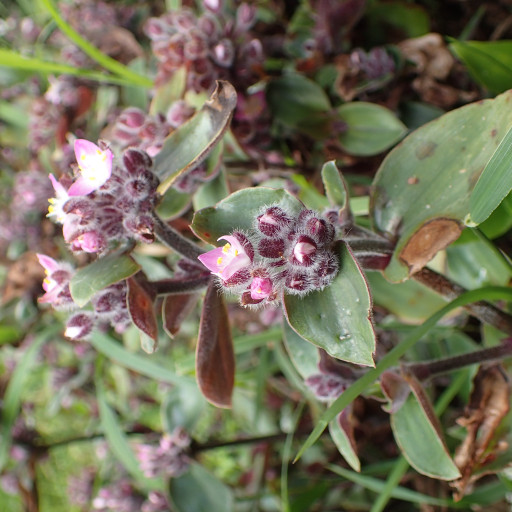
- 🍃 The Foliage: Leaves are fleshy, lance-shaped, and slightly succulent. The upper surface is a matte olive green, while the underside is a vivid, hairy magenta or purple.
- 🌸 The Bloom: Unlike many other Tradescantia species that rarely flower indoors, this variety frequently produces clusters of small, three-petaled flowers that are white with pinkish-purple tips.
- 🌿 The Stem: The stems are thick and juicy, often covered in fine, soft hairs (pubescence) that give the plant a silvery "glow" in the right light.
🏡 In Your Garden
- ☀️ Light & Color: To keep that deep purple "tan" on the bottom of the leaves, the plant needs bright, indirect light. If it’s kept in too much shade, the purple will fade, and the plant will become "leggy" as it stretches for the sun.
- ✂️ The "Pinch" Method: Because this plant grows so fast, it can start to look sparse at the top. The secret is to pinch off the growing tips regularly; this forces the plant to branch out, resulting in a much fuller, bushier appearance.
- 💧 Drought Tolerance: Because of its succulent-like leaves, it is much more forgiving of a missed watering than other tropicals. It stores water in its stems, making it perfect for the forgetful gardener.
⚠️ Safety & Toxicity
- 🐾 Toxic to Pets: This plant is considered mildly toxic to cats and dogs. Ingestion usually leads to mouth irritation, drooling, or digestive upset.
- 🚫 Skin Irritant: The sap contains calcium oxalate crystals. Some people (and pets) may develop a "contact dermatitis" (an itchy red rash) if the sap gets on their skin during pruning. It is best to wear gloves if you have sensitive skin.
✨ Fun Fact
The genus name Tradescantia honors John Tradescant the Younger, a famous 17th-century plant hunter and gardener to King Charles I of England, who was responsible for introducing many "exotic" American species to European soil.

Detailed Care Instructions
| Humidity | Normal |
| Lighting | Part Sun |
| Difficulty | Medium |
| Temperature | 21°C - 29°C |
| Hardiness Zones | 11 - 11 |
To grow Tradescantia cerinthoides (also known as inch plant or Wandering Jew), follow these steps:
- Choose a suitable location: Tradescantia cerinthoides can be grown both indoors and outdoors. It prefers bright, indirect light. If planting outdoors, choose a spot with partial shade.
- Select the right container or pot: If growing indoors, choose a well-draining pot that is slightly larger than the plant's root ball. If planting outdoors, ensure the soil is well-draining and amend it with organic matter if necessary.
- Prepare the soil: If planting outdoors, loosen and amend the soil with compost or well-rotted manure before planting.
- Planting: Dig a hole slightly larger than the root ball of the plant and place the plant in the hole. Backfill with soil and gently firm it around the roots.
- Watering: Water your Tradescantia cerinthoides thoroughly after planting. After that, water the plant regularly, keeping the soil moist but not waterlogged. Make sure to adjust the frequency of watering depending on the temperature and humidity levels in your area.
- Fertilizing: Tradescantia cerinthoides plants benefit from regular feeding. Use a balanced, water-soluble fertilizer diluted to half strength, and apply it every two to four weeks during the growing season.
- Pruning: Trim the plant periodically to encourage bushy growth and prevent it from becoming leggy. Pinch off the tips of the stems or cut them back just above a leaf node.
- Propagation: Tradescantia cerinthoides can be easily propagated through stem cuttings. Simply take a 3-4 inch cutting from a healthy stem, remove the bottom leaves, and place it in water or a well-draining potting mix until it roots.
- Pests and diseases: Tradescantia cerinthoides is generally resistant to pests and diseases. However, it can sometimes be affected by common houseplant pests such as spider mites or aphids. Regularly check the plants for signs of infestation and treat them accordingly.
Remember to provide your plant with the appropriate care, and it should grow and thrive.

Place in a window with dappled sun or a spot in the middle of a room. Or directly in a window facing west or east.

To water this plant, first check the soil moisture level by sticking your finger about an inch deep into the soil. If the soil feels dry, it's time to water. Use room temperature water and pour it slowly around the base of the plant until you see water draining out of the bottom of the pot. Avoid getting water on the foliage as it can lead to leaf spot and other diseases. Water only when the soil has dried out, as overwatering can lead to root rot. Adjust your watering frequency depending on the plant's specific needs and the environment it is in.
To fertilize this plant, use a balanced, water-soluble fertilizer with an N-P-K ratio of 10-10-10. Apply the fertilizer every two weeks during the growing season (spring and summer), reducing frequency to once a month in the fall and winter. Dilute the fertilizer according to package instructions and apply to moist soil around the plant, taking care not to get any on the leaves. Avoid fertilizing during drought or extremely hot temperatures.
In general, Tradescantia Cerinthoides plants thrive in soil that is well-draining and rich in organic matter. A mixture of peat moss, perlite, and vermiculite can create a loose, well-draining soil that will not become waterlogged. Additionally, adding some composted organic matter to the soil can help to provide the plant with additional nutrients as it grows. It is important to avoid using soil that is heavy or compacted, as this can cause drainage issues that can lead to root rot or other problems. Overall, using a high-quality potting mix that provides good drainage and nutrients is crucial for the health and success of a Tradescantia Cerinthoides plant.
To propagate this plant, you can take stem cuttings from the mature plant. Cut a 4-6 inch stem from the plant just below a node. Remove the leaves from the bottom half of the stem and dip the cut end in rooting hormone powder. Place the stem cutting in a pot filled with moist soil and cover it with a plastic bag or a clear plastic container to create a humid environment. Water the cutting regularly and keep it in a bright, indirect light. After a few weeks, the cutting should begin to root and new growth should appear.
Common pests of the flowering inch plant include Scale insect, mealybugs, spider mites, fungus gnats. Make a habit of checking your flowering inch plant frequently for pests so that any infestations can be caught and managed early.








