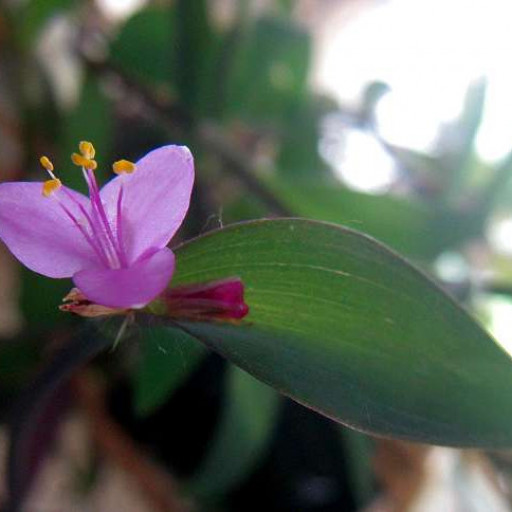
Plant Overview
Commonly known as the "Purple Heart" or "Purple Queen," this Mexican native is a dramatic showstopper in any plant collection. It is famous for its striking, monochromatic violet foliage that looks almost otherworldly against typical green garden plants. In folklore, its resilient nature has earned it a reputation as a symbol of "immortality," as it is nearly impossible to kill and bounces back from neglect with royal grace.
🔍 How to Identify
- 💜 Vibrant Foliage: The most distinct feature is its deep, saturated purple stems and lance-shaped leaves. In high light, the purple becomes incredibly intense, bordering on charcoal-violet.
- 🌸 Three-Petaled Blooms: It produces small, delicate flowers that are bright pink or lavender. These usually emerge at the tips of the stems and typically only open in the morning hours.
- ☁️ Fuzzy Texture: The leaves have a slightly succulent, fleshy feel and are covered in very fine, pale hairs (trichomes) that give the plant a soft, matte appearance.
🏡 In Your Garden
- ☀️ The Color Connection: To keep this plant "regal," it needs bright light. If the leaves start turning a muddy green, it’s a sign that the plant is struggling to produce its purple pigments due to a lack of sun.
- ✂️ Brittle but Brave: The stems are quite fragile and can snap easily if bumped. However, this is its secret weapon—every broken piece can be tucked back into the soil to start a brand-new plant almost instantly.
- 🌿 Groundcover or Trailer: Because of its sprawling habit, it works perfectly in hanging baskets where it can "spill" over the sides, or as a hardy groundcover in warmer climates.
⚠️ Safety & Toxicity
- 🚫 Irritant Status: The sap of the Purple Heart contains calcium oxalate crystals, which can cause skin irritation or a "prickly" rash in sensitive individuals.
- 🐾 Pet Warning: It is considered toxic to cats and dogs. Ingestion often leads to gastrointestinal upset or irritation of the mouth and throat. It is best displayed in high hanging pots out of reach of curious paws.
✨ Fun Fact
- 🌬️ Eco-Warrior: Beyond its beauty, Tradescantia pallida is a champion air purifier. Research has shown it is exceptionally effective at removing volatile organic compounds (VOCs) like benzene and trichloroethylene from indoor air, making it a functional "living filter" for your home.

Detailed Care Instructions
| Color | Dark Purple, Purple Violet |
| Soil Ph | Grows In All Soils |
| Lighting | Full Sun |
| Toxicity | Toxic |
| Soil Type | Moderately Moist Potting Soil |
| Bloom Time | Flowers Freely At All Times |
| Plant Type | Herbaceous Perennial |
| Mature Size | 6 To 9 Inches In Height, 12 To 24 Inches In Spread |
| Native Area | Mexico, South America, Central America, Caribbean |
| Sun Exposure | Bright, Indirect Sun |
| Hardiness Zones | 9 To 12 (Usda); Grown As A Houseplant Everywhere |
To grow Tradescantia pallida, also known as purple heart or wandering jew, follow these steps:
- Choose a suitable location: Tradescantia pallida thrives in bright, indirect light, but can also tolerate partial shade. It prefers warm temperatures between 70-85°F (21-29°C). Place it in a spot that receives ample sunlight or under fluorescent grow lights.
- Soil preparation: Use well-draining soil as Tradescantia pallida does not like to sit in standing water. A mix of potting soil and perlite or sand can be ideal. Ensure the pot or container has drainage holes to prevent water retention.
- Watering: Allow the top inch of soil to dry out before watering. Overwatering can lead to root rot, so it's important to maintain moderate moisture levels. During winter months, reduce watering frequency.
- Fertilizing: Feed your Tradescantia pallida every 4-6 weeks with a balanced liquid fertilizer during the spring and summer growing season. Follow the manufacturer's instructions for the appropriate amount and dilution.
- Propagation: Tradescantia pallida is easily propagated through stem cuttings. Simply take a cutting with several nodes and plant it in moist soil. Keep the soil consistently damp until roots form, usually in a few weeks. Transplant the rooted cutting into a new pot or container.
- Pruning: Pinch back the plant regularly to promote bushier growth and prevent leggy vines. This will encourage the plant to produce more vibrant purple foliage.
- Pests and diseases: Tradescantia pallida is generally resistant to most pests, but aphids and spider mites can occasionally be a problem. Keep an eye out for any signs of infestation and treat with appropriate insecticides or organic pest control methods.
Remember to provide adequate space for the plant to spread, as Tradescantia pallida can grow quite vigorously. With the right care and suitable conditions, it should thrive and produce beautiful purple leaves.

Place in a window with dappled sun or a spot in the middle of a room. Or directly in a window facing west or east.

1. Determine the watering requirements of the plant based on its species and individual needs.
2. Before watering, check the soil moisture level by sticking a finger or moisture meter into the soil. If the soil is dry approximately an inch below the surface, it's time to water the plant.
3. Use a watering can or hose with a gentle flow to avoid damaging the plant.
4. Water the plant slowly and evenly, making sure that the water reaches the root zone.
5. Allow the excess water to drain out of the bottom of the pot or soil to avoid waterlogging.
6. Don't let the plant sit in standing water as this can lead to root rot.
7. Adjust the watering frequency based on environmental factors such as temperature, humidity, and lighting conditions.
8. Mist the leaves occasionally to increase humidity levels around the plant.
9. Avoid using cold water, salt water, or hard water as these can harm the plant.
10. Finally, observe the plant regularly to spot any signs of overwatering or underwatering, such as yellowing leaves or wilting foliage.
To properly fertilize this plant, begin by selecting a balanced fertilizer high in nitrogen. When fertilizing, apply it to the soil around the base of the plant, taking care not to get it on the leaves or stems. Water the plant thoroughly after fertilizing, and repeat once every two weeks during the growing season. Be sure to follow the instructions on the fertilizer package and adjust your application based on the size of your plant.
The ideal soil for the plant in question should be well-draining and have a pH range of 5.5 to 6.5. It should be a loose and airy soil that encourages root development, while also retaining some moisture. A soil mixture consisting of perlite, peat moss, and sand is a good choice. In addition, it is recommended to fertilize the plant with a balanced, slow-release fertilizer to support its growth and overall health.
To propagate this plant, you will need to take a stem cutting that is approximately 4-6 inches in length. Make sure that the cutting has at least a few leaves and nodes on it.
Next, remove the leaves from the lower half of the stem and dip the cut end of the stem into rooting hormone powder. This will help to stimulate new root growth.
Place the stem cutting into a pot filled with well-draining soil and water thoroughly. Keep the soil moist but not overly wet.
Place the pot in a warm, bright location that is protected from direct sunlight. Cover the pot with a plastic bag or clear plastic wrap to create a humid environment.
Check the cutting regularly for new growth and root development. Once new leaves begin to appear, remove the plastic covering and continue to care for the plant as you would normally.
It is important to note that this plant can also be propagated by division, which involves separating the plant into smaller sections and replanting them individually.
Common pests of the purple heart include Scale insect, mealybugs, spider mites, fungus gnats, thrips. Make a habit of checking your purple heart frequently for pests so that any infestations can be caught and managed early.








