Plant Overview
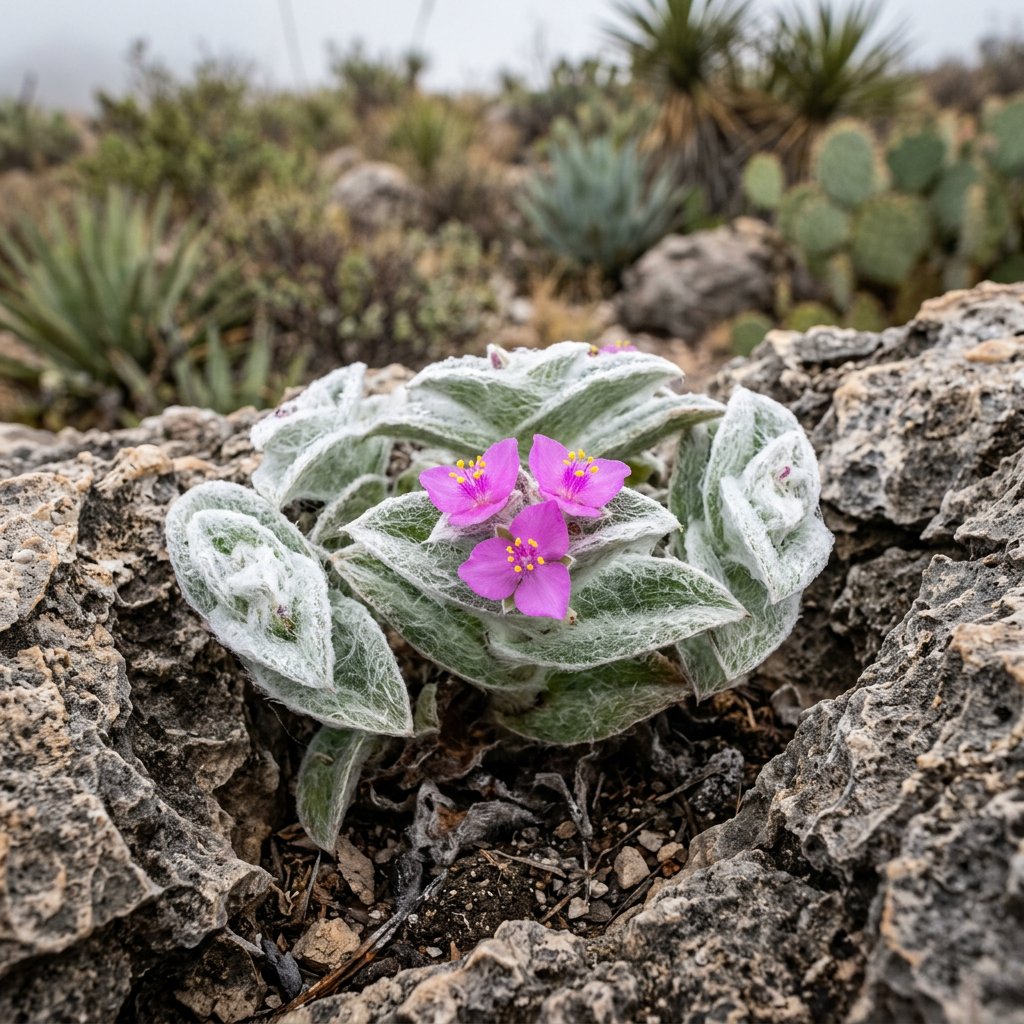
Often called the White Velvet or Cobweb Spiderwort, this striking Mexican native looks like it’s dressed for a winter gala, even in the heat of summer. Its dense coat of white, woolly hairs gives it a soft, ghostly appearance that stands out in any collection. In the wild, it clings to the rocky slopes of Nuevo León, using its unique "fur" to survive the intense sun.
🔍 How to Identify
- ☁️ The Foliage: Thick, succulent leaves are covered in a dense layer of soft, white hairs that look like spiderwebs or fine wool.
- 📐 Growth Pattern: The leaves are arranged in a precise, geometrical pattern along the stem, often appearing in two neat rows (distichous) or slightly spiraled.
- 🌸 The Bloom: In the summer, it produces small, vibrant magenta or bright pink flowers with three petals, creating a stunning contrast against the silver-white leaves.
🏡 In Your Garden
- ☀️ Light is Key: The "cobwebs" are actually a survival mechanism. To keep its fuzz thick and white, this plant needs plenty of bright light; in low light, it loses its hair and becomes a plain, leggy green.
- 💧 Dry and High: Because of its succulent nature, it is incredibly drought-tolerant. It thrives in well-draining soil and prefers to dry out completely between waterings—think of it more like a cactus than a traditional tropical Spiderwort.
- ✂️ Easy Refresh: Like its cousins, it can become "balding" or leggy at the base over time. Simply snip the tops and tuck them back into the soil to keep the mound looking full and lush.
⚠️ Safety & Toxicity
- 🐾 Mildly Toxic: Like most members of the Tradescantia family, the sap can be irritating to the skin and may cause a rash in sensitive individuals.
- 🐱 Keep Away from Pets: If ingested by cats or dogs, it can cause digestive upset. The sap is also known to cause "Tradescantia dermatitis" in some pets if they brush against the foliage frequently.
✨ Fun Fact
The white hairs on Tradescantia sillamontana serve a dual purpose: they reflect harsh UV rays to prevent "sunburn" and trap morning dew against the leaf surface to help the plant stay hydrated in arid mountain environments!

Detailed Care Instructions
| Soil Ph | 5.0–6.5 |
| Humidity | Normal |
| Lighting | Part Sun |
| Soil Type | Well-Draining Potting Mix |
| Difficulty | Medium |
| Plant Type | Perennial |
| Native Area | Mexico, South America, Caribbean |
| Temperature | 18°C - 25°C |
| Sun Exposure | Bright, Indirect Light |
| Hardiness Zones | 9-12 |
To grow Tradescantia Sillamontana, also known as the White Velvet or Cobweb Spiderwort, you can follow these steps:
- Obtain a healthy Tradescantia Sillamontana plant from a reputable nursery or online seller.
- Select a suitable pot with drainage holes. The pot should be slightly larger than the root ball of the plant.
- Fill the pot with well-draining potting soil. A mix of regular potting soil and perlite or sand can be used to improve drainage.
- Gently remove the plant from its current container, being careful not to damage the roots.
- Place the plant in the prepared pot, ensuring that the roots are spread out and covered with soil.
- Water the plant thoroughly, allowing excess water to drain out through the drainage holes. Avoid overwatering, as this plant is susceptible to root rot.
- Choose a location with bright, indirect sunlight. Tradescantia Sillamontana can tolerate some direct sunlight but may scorch if exposed to too much intense light.
- Maintain a temperature range of 60-80°F (15-27°C). Avoid placing the plant in drafty or excessively cold areas.
- Water the plant when the upper inch of soil feels dry. Allow the soil to dry out between waterings, ensuring that the roots do not sit in soggy soil.
- Fertilize the plant once every month during the growing season with a balanced, water-soluble fertilizer. Follow the instructions on the fertilizer packaging for proper dosage and application.
- Monitor the plant for any signs of pests such as spider mites, which are common for Tradescantia Sillamontana. If detected, treat the plant with appropriate methods, such as neem oil or insecticidal soap, according to the instructions on the product.
- Trim the plant occasionally to maintain its compact and bushy form. Prune any leggy or discolored stems to encourage new growth.
By following these steps and providing proper care, your Tradescantia Sillamontana plant should grow and thrive.

Place in a window with dappled sun or a spot in the middle of a room. Or directly in a window facing west or east.

In order to properly water this plant, it is important to follow a few key steps. First, determine the amount of water needed based on the plant's size and environment. The best way to do this is to feel the soil regularly to check for dryness. When the soil feels completely dry, it is time to water the plant.
Before watering, choose a suitable container that provides proper drainage and prevents water from sitting at the bottom. Slowly pour water onto the soil until it begins to drain out of the bottom of the container. Be sure not to overwater, as this can lead to root rot.
It is also important to keep the plant's environment in mind when watering. Humidity can play a role in the amount of water needed, as well as temperature and sunlight exposure. Adjust watering accordingly based on any changes in the plant's environment.
In general, it is best to check the soil regularly and water when necessary, rather than sticking to a strict watering schedule. With proper care, this plant can thrive and grow strong.
To fertilize this plant, use a balanced houseplant fertilizer once a month during the growing season (spring and summer). Dilute the fertilizer to half-strength and apply it to the soil. Avoid fertilizing in the winter months.
The soil to use with this plant should be well-draining and have a pH level of around 6.0 to 7.5. It should also be rich in organic matter and have good water retention capabilities. A soil mix containing a combination of peat moss, perlite, and coarse sand or vermiculite is ideal. It is important to avoid using heavy, compacted soils or those that retain too much water, as this can lead to root rot and other issues. Additionally, the plant prefers a slightly acidic soil, so adding acidic fertilizers can be beneficial.
To propagate this plant, you will need to take stem cuttings. Use a sharp, sterile blade to cut a stem that is a few inches long, making sure to include at least two nodes (where the leaves or buds are attached). Remove the bottom leaves from the cutting, leaving just a few at the top, and allow the stem to callus over for a day or two.
Prepare a pot with well-draining soil and make a hole in the center. Dip the cut end of the stem into rooting hormone powder (optional) and insert it into the hole. Gently pat the soil around the stem to ensure it is stable.
Water the cutting thoroughly and cover the pot with a plastic bag to create a humid environment. Place the pot in bright, indirect light and keep the soil moist but not waterlogged. After a few weeks, you should notice new growth from the stem, indicating that it has successfully rooted.
Once the plant has become established, you can gradually acclimate it to lower humidity levels and brighter light.
Common pests of the velvet plant include Mealybugs, spider mites. Make a habit of checking your velvet plant frequently for pests so that any infestations can be caught and managed early.








