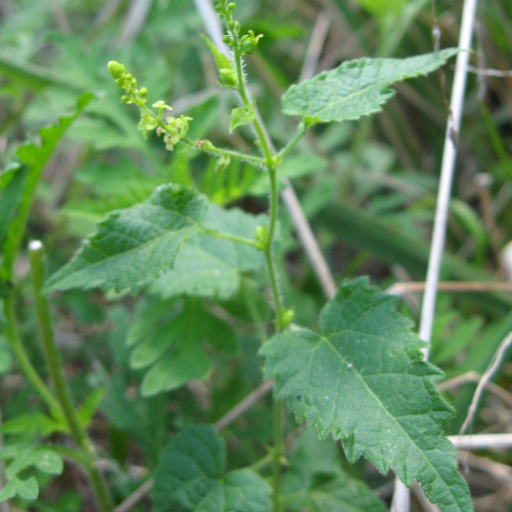
Plant Overview
Commonly known as the Heartleaf Noseburn, this unassuming vine is a master of self-defense. Native to the shaded woodlands of the southeastern United States, it often hides among more welcoming greenery, waiting for an unsuspecting hiker or gardener to brush past. Its delicate, twining stems and romantic heart-shaped leaves belie a surprisingly prickly personality.
🔍 How to Identify
- 🍃 Leaf Shape: The leaves are distinctly heart-shaped (cordate) with serrated or "toothy" edges, hanging from long, slender stalks.
- 🪡 Secret Weapons: Look very closely at the stems and leaf surfaces—they are covered in translucent, needle-like stinging hairs (trichomes) that act like tiny hypodermic needles.
- 🌱 Growth Habit: This is a twining, herbaceous vine that lacks tendrils; it instead scrambles over low-growing shrubs or sprawls across the forest floor.
🏡 In Your Garden
- 🌳 The Shade Dweller: Unlike many garden vines that crave the spotlight, Heartleaf Noseburn thrives in the dappled light of deciduous forests and rocky slopes. It prefers well-drained, slightly acidic soil.
- 🧗 A Low-Profile Resident: Because it stays mostly at ankle or knee height, it is often overlooked until it is touched. In a garden setting, it is usually considered a "weedy" intruder rather than an ornamental choice due to its aggressive defense mechanism.
⚠️ Safety & Toxicity
- 🚫 Burning Sensation: High Irritant. Touching any part of this plant causes an instant, sharp stinging sensation followed by an itchy, red rash. The common name "Noseburn" comes from the stinging heat it produces on the skin.
- 🐾 Pets and Kids: This plant is hazardous to barefoot children and curious pets. The stinging hairs can cause significant distress and skin inflammation. If you find it in a high-traffic area, it is best removed—but only while wearing thick, protective gloves.
✨ Fun Fact
Despite its nasty sting, the Heartleaf Noseburn is the primary host plant for the Common Mestra butterfly. While humans recoil from the stinging hairs, the caterpillars of this butterfly munch on the leaves with total immunity!

Detailed Care Instructions
To grow Tragia Cordata, also known as Heartleaf Noseburn or Nettleleaf Noseburn, follow these steps:
- Select a suitable location: Tragia Cordata prefers partial shade to full sun, so choose a spot in your garden or a container with good access to sunlight.
- Soil preparation: Prepare well-draining soil that is rich in organic matter. You can mix in compost or well-rotted manure to improve soil fertility and drainage. This plant can also tolerate a wide range of soil types, but fertile and loamy soil is ideal.
- Sowing the seeds: Tragia Cordata can be grown from seeds. Sow the seeds directly into the prepared soil in early spring or summer. Scatter the seeds over the soil surface and lightly press them into the ground. Alternatively, you can start the seeds indoors a few weeks before the last frost date and transplant the seedlings outdoors later.
- Watering: Keep the soil consistently moist but not waterlogged. Check the soil regularly and water when the top inch starts to dry out. During the hot summer months, you may need to water more frequently.
- Mulching: Mulch around the base of the plants to conserve moisture, suppress weed growth, and protect the roots during extreme weather conditions. Organic materials like straw or wood chips work well as mulch.
- Fertilization: Tragia Cordata generally does not require regular fertilization. However, if your soil is poor or lacking in nutrients, you can apply a slow-release balanced fertilizer once or twice during the growing season.
- Pruning: Tragia Cordata can develop a sprawling growth habit. To keep the plant compact and bushy, you can prune it lightly after it finishes flowering. Trim back any dead or damaged branches as needed.
- Pests and diseases: This plant is relatively pest and disease-resistant. However, aphids, mealybugs, or spider mites can occasionally be a problem. If you notice any infestation, you can wash them off with a strong jet of water or use organic insecticidal soap.
- Propagation: Tragia Cordata can also be propagated by stem cuttings. Take 4-6 inch long cuttings from healthy plants and remove the lower leaves. Dip the cut end in rooting hormone and place it in a well-draining potting mix. Keep the soil lightly moist and provide bright, indirect light until roots develop in a few weeks.
By following these steps, you will be able to successfully grow Tragia Cordata in your garden or as a container plant.

Place in a bright room that is sun drenched almost all day. Or directly in a south-facing window.

Tragia Cordata plant requires regular watering, but it should not be watered excessively. The plant should be watered when the topsoil becomes dry to touch. The watering frequency will depend on the soil type, temperature, humidity, and light conditions. It is important to use well-draining soil to prevent waterlogging, as excessive moisture can cause root rot. When watering, it is best to water the soil around the base of the plant, rather than watering the leaves or stem. This will prevent damage to the leaves and stem, and ensure that the water reaches the roots of the plant where it is needed. It is also important to avoid getting water on the leaves, as this can cause water spots and damage the plant. When watering, it is best to use room temperature water, rather than cold water, to avoid shocking the roots of the plant. Overall, Tragia Cordata plant requires regular watering, but it is important to monitor the soil moisture level and avoid overwatering.
To fertilize Tragia Cordata, apply a balanced, water-soluble fertilizer every two weeks during the growing season. Use a fertilizer with higher nitrogen content to promote leaf growth and greening. Dilute the fertilizer according to the package instructions and apply to the soil around the base of the plant. Be careful not to over-fertilize as it can cause root burn and damage to the plant. Water the plant thoroughly after fertilizing to help the nutrients penetrate the soil.
Tragia Cordata plant can thrive well in well-draining and loamy soil that is rich in organic matter. The pH of the soil should be slightly acidic to neutral, ranging from 5.5 to 7.0. In general, the soil should be able to retain moisture without becoming waterlogged. A good mix for the soil would include sand, clay, and organic matter such as compost or peat moss. It is advisable to avoid using heavy clay soil or sandy soil that does not retain water well. The soil should also be kept moist but not soggy. Mulching the soil around the plant helps to retain moisture and regulate temperature. An ideal location for planting Tragia Cordata in the garden would be an area that receives full to partial sun exposure.
To propagate this plant, the first step is to take stem cuttings from the parent plant. Choose healthy stems that are approximately 4-6 inches in length and have a few leaves on them. Using a sharp, clean pair of scissors or pruning shears, cut the stem at a 45-degree angle. Remove any leaves or buds from the bottom third of the stem.
Next, dip the cut end of the stem into a rooting hormone powder to encourage root growth. Shake off any excess powder and plant the cutting into a well-draining potting mix. Water the cutting lightly and cover it with a plastic bag to create a mini greenhouse. This will help to retain moisture and encourage root growth.
Place the pot in a brightly lit area, but out of direct sunlight. Keep the soil moist but not soggy, and remove the plastic cover once new growth appears. After a few weeks to a month, roots should begin to grow and the cutting can be transplanted into a larger pot or the garden.
It is important to note that this plant can be toxic, so wear gloves when handling it and keep it away from children and pets. Additionally, ensure that the parent plant is healthy and disease-free before taking cuttings to propagate.








