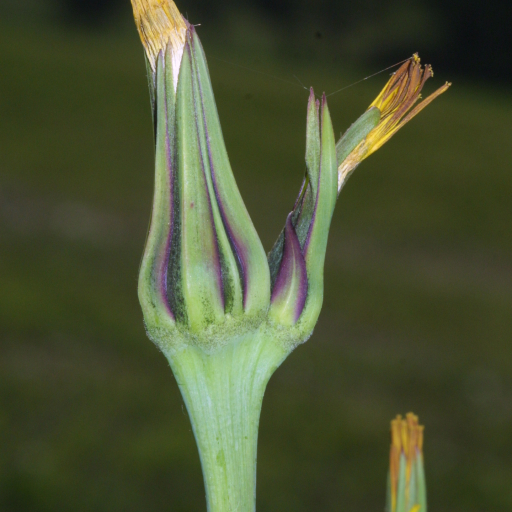
Plant Overview
Often called "Jack-go-to-bed-at-noon," this charming wildflower is nature’s most punctual timekeeper. Originating from the meadows of Europe and Western Asia, it is famous for its strict internal clock, closing its bright yellow petals precisely at midday. While it may look like a giant dandelion at first glance, its elegant, grass-like foliage gives it a much more sophisticated silhouette in a wild garden or meadow.
🔍 How to Identify
- 🌼 The Sun-Clock Flower: Features bright, lemon-yellow ray florets that are roughly 1–2 inches wide. Unlike dandelions, the bracts (the green bits under the flower) are usually shorter than or equal to the petals.
- 🌿 Grass-like Foliage: The leaves are long, narrow, and keeled, looking very much like thick blades of grass or leeks, often clasping the stem at the base.
- 💨 Giant Puffball: After flowering, it produces a massive, bronze-tinted "clock" or seed head. It looks like a dandelion puffball on steroids, with seeds attached to feathery "parachutes" (pappus) designed to catch the wind.
🏡 In Your Garden
- ☀️ The Sun Worshipper: This plant is a sun-seeker that thrives in well-drained, even poor soils. Because it has a very deep, sturdy taproot, it is incredibly drought-tolerant but notoriously difficult to move once established—pick its spot carefully!
- 🌱 A Biennial Journey: It typically spends its first year as a quiet rosette of leaves, storing energy in its root to send up its tall, flowering stalks in the second year. It is a fantastic choice for "rewilding" areas where you want to support local pollinators.
⚠️ Safety & Toxicity
- ✅ Generally Safe: Tragopogon pratensis is widely considered non-toxic to humans and common household pets. In fact, many parts of the plant are historically edible.
- 🥛 Sticky Sap: Like many members of the sunflower family, the stems contain a milky white latex (sap). While not poisonous, this sap can be sticky and may cause mild skin irritation for those with very sensitive skin or latex allergies.
✨ Fun Fact
- 🕰️ Linnaeus’s Flower Clock: The famous botanist Carl Linnaeus included this plant in his Horologium Florae (Flower Clock). He noticed that in his Swedish garden, the flowers opened at 3:00 AM and closed at exactly 12:00 PM every single day, regardless of the weather!

Detailed Care Instructions
| Humidity | Normal |
| Lighting | Part Sun |
| Toxicity | Poisonous |
| Difficulty | Easy |
| Temperature | 14°C - 39°C |
| Hardiness Zones | 3 - 7 |
To grow Tragopogon Pratensis, also known as meadow salsify or yellow goat's beard, you can follow these steps:
- Obtain seeds: Purchase Tragopogon Pratensis seeds from a reputable source. You can also harvest seeds from existing plants if they are available in your area.
- Choose the right location: Tragopogon Pratensis prefers full sun but can tolerate partial shade. Ensure that the planting area has well-draining soil.
- Prepare the soil: Clear the area of any weeds or debris. Loosen the soil with a garden fork or tiller and remove any large rocks.
- Sow the seeds: Scatter the seeds on the soil surface and lightly press them into the soil. You can also plant them individually, about 1/4 inch deep and 2 inches apart. If you are planting in rows, keep them 12-18 inches apart.
- Water regularly: Keep the soil consistently moist but not soaked. Water the seeds lightly immediately after planting and continue to water regularly until they germinate.
- Thin out seedlings: When the seedlings are about 2 inches tall, thin them out to reduce competition for nutrients and space. Leave only the strongest and healthiest plants, spacing them about 12 inches apart.
- Maintain the plants: Keep the area weed-free and water the plants regularly, especially during dry periods. Tragopogon Pratensis is known for its drought tolerance but will benefit from supplemental watering.
- Harvesting: Tragopogon Pratensis typically blooms in late spring to early summer. You can harvest the flowers for use in arrangements or allow them to go to seed. The seedheads resemble dandelions and can be collected and stored for future plantings.
By following these steps, you can successfully grow Tragopogon Pratensis plants in your garden or outdoor space.

Place in a window with dappled sun or a spot in the middle of a room. Or directly in a window facing west or east.

Tragopogon Pratensis is a flowering plant that requires regular watering to maintain its health and growth. It is recommended to water the plant deeply, allowing the water to penetrate into the soil and reach the roots.
Before watering, check the soil moisture by inserting your finger into the soil up to the second knuckle. If the soil is dry, it is time to water the plant.
Use a watering can or hose with a gentle flow to water the base of the plant, being careful not to hit the leaves or flowers. Water the plant until the soil is moist but not waterlogged.
It is important to monitor the soil moisture regularly and water the plant as needed. During periods of high temperatures or drought, the plant may require more frequent watering.
Avoid watering the plant in the afternoon or evening, as this can lead to fungal growth and disease. Watering in the morning or early afternoon is best, giving the plant time to dry before nightfall.
In summary, Tragopogon Pratensis should be watered deeply and regularly, while monitoring soil moisture and avoiding watering in the late afternoon or evening.
To properly fertilize this plant, use a balanced fertilizer with equal parts nitrogen, phosphorus, and potassium. Apply the fertilizer in early spring before new growth begins and again in mid-summer. Be sure to water the plant thoroughly before and after fertilizing to prevent burning of the roots. Avoid over-fertilizing as it can lead to excessive growth and reduced flowering.
Tragopogon Pratensis plant requires well-draining soil that is rich in organic matter to grow in optimal conditions. The soil should have a pH range between 6.0 to 7.5. Using loamy soil with proper drainage is ideal, but sandy soil or clay soil can also be used if amended with organic matter such as compost. It is important to ensure the soil is not waterlogged, as the plant may suffer from root rot. Avoid using heavy fertilizers, as they can damage the plant's delicate root system. Instead, use slow-release fertilizers or fertilizers specifically formulated for flowering plants. Regular watering is required, but overwatering should be avoided. Mulching around the base of the plant can help conserve moisture and prevent weed growth.
To propagate this plant, you can collect the seeds from its flowers that have matured and dried up. Then, you can either sow them directly into the soil, or store them in a cool and dry place for later use. It is recommended to scarify the seeds before sowing them, which involves scratching the outer coating of the seed to allow water to penetrate and stimulate germination. Another method of propagation is to divide the root clumps of an established plant during its dormant season. Cut off parts of the root with a sharp knife and replant them in appropriate soil and conditions.








